
Trolley
You have no items in your shopping cart

 Budgets
 Dumbers
 Discs
 Benches
 Racks and Rigs
 Weights Holders
 Isotonic machines
 Calisthenics
 Cardio
 Kettlebells
 Flooring
 Gym Set
 Accessories
 Combat
 ARTI MARZIALI
 CONTAINER GYM
 Tug-Of-War
 Used Gym Equipment
 PILATES MACCHINARI
 GINNASTICA ARTISTICA
 CAMPI DA PADEL
 Prodotti in Pronta Consegna
 Informazioni
 IRONMAN
 Gift Card
- Donatif
- General information
- 0 I like it
- 186 Views
- 0 comments
- gym flooring, safety flooring, gym safety, shock-absorbing materials
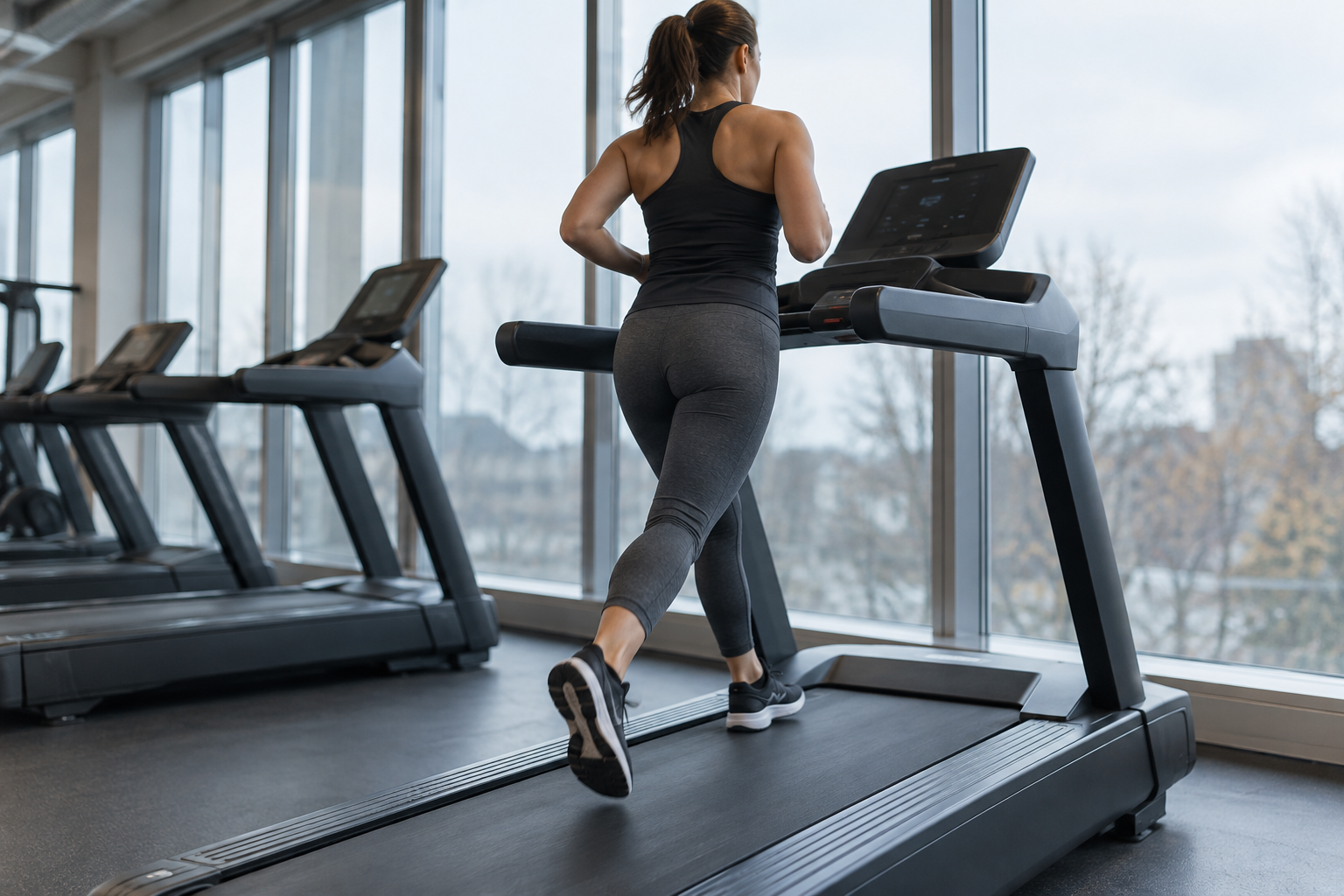
Maximum Treadmill Weight Capacity: How to Interpret It
Maximum weight capacity is one of the first specifications a facility manager encounters when comparing treadmills, but the number on the datasheet alone does not tell how the machine will perform in a busy room. It is necessary to understand which weight it refers to, under what conditions it is declared, and how it combines with the intended use.
Knowing how to evaluate the maximum weight capacity of a treadmill means connecting the manufacturer's limit to actual users, proposed activities, and model documentation. A high capacity does not automatically guarantee a suitable running surface, a motor appropriate for continuous use, or effective support service.
This guide offers a method to read information, make precise requests, and compare machines intended for a gym or fitness room. Specific values and applicable conditions must be verified in the manufacturer's documentation and the chosen model's offer.
- What capacity indicates
- Describing users and activities
- Reading the complete technical sheet
- Space, systems, and flooring
- Practical test and safety
- Maintenance and service continuity
- Comparing models and offers
What capacity indicates
The declared user limit
In many datasheets, capacity is presented as the maximum user weight. Verify that the wording actually refers to the person and ask how any clothing or accessories carried should be considered. If the documentation uses different terms or does not explain the data, request written clarification from the supplier.
The person's capacity is distinct from the machine's own weight and the load capacity of the floor on which it is installed. These are data related to the same location, but they answer different questions. Confusing them can lead both to choosing an unsuitable model and to neglecting necessary checks on the room.
Conditions and meaning of the data
A numerical limit makes sense together with the conditions defined by the manufacturer. Check whether the manual specifies constraints related to speed, incline, use, or accessories and whether the data reported in advertising coincides with that of the technical documentation. In case of a difference, ask which value applies to the supplied configuration.
Do not assume that two identical figures were determined using the same methods if the datasheets do not explain it. Available information may vary between manufacturers. In the comparison, also record what is not specified and request documentation rather than completing missing cells with guesses.
Describing users and activities
A room frequented by different people
A gym can accommodate people with different builds, experience levels, and goals. To choose responsibly, the manager must consider the plausible range of use of the facility without collecting more personal data than necessary. The declared limit must cover the expected users in compliance with the manufacturer's instructions.
In addition to weight, consider belt access, movement space, and ease of controls. A person may fall within the limit but find it difficult to step onto the machine or use a poorly legible console. Capacity is therefore a condition of the evaluation, not a complete measure of accessibility.
Walking, running, and frequency
Walking and running produce different usage modes. Ask the supplier if the declared capacity applies to all expected speeds and inclines and if there are other limitations. Do not invent percentage reductions or numerical margins: use the conditions actually documented for the model.
Frequency is a separate criterion. A machine with adequate capacity may not be intended for back-to-session use for many hours a day. Describe session duration, peaks, and room schedules to the supplier and ask for written confirmation of compatibility with the intended use.
Reading the complete technical sheet
Destination and operation
Identify the category of use indicated by the manufacturer and verify if it is consistent with a facility open to multiple users. The word professional, on its own, does not specify session duration, environmental conditions, or support. Look for concrete operational indications in the manual and sales documentation.
Also compare motor data in their context. Continuous power and peak power, if indicated, are not automatically interchangeable. The capacity value does not allow deducing the necessary power or motor durability: both require declared information and conditions of use.
Running surface and adjustments
Length and width of the usable surface must be evaluated against stride, speed, and user profiles. A high load capacity does not necessarily compensate for a surface that does not allow comfortable movements. The external measurements of the machine are different from those actually available for walking or running.
Check intervals and methods for adjusting speed and incline, data legibility, and ease of stopping. During an appropriate test, observe how users reach the controls. Do not use capacity as a shortcut to determine whether these ergonomic aspects are suitable.
Space, systems, and flooring
Machine weight and support
The weight of the treadmill is relevant for transport, positioning, and environmental evaluation. The maximum user value does not coincide with the permissible structural load of the floor slab. If project conditions require it, a competent professional must evaluate the machine, users, support distribution, and relevant stresses.
Do not derive floor suitability by simply adding two numbers and comparing them with generic data. Support geometry, position, and characteristics of the structure can influence the verification. Provide the technician with available datasheets and drawings, also signaling the possible presence of other nearby equipment.
Clear areas and power supply
Consider the machine's footprint and the spaces required by the manufacturer for use, access, emergency, and maintenance. Doors, passages, walls, and other equipment can limit positioning. A model adequate for capacity and functions cannot be used correctly if the room does not offer the necessary spaces.
The power supply must comply with the model specifications and system conditions. Ask a qualified professional to evaluate connections when necessary and do not improvise solutions that leave cables along pathways. Noise and vibrations must be evaluated in the actual context of the building and activity.
Practical test and safety
Organizing a useful test
If the supplier offers a test, choose conditions consistent with the machine instructions and involve people representing different needs. Observe access, perceived stability, control legibility, and movement space. No test must exceed the declared limits or be used as an improvised test of maximum capacity.
A brief test can reveal ergonomic difficulties, but it does not prove the machine's durability or suitability for intensive use. Record observations on the same sheet for each model and ask for clarification when user feedback does not match expectations derived from data.
Controls and stopping procedures
Check the position and comprehensibility of start and stop controls, including the safety device when provided. Users must know how to start at low speed, change pace, and end the session according to the manufacturer's instructions. Staff must be trained on facility procedures.
If unusual noises, abnormal odor, irregular sliding, or error messages emerge during use, stop exercising and report the problem. Do not continue using the machine just because the person falls within the declared capacity: the limit does not replace checking actual conditions.
Maintenance and service continuity
Checks and assistance
Ask what routine checks are planned for the belt, deck, cleaning, and other components and who can perform them. Frequency and procedures depend on the model and usage. Unforeseen products or interventions can damage the equipment: follow the manual and involve qualified personnel when required.
Before purchase, clarify how to open a support request, what information to provide, and which spare parts are available. Conditions and times must appear in the applicable offer or contract. An adequate capacity limit does not eliminate the need to schedule checks and possible machine downtime.
Recording anomalies
A simple log can record model, serial number, installation date, checks, and reports. For each anomaly, describe the symptom, time, and observed conditions, avoiding improvised diagnostics. Documentation helps the technician understand if the problem recurs and which checks have already been performed.
If the defect can compromise use, apply the out-of-service procedure and make the machine's status recognizable. Reopening requires the verification provided by the organization and relevant instructions. An occasional restart does not prove that an intermittent problem has been resolved.
Comparing models and offers
Questions to ask the supplier
Prepare a grid with capacity and definition, intended use, running surface, dimensions, power supply, adjustments, and maintenance conditions. Add delivery, installation, warranty, and support. For each response, note the source and flag points still to be confirmed, so offers remain comparable.
The selection of cardio machines can help identify relevant categories; however, deciding requires the specifications of the individual treadmill and the actual supply conditions. Ask for confirmation of updated data directly on the proposed model.
From datasheet to choice
Order requirements by distinguishing indispensable ones from desirable ones. A model must respect the limit applicable to expected users, adapt to space, and have a destination consistent with room frequency. Only among solutions that satisfy these requirements does it make sense to compare accessory functions and commercial conditions.
Keep the documentation used for the choice together with the delivered manual and check for any differences before commissioning. Then collect observations from users and staff: access, queues, and reports can help improve organization without attributing every aspect of the experience to capacity alone.
Comments (0)