
Trolley
You have no items in your shopping cart

 Budgets
 Dumbers
 Discs
Discs
 Benches
 Racks and Rigs
 Weights Holders
 Isotonic machines
 Calisthenics
 Cardio
 Kettlebells
 Flooring
 Gym Set
 Accessories
 Combat
 ARTI MARZIALI
 CONTAINER GYM
 Tug-Of-War
 Used Gym Equipment
 PILATES MACCHINARI
 GINNASTICA ARTISTICA
 CAMPI DA PADEL
 Prodotti in Pronta Consegna
 Informazioni
 IRONMAN
 Gift Card
- Donatif
- General information
- 0 I like it
- 1 Views
- 0 comments
- gym flooring, safety flooring, gym safety, shock-absorbing materials
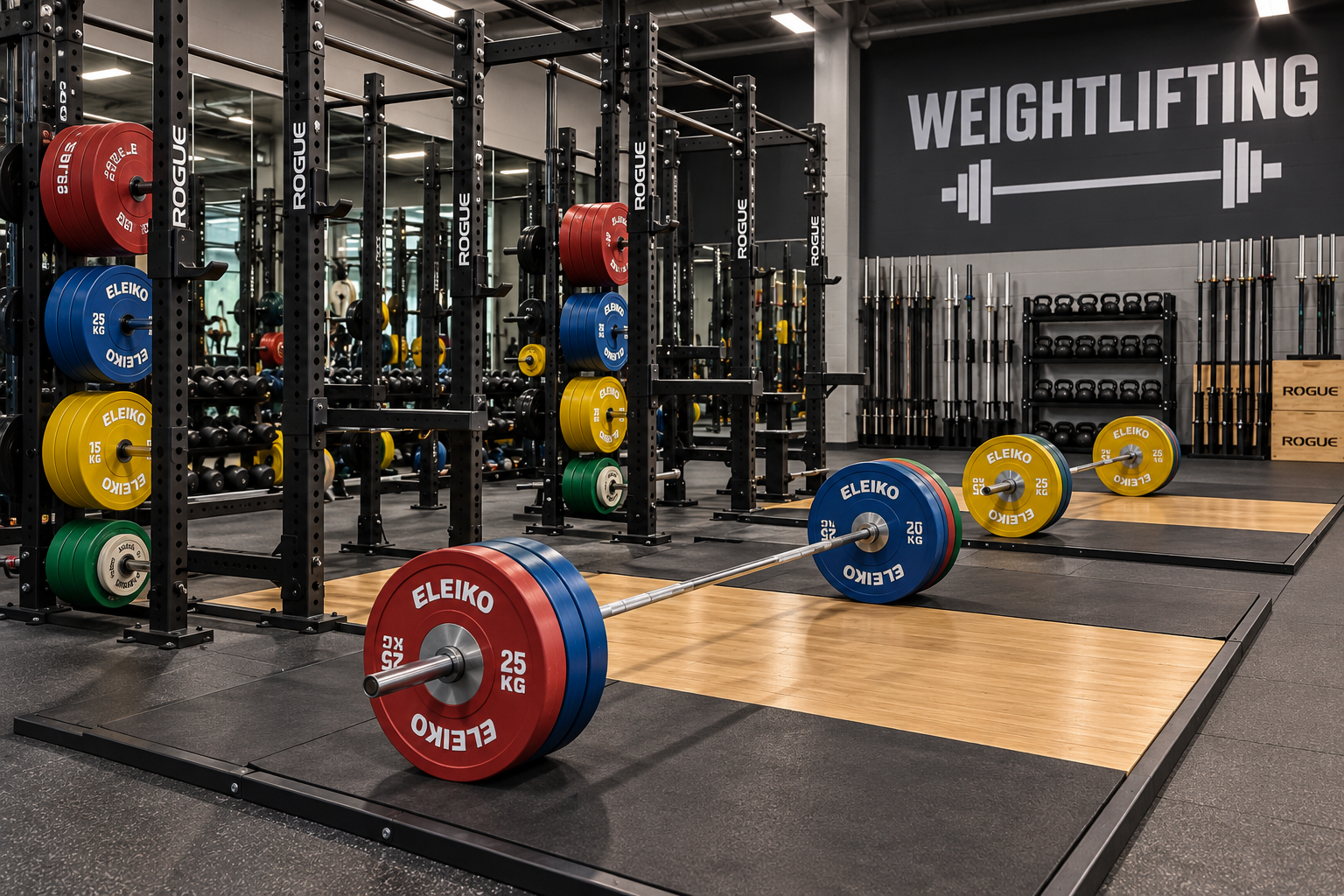
How to set up a weightlifting area: a guide to designing a functional space
Creating an area dedicated to weightlifting requires planning that takes into account the characteristics of the discipline, the available space, and the needs of the athletes. Unlike a general weight room, an area designated for snatch and clean and jerk must be organized to allow for wide movements, the use of bumper plates, and the safe management of dropping the barbell.
An effective project starts with defining the layout, continues with the choice of compatible equipment, and ends with the planning of maintenance and surface protection. Each element should be selected by referring to the technical specifications declared by the manufacturer and the actual needs of the facility.
Whether it is a professional gym, a sports center, or a dedicated area within a multifunctional fitness room, properly planning spaces helps improve daily organization and facilitates any future expansions.
- What requirements must a weightlifting area have?
- How to organize the layout
- What equipment to choose
- Recommended configuration table
- Safety and facility protection
- How to manage space over time
- Design errors to avoid
- How to plan the investment
What requirements must a weightlifting area have?
Design should start with the evaluation of the available space and the number of stations the facility intends to create. Every athlete must be able to perform Olympic lifts without interference with other training areas.
In addition to the surface intended for the platforms, it is advisable to provide areas dedicated to the storage of barbells, bumper plates, and accessories, always keeping the operational area free.
The rational distribution of spaces facilitates the work of instructors, improves circulation within the gym, and makes daily maintenance simpler.
How much does available space matter?
Space represents one of the main design criteria because it determines the number of installable stations and the distance between the various operational areas.
Why organize dedicated areas?
Separating the training zone from the spaces intended for storage allows for maintaining order and improving equipment management.
How to organize the area layout?
The layout should allow for fluid use of the stations and leave sufficient space for all phases of training, including loading the barbell and retrieving the bumper plates.
The platforms can be arranged linearly or in multiple rows, as long as a correct separation between athletes is maintained and it is possible to easily access the equipment.
It is also advisable to provide simple paths for moving materials and easily reachable areas dedicated to plate racks and barbell holders.
How to position the platforms?
The platforms should be oriented uniformly and integrated into the general layout of the room to facilitate supervision and the simultaneous use of the stations.
Why study movement flows?
A rational arrangement reduces crossings of the technical area and improves training organization.
What equipment to choose?
A complete station includes a barbell dedicated to weightlifting, bumper plates, a technical platform, and organization systems for the equipment. The choice should be made by evaluating compatibility and the characteristics declared by the manufacturer.
In the case of the barbell, it is useful to check the grip diameter, construction characteristics, and barbell whip when provided in the technical specifications. The bumper plates must also be compatible with the barbell used.
The configuration can be expanded with accessories intended for storage and the organization of the area without compromising the athletes' freedom of movement.
What characteristics to check in the barbell?
The most important information is reported in the manufacturer's technical documentation and includes materials, dimensions, and compatibility with the plates used.
Why choose compatible bumper plates?
Compatibility between the barbell and bumper plates facilitates the use of the station and helps keep the entire training area uniform.
Recommended configuration table
The following table summarizes the main elements of a station dedicated to weightlifting.
| Component | Function | Recommended check |
|---|---|---|
| Barbell | Snatch and clean and jerk | Diameter and technical characteristics |
| Bumper plates | Progressive loading | Compatibility with the barbell |
| Platform | Technical area | Materials and stability |
| Plate racks | Organization | Capacity and accessibility |
| Barbell holders | Storage | Compatibility with the number of tools |
| Flooring | Facility protection | Integration with platforms |
This configuration represents a modular base that can be expanded according to the needs of the gym.
Before purchasing, it is always advisable to compare the technical specifications of the various components.
Which accessories are truly useful?
Storage systems improve area organization and reduce the time required to prepare each station.
Why choose a modular configuration?
An easily expandable structure allows for adding new stations while keeping the initial design uniform.
How to improve safety and facility protection?
The design must include adequate technical flooring and platforms compatible with the type of training performed. These elements help protect the underlying surface and create an area dedicated to Olympic exercises.
It is also important to periodically check the condition of the equipment, following the instructions provided in the manufacturers' manuals for maintenance and inspections.
An orderly environment free of obstacles facilitates athletes' movements and makes the daily management of the room simpler.
Why use a dedicated platform?
The platform defines the technical area and contributes to the protection of the flooring during barbell training.
What checks to perform?
It is advisable to periodically check the condition of barbells, bumper plates, platforms, and storage systems following the manufacturer's instructions.
How to manage the weightlifting area over time?
Good organization does not end with the installation of the equipment. Scheduling maintenance, periodic checks, and cleaning of the area allows for maintaining high station efficiency.
Logging interventions facilitates monitoring the condition of the equipment and makes it possible to plan any replacements without interrupting the gym's activity.
Correct material arrangement also helps improve the usability of the area during peak hours.
Why keep the room tidy?
An organized environment facilitates workouts, periodic checks, and the handling of equipment.
Is it useful to log interventions?
Documenting maintenance and checks helps manage the lifecycle of the equipment more effectively.
What design errors to avoid?
One of the most frequent errors consists of dedicating too little space to the stations or neglecting the areas intended for material storage.
It is also advisable to avoid choosing incompatible components or designing a layout that makes movements within the room difficult.
Another critical issue concerns the failure to plan for future expansions, which could require more demanding modifications over time.
Why always check compatibility?
Barbells, plates, platforms, and accessories must be usable together without operational limitations.
Why think about future growth?
A modular design makes it easier to add new stations while keeping the entire area homogeneous.
How to plan the investment in a weightlifting area?
Effective design stems from the joint evaluation of available space, number of athletes, intensity of use, and expansion possibilities. Initially investing in compatible components allows the area to be developed over time without compromising the original project.
Carefully evaluating the weightlifting barbell, bumper plates, snatch and clean and jerk platform, and space organization allows for building a functional and easily manageable room.
To complete a station dedicated to Olympic exercises, it can be useful to integrate a supply of bumper plates compatible with the chosen barbell, maintaining uniformity across all stations and facilitating any future expansions.
Comments (0)