
Trolley
You have no items in your shopping cart

 Budgets
 Dumbers
 Discs
Discs
 Benches
 Racks and Rigs
 Weights Holders
 Isotonic machines
 Calisthenics
 Cardio
 Kettlebells
 Flooring
 Gym Set
 Accessories
 Combat
 ARTI MARZIALI
 CONTAINER GYM
 Tug-Of-War
 Used Gym Equipment
 PILATES MACCHINARI
 GINNASTICA ARTISTICA
 CAMPI DA PADEL
 Prodotti in Pronta Consegna
 Informazioni
 IRONMAN
 Gift Card
- Donatif
- General information
- 0 I like it
- 757 Views
- 0 comments
- gym flooring, safety flooring, gym safety, shock-absorbing materials
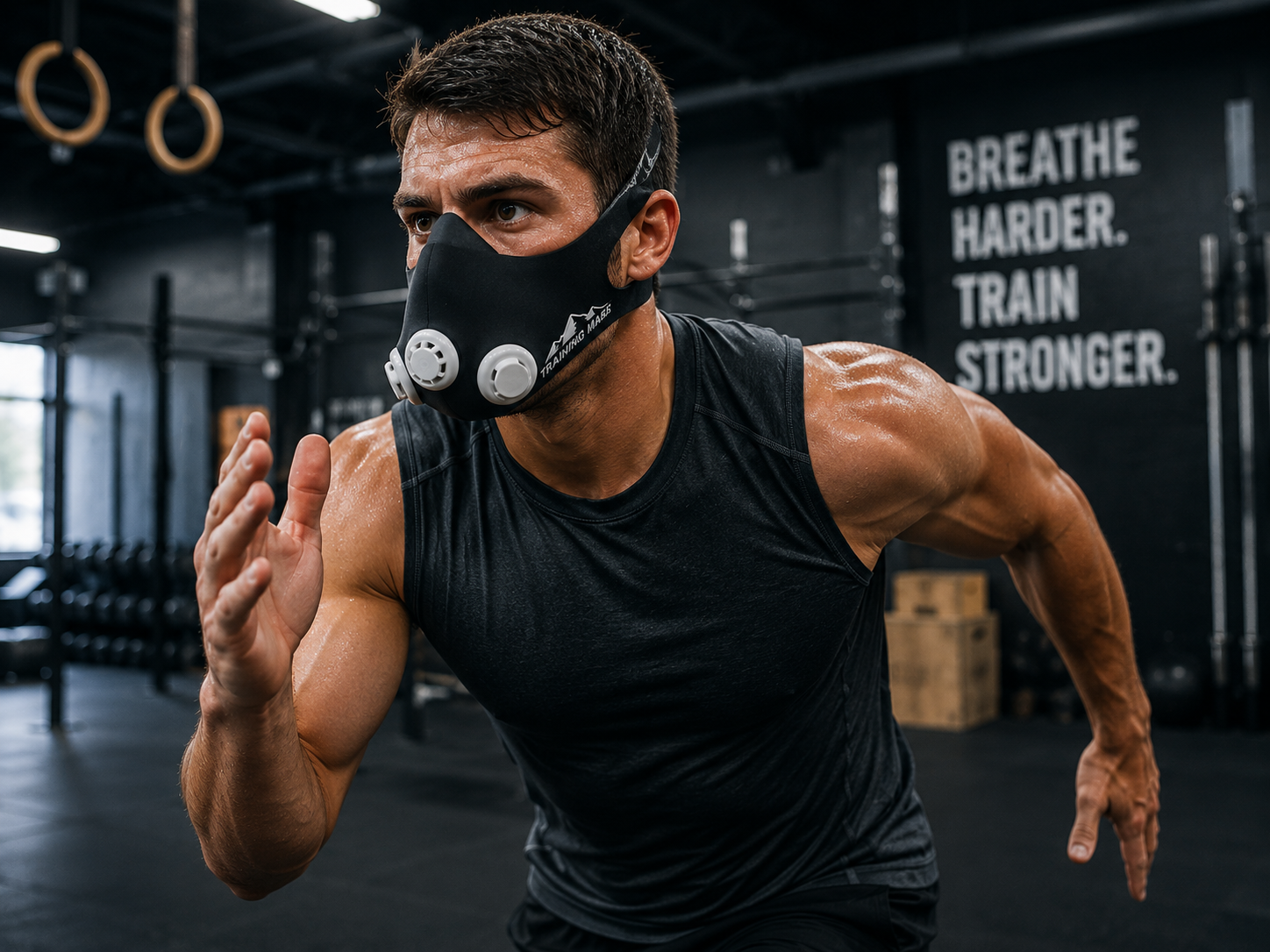
Hypoxic chamber vs training masks: the difference between real hypoxia and respiratory restriction
The comparison between the hypoxic chamber and training masks is one of the most discussed topics in the world of athletic preparation and advanced fitness. Many athletes associate these two tools because both are used during physical activity and because both recall the concept of training in harder conditions compared to normal breathing. However, from a technical and physiological standpoint, these are profoundly different solutions that act through completely different mechanisms.
For gyms, fitness centers, and advanced home gyms, it is important to understand this distinction in order to correctly communicate the value of a service based on real hypoxia. A training mask can modify the perception of respiratory effort, whereas a professional hypoxic chamber effectively modifies the composition of the inspired air, creating conditions similar to those encountered at high altitudes.
Understanding the difference between airflow restriction and true hypoxic simulation makes it possible to avoid erroneous beliefs and better evaluate which technology is truly suited to performance, recovery, and advanced training goals. The choice is not simply about which tool is more demanding to use, but which system produces a given physiological stimulus.
- How a hypoxic chamber works
- What training masks actually do
- Real hypoxia and respiratory restriction: two different mechanisms
- Physiological differences between hypoxic chamber and mask
- Why the myth of elevation masks exists
- Which solution to choose for a professional fitness center
- Commercial value of real hypoxia
- Investing in the correct technology for performance
How a hypoxic chamber works
A hypoxic chamber is a controlled environment in which the oxygen concentration present in the air breathed by users is modified. Unlike a normal variation in respiratory effort, the system acts directly on the composition of the internal atmosphere, reducing the percentage of available oxygen and simulating conditions typical of altitude training.
The operation of a professional hypoxic chamber requires a coordinated set of technologies: hypoxia generators, environmental sensors, and air control and distribution systems. Each element contributes to maintaining a stable oxygen level setpoint and ensuring that the environment remains consistent throughout the session.
For a sports facility, this means being able to offer a programmable and repeatable experience. Users can train in defined conditions, while professionals can set protocols based on controlled environmental parameters rather than relying exclusively on the subjective perception of fatigue.
Modification of air composition
The fundamental principle of the hypoxic chamber consists in varying the amount of oxygen available in the environment. The air maintains normal pressure, but features a lower concentration of oxygen compared to sea-level conditions.
This element is what distinguishes environmental hypoxia from other training methods. The body responds to the different oxygen availability through specific physiological adaptations.
Technical control of the hypoxic environment
A professional hypoxic environment must be continuously monitored to maintain precise conditions. Sensors and automated systems make it possible to check values and correct any variations caused by the presence of users or air exchanges.
This control capability represents one of the main advantages over non-environmental tools, because it allows for the creation of more consistent and easily manageable sessions.
What training masks actually do
Training masks, often also called elevation masks, are wearable devices designed to alter respiratory sensation during physical exercise. Their operation is mainly based on adjusting resistance to airflow, making breathing more difficult for the user.
These tools can increase the perception of effort and require greater breathing control. However, they do not modify the percentage of oxygen present in the surrounding environment and do not automatically recreate the conditions of a true simulated altitude.
The technical difference is fundamental because the human body does not interpret greater breathing difficulty and a real reduction in available oxygen in the inspired air in the same way.
Effect on breathing
A mask limits the airflow passing through the device and may require greater work from the respiratory muscles. This can represent a specific stimulus for certain training methodologies, but it does not equate to a modification of the environment.
In fact, the user continues to breathe air with the same percentage of oxygen normally present, even with a different sensation during inhalation.
Limitations of the mask compared to hypoxia
The main limitation of masks is that they do not allow for the control of environmental oxygen levels. It is therefore not possible to set a specific degree of hypoxia or precisely reproduce a specific simulated altitude.
For this reason, they cannot be considered equivalent to a hypoxic chamber when the goal is to work with protocols based on real oxygen availability.
Real hypoxia and respiratory restriction: two different mechanisms
The difference between real hypoxia and respiratory restriction represents the core point of the comparison between these two tools. Hypoxia occurs when cells receive a lower amount of available oxygen compared to normal conditions. Respiratory restriction, on the other hand, concerns the way air is inhaled and exhaled.
These two phenomena can generate similar sensations, such as greater difficulty during physical activity, but they do not necessarily produce the same physiological responses. This is why it is important not to confuse the perception of effort with the environmental stimulus.
In the professional fitness sector, this distinction makes it possible to more accurately communicate the value of the different technologies available and choose tools consistent with the goals of the service.
Difference between respiratory stimulus and hypoxic stimulus
A mask acts primarily on the work required to breathe, whereas a hypoxic chamber acts on the availability of oxygen in the environment. These are therefore two different stimuli involving different processes.
Understanding this distinction helps athletes and professionals use each tool for its real purpose.
Why air composition matters
The human body responds to variations in air composition through complex mechanisms. The amount of available oxygen influences how the body manages effort and adaptation.
A technology that actually modifies the environment therefore makes it possible to work on a specific and measurable parameter.
Physiological differences between hypoxic chamber and mask
From the perspective of respiratory physiology, the comparison between a hypoxic chamber and a mask requires attention. The body's response does not depend solely on how difficult an exercise feels, but also on the type of stimulus received during the activity.
A hypoxic chamber creates a situation in which the body must adapt to a lower availability of oxygen in the inspired air. A mask, instead, modifies the work of breathing without changing the composition of the environment.
For advanced training programs, it is therefore essential to know which physiological response you want to stimulate before choosing the tool.
Body adaptations to the hypoxic stimulus
Exposure to controlled hypoxic conditions is used in various sports contexts because it allows for work on specific organism responses to reduced oxygen availability.
Professional environmental management makes it possible to modulate the level of the stimulus and integrate it within structured programs.
Perception of fatigue and physiological response
The sensation of greater difficulty during exercise does not always indicate the same type of adaptation. A higher respiratory effort does not necessarily mean being in hypoxic conditions.
This difference is important to avoid misinterpretations of results obtained with different tools.
Why the myth of elevation masks exists
The connection between training masks and altitude training stems primarily from commercial communication and the similarity of the perceived experience. Both tools can make an exercise more demanding, creating the impression of being in more extreme environmental conditions.
However, the term altitude training refers to a modification in oxygen availability, whereas the mask intervenes on the respiratory system. The technical difference therefore remains substantial.
For fitness operators and informed clients, it is important to move past this misconception and understand the actual operation of the available technologies.
Anchoring bias and product perception
Anchoring bias can influence how people evaluate similar tools. A product associated with the idea of mountains or altitude can be perceived as equivalent to a system that actually simulates altitude.
Analyzing technical operation, conversely, makes it possible to distinguish marketing from actual features.
Customer education in premium fitness
For a premium fitness center, educating the client means increasing the perceived value of the service. Explaining the difference between breathing with greater difficulty and breathing in a hypoxic environment strengthens the facility's credibility.
Technical competence thus becomes an element of commercial differentiation.
Which solution to choose for a professional fitness center
The choice between masks and a hypoxic chamber depends on the service objectives. A gym that wants to offer an experience based on simulated altitude training needs technology capable of modifying and controlling the environment.
The hypoxic chamber represents a more complete solution because it integrates control, measurement, and the possibility of customizing protocols.
For professional facilities, this means being able to build a more structured and easily monetizable service.
Advantage of controlled programming
A controlled environment allows professionals to set consistent and monitorable sessions. This improves the management of the user journey and increases perceived quality.
Parameter precision represents a fundamental element in advanced fitness services.
Premium positioning of the hypoxic chamber
Professional hypoxic technology can become a distinctive element for a facility looking to differentiate itself. The ability to offer a service based on real technical parameters increases the value of the offering.
Correct positioning allows for better communication of the investment and the benefit to the end customer.
Commercial value of real hypoxia
Integrating hypoxic technology into a gym does not just mean adding a new tool, but creating a service with specific and measurable characteristics. The difference compared to training masks can become an important communication element.
Clients interested in performance increasingly look for solutions based on technology and expertise. A facility capable of correctly explaining the operation of its equipment conveys greater professionalism.
The enhancement of the service therefore passes through the ability to distinguish true technical innovation from tools that merely offer a similar perception.
Communicating technical value
Effective communication must highlight concrete differences: environmental control, parameter measurement, and customization possibilities.
These elements help the client understand why a professional solution holds superior value.
Creating a differentiating experience
Technology becomes an integral part of the experience offered by the gym. A well-designed service can increase loyalty and the premium perception.
The difference between imitation and technical innovation lies in the quality of the system used.
Investing in the correct technology for performance
The choice between a training mask and a hypoxic chamber must start from an understanding of the mechanism you want to use. Limiting airflow and actually modifying oxygen concentration are two different approaches that must not be confused.
For gyms and fitness centers wishing to offer an advanced service, hypoxic technology represents a solution based on control, measurement, and professional environmental management.
Investing in the correct solution means building a more solid offering, better educating the client, and creating a performance-oriented service with concrete technical foundations.
Comments (0)