
Trolley
You have no items in your shopping cart

 Budgets
 Dumbers
 Discs
Discs
 Benches
 Racks and Rigs
 Weights Holders
 Isotonic machines
 Calisthenics
 Cardio
 Kettlebells
 Flooring
 Gym Set
 Accessories
 Combat
 ARTI MARZIALI
 CONTAINER GYM
 Tug-Of-War
 Used Gym Equipment
 PILATES MACCHINARI
 GINNASTICA ARTISTICA
 CAMPI DA PADEL
 Prodotti in Pronta Consegna
 Informazioni
 IRONMAN
 Gift Card
- Donatif
- General information
- 0 I like it
- 802 Views
- 0 comments
- gym flooring, safety flooring, gym safety, shock-absorbing materials
Hypoxic training for beginners: where to start
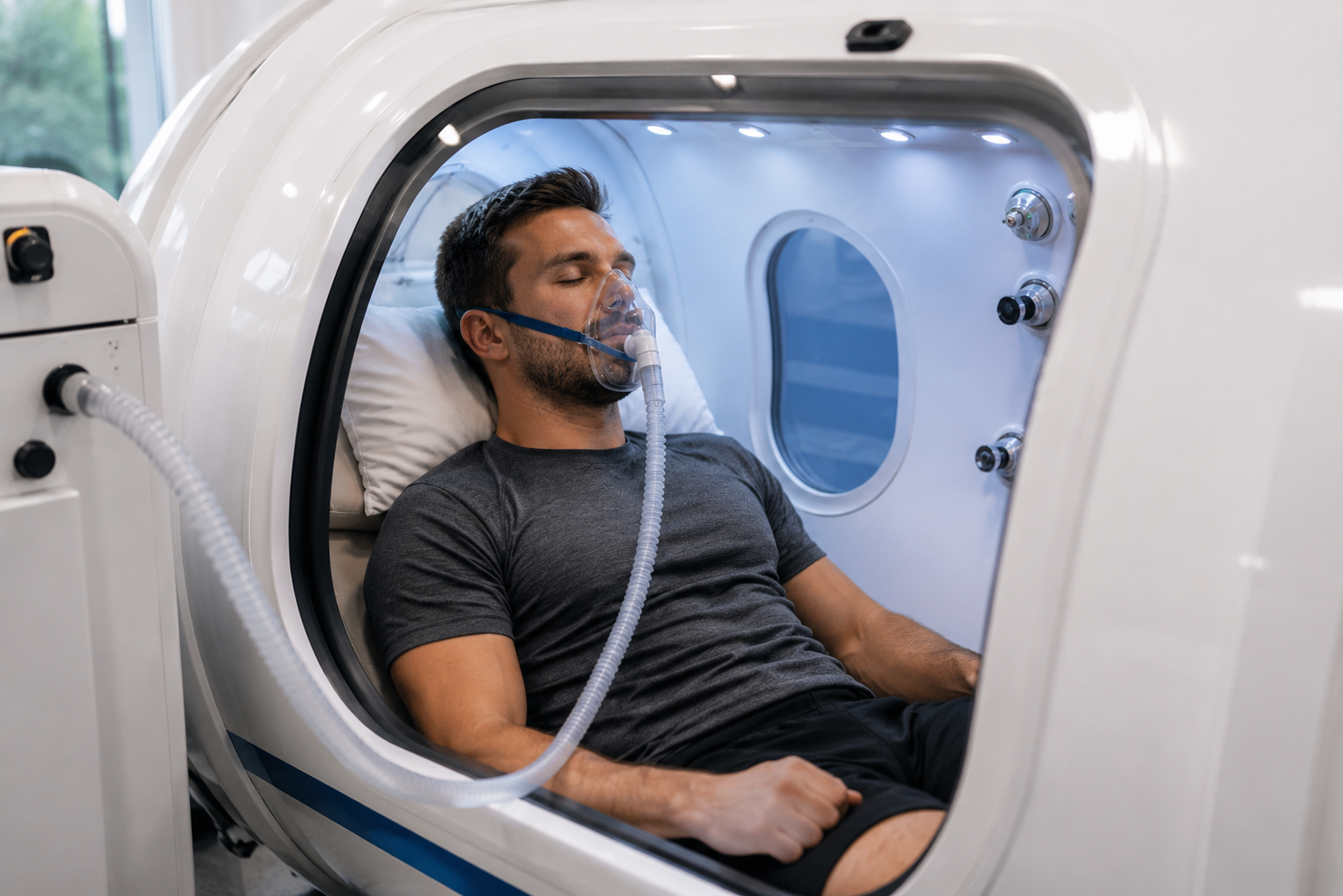
Interest in hypoxic training has grown rapidly even among people who are not professional athletes, but who wish to improve their well-being, optimize body composition, or introduce new stimuli into their fitness routine. The ability to use a home hypoxic chamber now makes approaching altitude simulation more accessible and controlled than in the past.
For those tackling this method for the first time, however, it is essential to understand that hypoxia should not be considered simply as a more intense version of traditional training. The reduction in oxygen availability represents a specific stimulus that must be introduced gradually, respecting individual adaptation times and building a progressive path.
Knowing the principles of hypoxic training programs for beginners allows you to start consciously, choosing appropriate exercises, managing the duration of sessions, and understanding how to integrate simulated altitude into a health- and performance-oriented lifestyle.
- What is hypoxic training and how it works
- How to start with a hypoxic chamber
- Benefits of hypoxia for beginners
- How to structure a basic hypoxia program
- What exercises to perform in a hypoxic chamber
- Hypoxia and weight loss in simulated altitude
- Common beginner mistakes in hypoxic training
- Building a safe and progressive path
What is hypoxic training and how it works
Hypoxic training consists of performing physical activity in an environment where the amount of available oxygen is modified through dedicated technological systems. A hypoxic chamber uses a specific generator to create conditions similar to those that can be encountered at high altitudes.
Unlike a normal gym workout, the body must adapt to a different oxygen availability while continuing to perform the required muscular work. This creates an additional stimulus that can influence the perception of effort and the body's response.
For beginners, the initial goal is not to seek extreme conditions, but to learn how to properly manage the stimulus. A gradual approach allows you to understand how your body reacts and to build a sustainable routine.
The principle of simulated altitude
Simulated altitude reproduces certain characteristics of the mountain environment by modifying the air composition. Atmospheric pressure normally remains unchanged, while the relative oxygen availability changes.
This allows for a controlled experience without having to physically reach high altitudes.
Differences compared to traditional fitness
The main difference compared to conventional training concerns the additional environmental stimulus. The same exercises can feel more demanding because they are performed under different conditions.
For this reason, intensity management becomes particularly important, especially in the early stages.
How to start with a hypoxic chamber
Those approaching hypoxia for the first time should consider the initial phase as an adaptation period. Familiarization with the environment and the sensations generated by simulated altitude represents an essential step.
One of the most important features of a beginner's path is progressivity. Increasing the duration or intensity of sessions too quickly can make recovery more difficult and compromise the continuity of the program.
The hypoxic chamber should be seen as a tool to be integrated into an already organized routine, not as an isolated element capable of completely replacing traditional physical activity.
The first experience in a hypoxic environment
During the first sessions, it is important to pay attention to your sensations and understand how the body responds to the new stimulus.
A calm approach allows you to build familiarity and gradually increase the quality of subsequent workouts.
Duration of initial sessions
For beginners, it is generally advisable to start with times compatible with their level of preparation.
The duration can be progressively modified based on individual response and the goals of the path.
Benefits of hypoxia for beginners
The use of hypoxia can offer several advantages within a well-structured fitness program. For beginners, the main value concerns the opportunity to introduce a new stimulus without necessarily increasing training volume excessively.
The fitness hypoxia benefits must be interpreted within a complete path that includes regular movement, balanced nutrition, and adequate recovery.
The hypoxic environment can represent an interesting opportunity for those looking for new training methods and wanting to make their approach to fitness more varied.
Support for cardiovascular endurance
Training in hypoxic conditions can increase physiological demand during activity, making proper effort management important.
This can help develop a greater awareness of one's aerobic capacity.
Progressive adaptation of the organism
The body responds to stimuli through adaptation processes that take time.
Gradualness allows for building a more stable and sustainable response.
How to structure a basic hypoxia program
A beginner program should start from realistic and easily monitorable goals. Before increasing difficulty, it is important to create a good habit of using the hypoxic chamber.
Session structures can vary by individual, but generally must provide a balance between the exposure phase, physical activity, and recovery.
Personalization represents the most important principle because each individual exhibits a different response to the hypoxic stimulus.
Session frequency
The ideal frequency depends on training level, goals, and recovery capacity.
A sustainable program over time is often more effective than an overly intense approach in the first weeks.
Progressively increasing the load
As with any training method, hypoxia also requires controlled progression.
Gradually increasing the stimulus allows you to maintain quality and continuity.
What exercises to perform in a hypoxic chamber
The most suitable exercises for a hypoxic chamber depend on the person's level and specific goals. For a beginner, it is generally useful to choose simple, controllable, and easily adaptable activities.
The initial goal should be to learn how to manage effort in a different environment while maintaining good movement quality.
The hypoxic chamber exercises can include light cardiovascular activities, functional exercises, and mobility work.
Moderate cardiovascular activity
Fast walking, stationary cycling, or controlled aerobic activities can represent a good starting point.
These exercises allow you to easily monitor the body's response.
Functional exercises
Bodyweight movements and simple circuits can be progressively integrated.
The priority must remain correct technical execution.
Hypoxia and weight loss in simulated altitude
One of the most frequent interests regarding hypoxic training concerns potential support in body recomposition paths. However, it is important to understand that hypoxia does not replace the fundamental basics of weight loss.
Body weight reduction depends primarily on the relationship between diet, physical activity, and overall lifestyle.
The weight loss in simulated altitude must therefore be considered as part of a broader path oriented toward physical fitness improvement.
Additional metabolic stimulus
The hypoxic environment can increase physiological demand during exercise.
This makes it important to choose appropriate activities and maintain consistent programming.
Importance of lifestyle
No technology can replace correct habits.
Hypoxia works best when integrated with a balanced diet and regular movement.
Common beginner mistakes in hypoxic training
Approaching hypoxia with overly high expectations can lead to management errors. One of the most common is thinking that greater intensity automatically means better results.
The quality of the path depends instead on the ability to maintain consistency and progression.
An intelligent approach allows you to better exploit the potential of the technology.
Starting with excessive intensity
Increasing difficulty too quickly can make the experience less sustainable.
Gradualness remains the fundamental principle.
Neglecting recovery
Recovery is an essential part of improvement.
Properly integrating pauses allows you to maintain continuity.
Building a safe and progressive path
Hypoxic training for beginners must be built on the basis of gradualness, listening to one's body, and programming. The hypoxic chamber represents an advanced technological tool that can also be used by those approaching simulated altitude for the first time.
Starting with simple protocols allows you to understand individual response and create the conditions to progressively increase the quality of sessions.
A balanced approach makes it possible to integrate hypoxia into an active lifestyle, transforming technology into concrete support for well-being, cardiovascular health, and personal performance.
Comments (0)