
Trolley
You have no items in your shopping cart

 Budgets
 Dumbers
 Discs
 Benches
 Racks and Rigs
 Weights Holders
 Isotonic machines
 Calisthenics
 Cardio
 Kettlebells
 Flooring
 Gym Set
 Accessories
 Combat
 ARTI MARZIALI
 CONTAINER GYM
 Tug-Of-War
 Used Gym Equipment
 PILATES MACCHINARI
 GINNASTICA ARTISTICA
 CAMPI DA PADEL
 Prodotti in Pronta Consegna
 Informazioni
 IRONMAN
 Gift Card
- Donatif
- General information
- 0 I like it
- 186 Views
- 0 comments
- gym flooring, safety flooring, gym safety, shock-absorbing materials
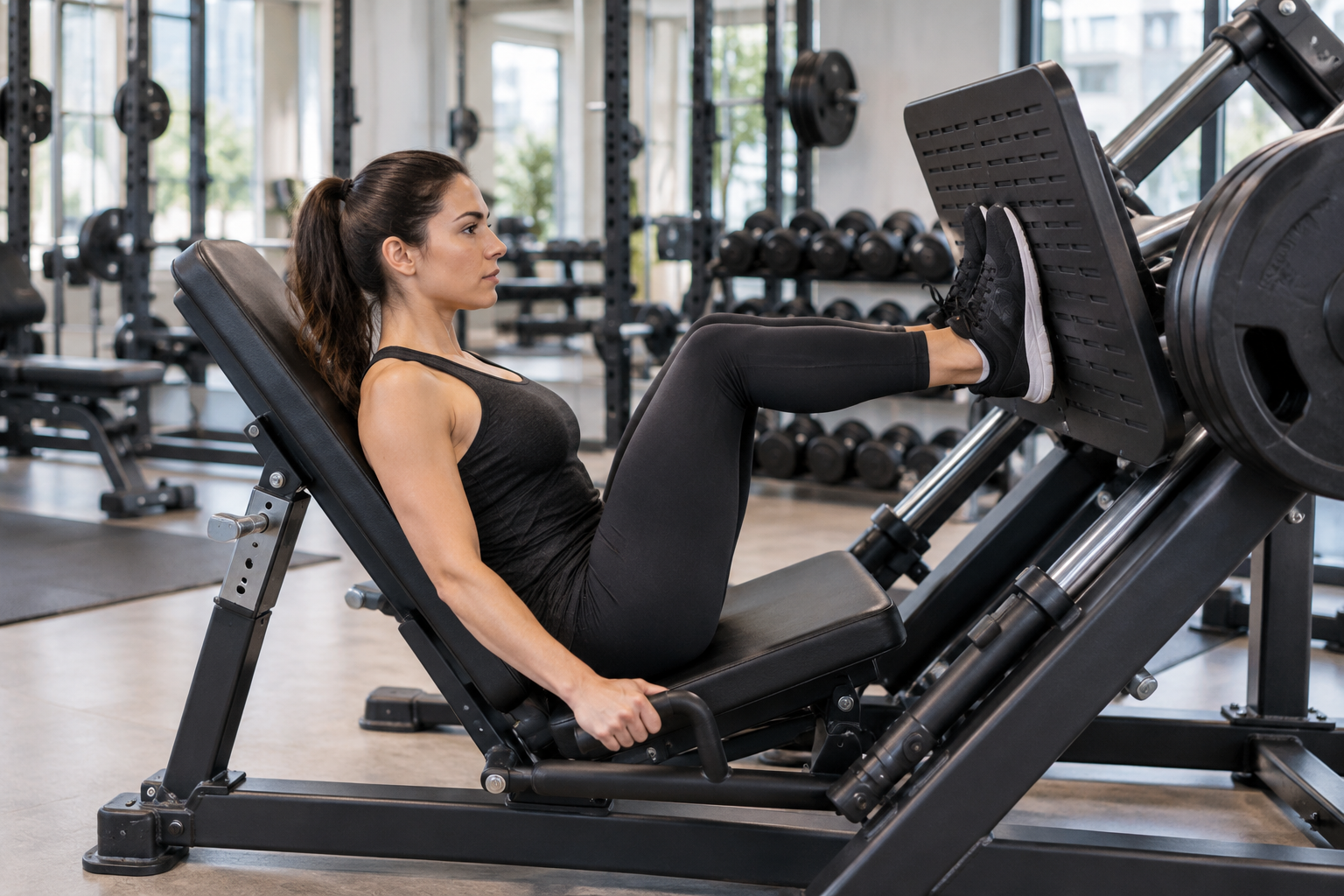
Italian gym equipment suppliers: evaluating offers and services
Choosing a supplier means organizing a relationship that can continue after delivery. The purchasing manager must understand which products they will receive, who will install them, and how requests for support or spare parts will be handled. A large catalog alone does not answer these questions.
To compare Italian gym equipment suppliers, it is best to prepare a common request and verify the answers through documents and concrete conditions. Local presence can be useful, but it does not automatically demonstrate availability, fast timelines, or a specific origin of the products.
This guide proposes a selection method for anyone who needs to set up or update a facility. It does not present a ranking or attribute performance to specific operators; it helps distinguish the characteristics of the offer and the responsibilities that will accompany the purchase.
The starting point is the gym project. Without planned activities, users, space, and service requirements, even a detailed quote risks describing an irrelevant configuration. Commercial comparison becomes useful when all interlocutors respond to the same needs.
Imagine receiving two proposals for the same strength area. The first includes products and transport; the second adds internal handling and assembly. Before discussing the discount, the manager must understand who will perform the excluded activities and whether their cost is already available. Only then do the totals describe comparable alternatives.
Another case involves two models with similar names but different adjustments. If a machine does not adapt to the planned activities, its immediate availability does not solve the need. The comparison must return to the requested function, verifying the specifications and real conditions rather than considering any product in the same category equivalent.
These examples can become standard questions to include in the initial request, so each interlocutor knows from the beginning the expected level of detail.
- Define the supply request
- Understand the operator's role
- Evaluate the proposed products
- Clarify logistics and installation
- Examine support and spare parts
- Compare the total cost
- Make a documented decision
Define the supply request
Functions and quantities
Prepare a list of the activities the gym must offer and link them to the required categories. Indicate quantities, expected frequency, and user characteristics without turning a preference into an unverified technical requirement. The supplier will be able to propose models, but must explain how they respond to the request.
Distinguish essential equipment from options. If some products are intended for a later expansion, declare this and verify any consequences on space and compatibility. An offer built in this way allows comparing different phases without confusing essential functions and optional accessories.
Information about the premises
Share floor plans, access points, and known conditions, highlighting what still requires verification. Passage width, stairs, and the location of rooms can alter delivery and assembly. The quote must identify the assumptions used, avoiding missing information being considered already favorable conditions.
Verifications of the building and systems are the responsibility of the appropriate figures. Ask the supplier which product requirements must be communicated to the technicians and which services are included in their offer. A layout proposal does not automatically equate to a complete evaluation of the property.
Understand the operator's role
Manufacturer, distributor, and installer
Identify who sells, who manufactures, and who performs the operational services. An interlocutor can play multiple roles or coordinate different subjects. This distinction helps understand from whom to obtain data sheets, technical confirmations, and installation instructions, without assuming that every activity is performed directly by the seller.
Ask how communications are handled when a problem involves multiple parties. The client should know the contact person and the procedure, rather than reconstructing responsibilities after delivery. This information must be consistent with the actual conditions of the supply.
Location and origin of products
A supplier based in Italy can market products of different origins. If origin is relevant to the request, ask for relevant documentation on the model and do not deduce it from the company address. Design, assembly, and production can also refer to different phases.
Geographical proximity can facilitate site inspections or contacts, but the available services must be confirmed. Do not take a local warehouse, a nearby technician, or a specific delivery for granted. Evaluate documented commitments and service conditions, not just the distance on the map.
Evaluate the proposed products
Data sheets and intended use
Request the model, configuration, dimensions, and declared intended use. For a shared room, verify that the expected frequency and operating conditions are consistent with the instructions. A professional commercial definition does not replace the limits and information of the individual product.
Read weight capacities, power supply, and other specifications in their context. If two data sheets use different definitions, ask for clarification before comparing the figures. Missing information must remain recognizable in the evaluation rather than being completed with favorable assumptions.
Tests and demonstrations
If it is possible to test the equipment, prepare the exercises and operations you want to observe: access, adjustments, use, and cleanup. Involve staff and representative users, respecting instructions and limits. A useful demonstration responds to your facility's needs, not just the flashiest features.
Record observations using the same sheet for each proposal. Ease of use and comfort are useful information, but a short test does not demonstrate durability or quality over time. Compare them with documentation, planned maintenance, and support conditions.
Clarify logistics and installation
Delivery to the final location
Distinguish transport, unloading, internal handling, and positioning. Curb-side delivery is different from the arrival of the machine in the final room. Specify access points and route conditions, and ask which activities are included, which are excluded, and which depend on further verifications.
Define who receives the goods, how components are checked, and how to report any damage or discrepancies. Materials delivered before the premises are ready require compatible storage space. The schedule must consider these conditions and not just the shipping date.
Assembly and handover to staff
Ask who will perform the assembly and which prerequisites of the premises must be completed. Connections, fasteners, and verifications must follow the product instructions and involve qualified professionals when necessary. Avoid implicit boundaries between site preparation and the installers' work.
Before use, staff must know the adjustments, limits, and reporting procedures. Verify whether an initial demonstration is included and which documents will be delivered. An assembled product is not automatically integrated into the gym's daily procedures.
Examine support and spare parts
After-sales procedures
Request the support channel, the information needed to open a request, and the intervention conditions. Times, coverage, and costs must be confirmed in the offer or applicable conditions. The presence of a telephone number alone does not describe the available service.
If certain interventions are performed by external parties, clarify how they are coordinated. The gym manager must know who to contact and how to communicate the machine's status to the shifts. Do not assume that installation and maintenance are included in the same agreement.
Compatibility and availability
For equipment spare parts, ask how to identify codes and models and what information to keep. An apparently similar part is not automatically compatible. The gym plan should connect the serial number, manual, and intervention history.
An operator like Donatif can be consulted for categories and proposals; the availability, services, and conditions of the models must still be verified directly. The catalog is a starting point for formulating questions, not a confirmation of every requested service.
Compare the total cost
Make offers homogeneous
Create a grid with products, configurations, delivery, assembly, documentation, and services. Separate options and make exclusions evident. Two totals are not directly comparable when one includes services that the other leaves to the client.
For every difference, ask for an explanation and, if necessary, a revision of the proposal. Do not automatically attribute higher quality to the higher amount or greater convenience to the lower one. The evaluation concerns what you will receive and the conditions to use it.
Commitments and variations
Examine the validity of the offer, payment, schedule, and methods for managing modifications. If a model can be replaced, ask how equivalence and compatibility with the project will be verified. A variation can affect footprint, maintenance, and premises requirements.
When relevant contractual issues arise, involve the competent professional. The purchasing manager should maintain a summary of the agreed conditions and received confirmations. This file connects the approved quote to the actually delivered supply.
Make a documented decision
Priorities and open verifications
Prioritize requirements before the final choice: essential functions, space compatibility, management ease, and necessary services. Identify elements not yet confirmed and who must resolve them. An important open point should not be hidden inside a generic numerical evaluation.
If the preferred proposal requires clarification, ask for it before placing the order. The comparison must be understandable even to those who did not participate in the meetings: a table with data, sources, and motivations helps explain why a solution best meets the gym's needs.
From choice to collaboration
Upon delivery, verify products and documents against the agreement and record any discrepancies. After launch, gather observations on installation, support, and ease of obtaining information. This data can improve future requests without turning a single episode into a general judgment on the entire sector.
Update the file with actual models, contacts, and interventions. The relationship with the supplier remains useful when responsibilities and procedures are clear to the staff. In this way, the purchase becomes part of the facility's management and does not end with the initial price comparison.
Comments (0)