
Trolley
You have no items in your shopping cart

 Budgets
 Dumbers
 Discs
Discs
 Benches
 Racks and Rigs
 Weights Holders
 Isotonic machines
 Calisthenics
 Cardio
 Kettlebells
 Flooring
 Gym Set
 Accessories
 Combat
 ARTI MARZIALI
 CONTAINER GYM
 Tug-Of-War
 Used Gym Equipment
 PILATES MACCHINARI
 GINNASTICA ARTISTICA
 CAMPI DA PADEL
 Prodotti in Pronta Consegna
 Informazioni
 IRONMAN
 Gift Card
- Donatif
- General information
- 0 I like it
- 505 Views
- 0 comments
- gym flooring, safety flooring, gym safety, shock-absorbing materials
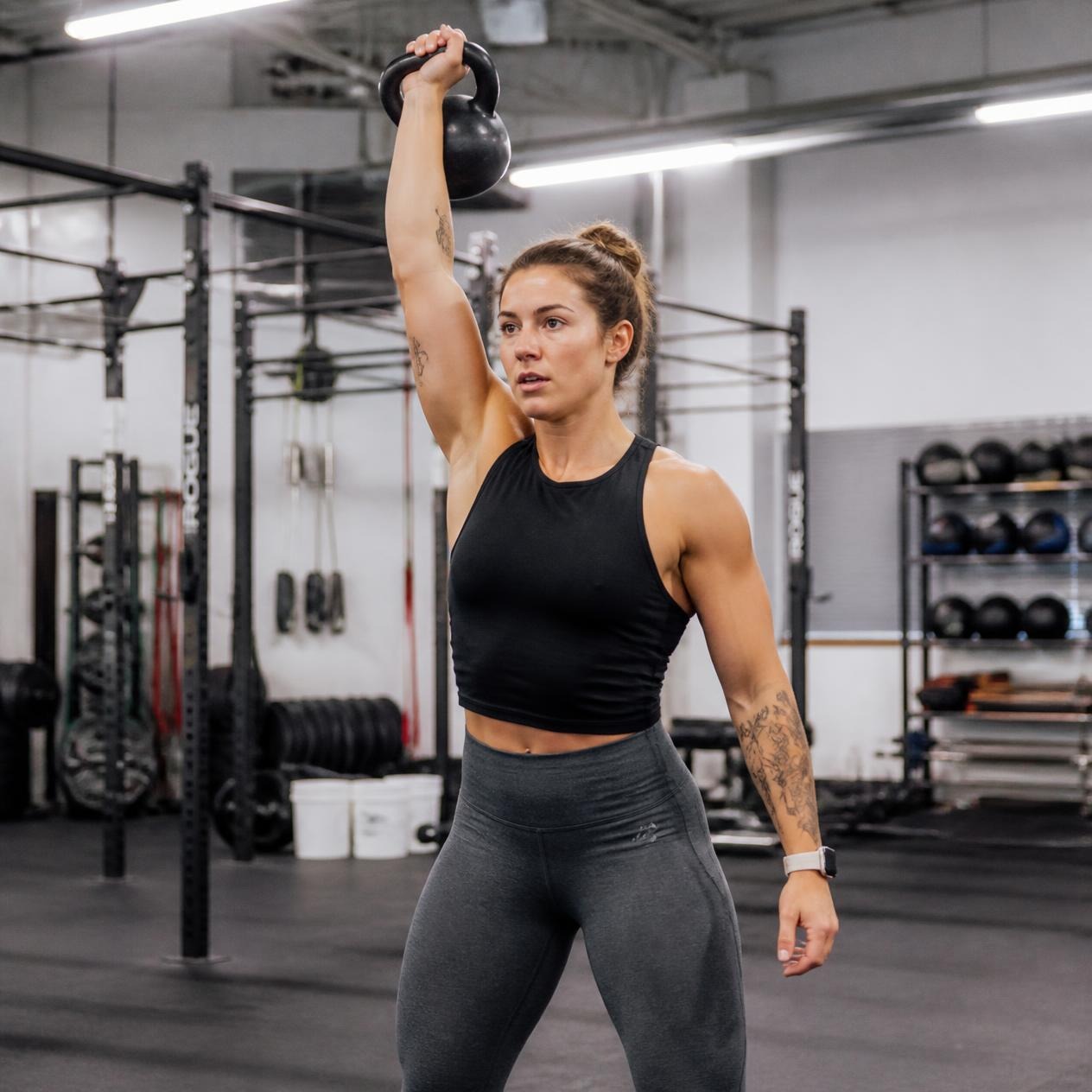
Kettlebell Workout Program for Beginners: From Zero to 100 Swings
Starting a kettlebell workout can seem challenging, especially for those who train at home and have little time. The good news is that a single piece of equipment is enough to build strength, improve cardiovascular endurance, increase coordination, and develop better body composition. The kettlebell is, in fact, one of the most versatile tools in the functional training landscape, capable of offering complete workouts without the need for a gym full of machines.
To achieve concrete results, it is essential to follow a structured progression. Many beginners make the mistake of performing hundreds of repetitions without proper technique or increasing volume and intensity too quickly. A well-constructed program, on the other hand, allows you to acquire fundamental movements, improve the quality of execution, and gradually prepare the body to sustain higher workloads.
In this guide, you will discover a four-week progressive program designed for those starting from scratch who want to reach 100 swings safely. We will analyze the main exercises, the distribution of workouts, the most frequent mistakes, and the best strategies to achieve lasting results while training comfortably at home.
- Why choose the kettlebell
- Week 1: learning the basics
- Week 2: increasing volume
- Week 3: building endurance
- Week 4: reaching 100 swings
- Technical tips
- Mistakes to avoid
- Why follow a structured progression
Why choose the kettlebell for home training
The kettlebell allows you to perform complete workouts even in small spaces. Thanks to the particular shift in the center of gravity compared to a traditional dumbbell, it constantly engages stabilizing muscles, the core, and the posterior chain.
For those who work long hours and have little time, it represents an extremely efficient solution. In 20-30 minute sessions, it is possible to train practically the entire body, simultaneously improving strength, endurance, and cardiovascular capacity.
A further advantage consists of the ease with which it is possible to progressively increase the workload without completely changing the program. A few variations in sets, repetitions, or recovery times are enough to continue improving.
Main benefits
Dynamic work improves functional strength, coordination, balance, and muscular endurance, making the kettlebell ideal for both beginners and more experienced users.
What you need
To start, all you need is a kettlebell of a weight appropriate for your level, a free space, and a mat for floor exercises.
Week 1: learning the fundamental movements
The first week is dedicated exclusively to technical learning. The goal is not fatigue, but the quality of movement.
The three weekly sessions include simple exercises such as hip hinges, kettlebell deadlifts, planks, and bodyweight squats. The swing is introduced only after having acquired correct hip extension.
By the end of the week, the beginner should be able to complete small sets of swings while maintaining stable and controlled technique.
Workout schedule
Three weekly workouts with 3-4 exercises, full recovery, and maximum attention to execution.
Goal
Create solid motor foundations that allow you to tackle the following weeks without compensations.
Week 2: gradually increasing volume
Once the technique is acquired, it is possible to increase the total number of repetitions while always maintaining good execution quality.
In this phase, the first simple circuits that alternate swings, goblet squats, and presses enter the program. The work remains oriented toward learning but introduces a greater cardiovascular stimulus.
The progression must be gradual, avoiding reaching muscle failure.
Work volume
Increase swings to about 40-50 total repetitions distributed in short sets.
New exercises
Progressively insert kettlebell workout plan with goblet squats, military presses, and rows.
Week 3: building strength and endurance
The third week introduces more metabolic work while still maintaining sufficient breaks to preserve technical quality.
The sessions become more dynamic and include full-body circuits that involve the legs, torso, and upper body.
The goal is to manage a high number of swings without losing control of the movement.
How to increase the load
Increasing the number of sets rather than the duration of individual sequences helps keep quality high.
Recovery management
60-90 second recoveries allow you to maintain high force production throughout the session.
Week 4: reaching 100 swings
The last week represents the culmination of the progression. The body is now prepared to sustain a significantly higher volume of work than at the beginning.
The 100 swings are not performed consecutively but distributed in manageable sets, for example, ten sets of ten repetitions or five sets of twenty, depending on the individual level.
Completing this milestone means having developed a good technical foundation and decent cardiovascular capacity, paving the way for more advanced programs.
How to distribute repetitions
Dividing the work allows you to keep technical quality constant until the last set.
Evaluating progress
Recording times, recoveries, and perceived exertion helps plan subsequent workouts.
Technical tips for better results
During the swing, force must be generated mainly by the hips and not the arms. The kettlebell is projected thanks to the explosive extension of the pelvis.
Keeping the back neutral and the core active reduces the risk of overloading the lumbar area.
For those training at home, occasionally recording your technique can be a valuable tool for improvement.
Breathing
Exhaling air during the explosive phase improves stability and movement control.
How often to train
Three weekly sessions are generally sufficient to achieve constant progress while leaving room for recovery.
The most common beginner mistakes
Many start by using excessive weight, thinking they will get results more quickly. In reality, a kettlebell that is too heavy compromises technique and increases the risk of injury.
Another frequent mistake is turning the swing into a squat. The correct movement instead derives from a hip hinge, with a powerful extension of the hips.
Neglecting recovery, skipping the warm-up, or increasing volume too quickly are further behaviors that slow down progress.
Choosing the load
It is better to start with a manageable weight and increase it only when the technique is stable.
Technique first, then intensity
Every repetition should be performed with the same quality level as the first.
Why a structured progression really makes the difference
Following a progressive program allows you to build solid foundations without improvising. The gradual increase in work volume reduces the risk of injury and makes improvements more sustainable over time.
For those who wish to train independently, well-organized planning represents an investment in their consistency. Even with a single tool, it is possible to develop strength, improve posture, and obtain a complete workout. Exploring methodologies and programs dedicated to functional training through full body kettlebell can offer further ideas for building increasingly effective paths.
The 100-swing milestone does not represent an end point, but the beginning of a growth journey. Once good technique is acquired, it will be possible to introduce more advanced exercises, progressively increase the load, and exploit all the potential offered by kettlebell training.
Comments (0)