
Trolley
You have no items in your shopping cart

 Budgets
 Dumbers
 Discs
Discs
 Benches
 Racks and Rigs
 Weights Holders
 Isotonic machines
 Calisthenics
 Cardio
 Kettlebells
 Flooring
 Gym Set
 Accessories
 Combat
 ARTI MARZIALI
 CONTAINER GYM
 Tug-Of-War
 Used Gym Equipment
 PILATES MACCHINARI
 GINNASTICA ARTISTICA
 CAMPI DA PADEL
 Prodotti in Pronta Consegna
 Informazioni
 IRONMAN
 Gift Card
- Donatif
- General information
- 0 I like it
- 71 Views
- 0 comments
- gym flooring, safety flooring, gym safety, shock-absorbing materials
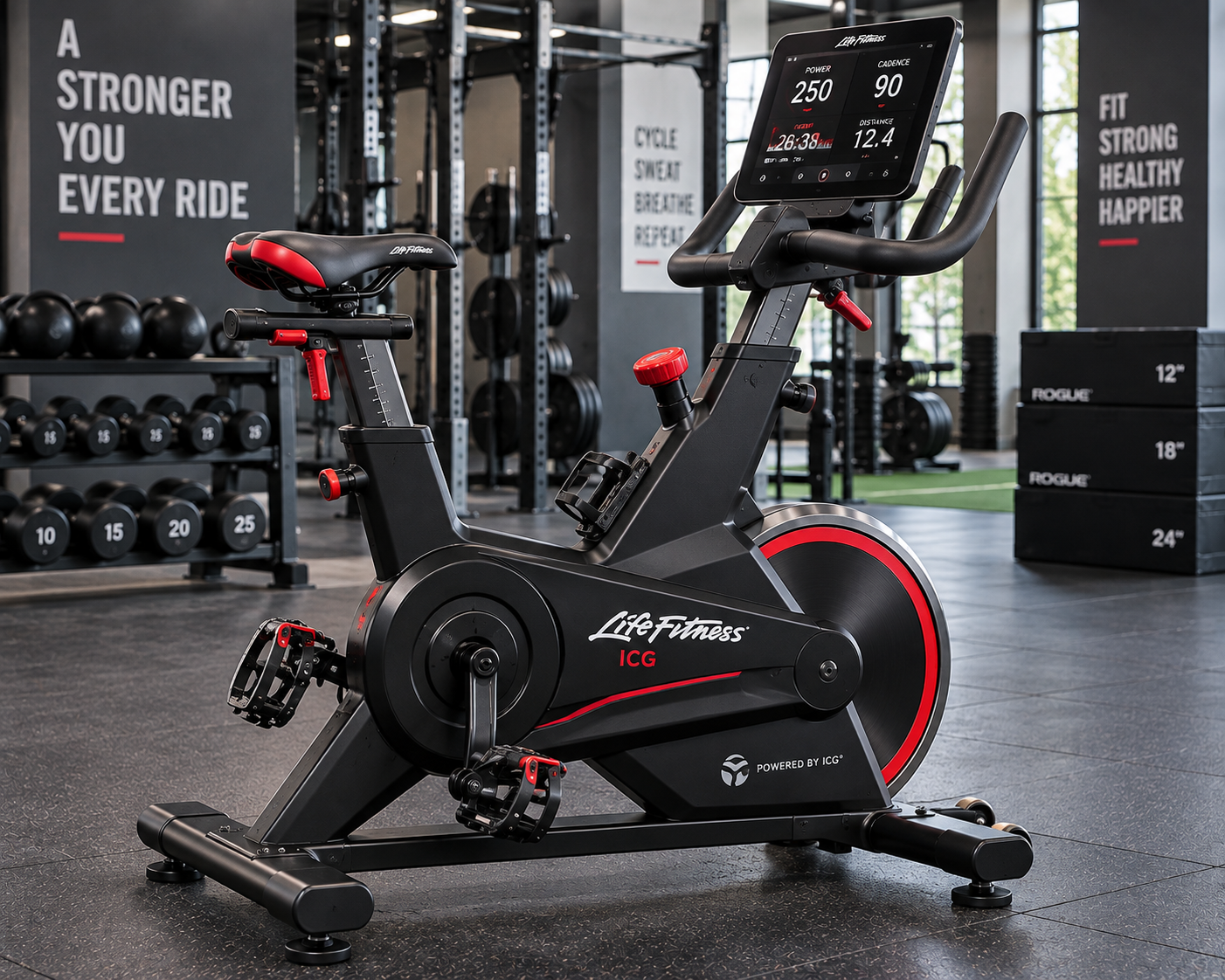
Professional exercise bike maintenance: pedals and drivetrain
Proper maintenance of a professional exercise bike is essential to guarantee operational continuity, comfort during pedaling, and reduced machine downtime. Among the components that require the most attention are the pedals and the drivetrain system, which are subjected to constant stress during daily use in a gym, hotel, or fitness center.
A preventive maintenance strategy makes it possible to promptly identify any signs of wear before they turn into more complex failures. The goal is not only to preserve the machine's performance but also to schedule interventions without interrupting the service offered to users.
This guide brings together practical criteria for checking pedals and the drivetrain, recognizing the main signs of wear, planning periodic checks, and correctly managing maintenance in compliance with the manufacturer's instructions.
- Quick answer
- What to check on pedals and drivetrain
- Inspection frequencies
- Signs of wear to recognize
- Cleaning and preventive maintenance
- When to intervene or replace components
- Errors to avoid
- Why maintenance protects the investment
How to keep a professional exercise bike efficient?
Maintenance should be scheduled following the instructions in the manufacturer's manual and include periodic checks of the pedals, drivetrain, adjustments, and fasteners. Constant verification makes it possible to promptly identify any anomalies and reduce the risk of service interruptions.
A properly maintained machine retains more consistent performance over time and allows for more predictable operating cost management.
Each intervention should be recorded within the facility's maintenance plan to facilitate the scheduling of subsequent checks.
What is the goal of maintenance?
To preserve reliability, safety, and operational continuity through regular checks and scheduled interventions.
Why follow the manufacturer's manual?
The procedures indicated by the manufacturer represent the main reference for control frequencies, cleaning, and replacement of parts subject to wear.
What to check on pedals and drivetrain?
The pedals constitute one of the points subjected to the greatest stress during daily use. It is advisable to periodically check their correct fastening, the integrity of the contact surfaces, and the absence of abnormal play.
The drivetrain system also deserves special attention because it directly affects the smoothness of pedaling. Any unusual noises, vibrations, or irregularities during movement represent elements that require further checks.
During checks, it is also advisable to observe the general state of the structure and adjustments to identify any easily recognizable anomalies.
What checks should be performed on the pedals?
Check stability, correct tightening, the condition of the contact surfaces, and the presence of any visible signs of wear.
How to check the drivetrain?
It is advisable to verify that the movement is smooth, free of abnormal noise, and compliant with the manufacturer's instructions.
How often should checks be performed?
The frequency of maintenance depends on the intensity of machine use and the instructions contained in the technical documentation provided by the manufacturer.
Facilities with intensive use can schedule frequent visual checks accompanied by periodic technical verifications planned according to the maintenance plan.
Preventive management allows interventions to be distributed over time, avoiding sudden machine downtime.
What checks should be performed daily?
Visual checks of the machine's stability, the condition of the pedals, adjustments, and the absence of obvious anomalies.
When should in-depth checks be carried out?
According to the schedule provided by the manufacturer or after particularly intense use or a maintenance intervention.
What signs indicate possible wear?
A variation in pedaling smoothness, unusual noises, or irregular movements can represent signs that require technical verification.
Visibly worn components, unstable fasteners, or adjustments that do not properly maintain their position also deserve a check before continuing use.
It is important not to automatically attribute these symptoms to a single cause but to follow a verification procedure compliant with the manufacturer's instructions.
When do noises require attention?
Any unusual noise should be checked to identify its origin before the machine continues to be used.
Why observe the smoothness of movement?
Regular pedaling represents one of the indicators of the machine's correct operation.
How to perform cleaning and preventive maintenance?
Periodic cleaning helps keep the equipment in good condition and facilitates the identification of any anomalies during visual checks.
It is advisable to use exclusively procedures and products compatible with those provided by the manufacturer, avoiding interventions not indicated in the technical documentation.
To design a complete cardiovascular training area, it is possible to integrate the exercise bike with other professional cardio machines while maintaining a consistent maintenance program for all of them.
Which surfaces should be cleaned?
External surfaces, contact areas, and parts indicated by the manufacturer should be kept clean according to the established procedures.
Why log interventions?
Logging allows you to monitor the machine's history and more effectively plan future checks.
When to replace or have a component checked?
The replacement of parts subject to wear should take place according to the manufacturer's instructions or when technical checks highlight the need for intervention.
In the presence of persistent anomalies, it is advisable to temporarily suspend the use of the machine until the required checks are completed.
The availability of spare parts and qualified assistance service represents an important element in managing a professional exercise bike.
Why use compatible spare parts?
Following the manufacturer's instructions helps keep the machine compliant with the characteristics envisioned during the design phase.
When to contact support?
Any situation that cannot be resolved with routine checks should be handled according to the procedures indicated by the manufacturer.
What errors compromise maintenance?
One of the most frequent errors consists of intervening only when an obvious problem appears instead of scheduling preventive checks.
It is also advisable to avoid modifications not foreseen by the manufacturer, the use of incompatible components, or interventions carried out without following the technical documentation.
Neglecting small signs of wear can make long-term machine management more complex.
Why not postpone checks?
Periodic checks allow you to promptly identify anomalies that could evolve into more demanding failures.
Why always follow the documentation?
Manuals and manufacturer instructions represent the primary reference for every maintenance intervention.
Why does maintenance protect the investment?
Scheduled management of the professional exercise bike helps preserve reliability, operational continuity, and the quality of the user experience.
Periodically checking pedals, the drivetrain, adjustments, and components subject to wear makes it possible to plan interventions and reduce the risk of unexpected machine downtime.
Basing maintenance on the manufacturer's instructions and maintaining an intervention history represents an effective approach to enhancing the long-term investment.
Which component needs to be checked most often?
The frequency of checks depends on the level of use, but pedals, adjustments, and components subject to the greatest stress deserve regular checks according to the maintenance plan.
How to organize maintenance?
Setting up a schedule of checks, logging every intervention, and following the manufacturer's technical documentation allows you to manage the machine more efficiently and systematically.
Comments (0)