
Trolley
You have no items in your shopping cart

 Budgets
 Dumbers
 Discs
Discs
 Benches
 Racks and Rigs
 Weights Holders
 Isotonic machines
 Calisthenics
 Cardio
 Kettlebells
 Flooring
 Gym Set
 Accessories
 Combat
 ARTI MARZIALI
 CONTAINER GYM
 Tug-Of-War
 Used Gym Equipment
 PILATES MACCHINARI
 GINNASTICA ARTISTICA
 CAMPI DA PADEL
 Prodotti in Pronta Consegna
 Informazioni
 IRONMAN
 Gift Card
- Donatif
- General information
- 0 I like it
- 1 Views
- 0 comments
- gym flooring, safety flooring, gym safety, shock-absorbing materials
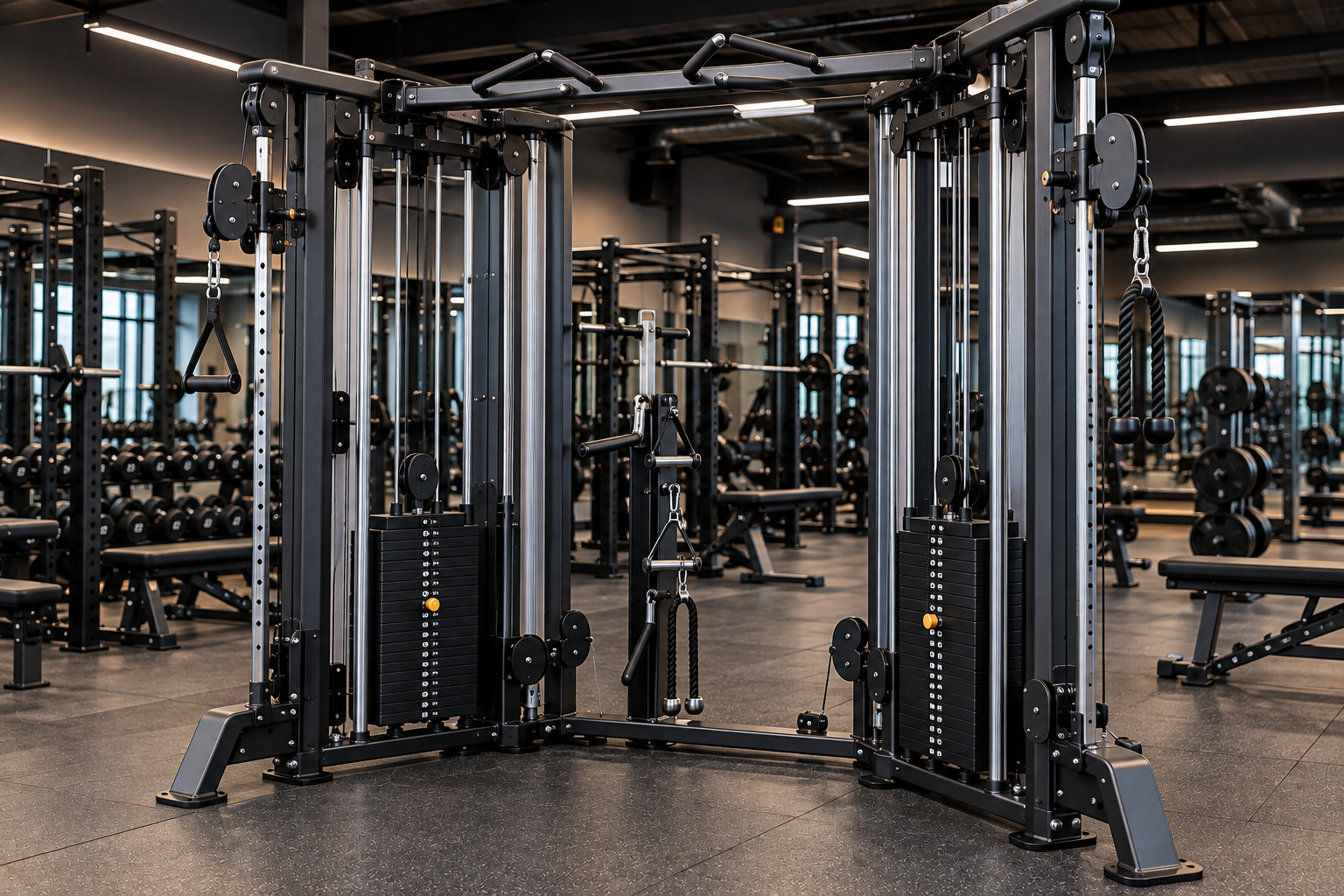
Cable and pulley maintenance for the cable machine: checks, wear and prevention
Cable and pulley maintenance is one of the most important activities to keep a cable machine efficient, safe and smooth during use. Cables, pulleys and sliding systems are in fact subject to continuous stress and require periodic checks to promptly identify any anomalies before they can compromise the machine's operation.
Scheduled maintenance does not only consist of cleaning surfaces, but includes visual inspections, checks for proper sliding, checking fasteners and complying with the instructions in the manufacturer's manuals. Intervening at the first signs of wear generally makes it possible to avoid more extensive damage and reduce machine downtime.
This guide provides practical criteria for organizing cable and pulley maintenance without delving into machine operation, pulley ratio or cable machine selection criteria, which are covered in dedicated articles.
- Quick answer
- What to check during inspections
- Control and maintenance frequencies
- Signs of wear to recognize
- Cleaning and preventive maintenance
- When to replace cables or pulleys
- FAQ
- Why scheduled maintenance is an investment
How to perform cable and pulley maintenance?
Maintenance of the cable machine consists of periodically checking cables, pulleys, fastening and sliding systems, verifying the absence of wear, deformations, abnormal play or visible damage. Operations must be carried out according to the manufacturer's instructions and documented within the gym's maintenance schedule.
Periodic checks make it possible to maintain consistent machine performance and reduce the risk of sudden breakdowns.
Each check should be recorded indicating the date, operator and any anomalies found.
What is the fundamental principle?
To identify the first signs of deterioration before they can compromise safety or the proper functioning of the equipment.
Which documents should be consulted?
User manuals, maintenance instructions and the manufacturer's technical documentation always constitute the main reference for procedures, lubrication and replacements.
What to check during each inspection?
Every check should follow a standardized procedure so as to make verifications comparable over time.
Visual inspections take only a few minutes but often allow anomalies to be identified at an early stage.
Functional checks complete the inspection by observing the machine's behavior during use.
Cable inspection
Check for any fraying, crushing, abnormal bending, wear of the coating, deformations, abrasions, friction points and correct fastening at the ends.
Pulley inspection
Observe correct alignment, smooth rotation, absence of excessive play, cracks, chipping, localized wear or noise during movement.
How often should checks be performed?
The frequency of verifications depends on the intensity of machine usage and the manufacturer's instructions.
Professional facilities should integrate these activities into their normal equipment maintenance schedule.
A defined calendar makes it easier to monitor the machine's status.
Daily checks
Before opening, it is useful to visually check the integrity of the cables, the correct positioning of accessories and the absence of obvious anomalies during some test movements.
Scheduled checks
With a frequency defined by the maintenance plan, it is advisable to carry out a complete inspection of cables, pulleys, adjustment systems, fasteners and moving components, recording every performed intervention.
What signs indicate a potential problem?
Many anomalies can be identified before they turn into actual breakdowns.
Paying attention to small changes helps preserve machine efficiency.
Any anomaly should be evaluated before continuing to use the equipment.
Signs on cables
Fraying, bulges, abrasions, variations in tension, damaged coatings and difficulty in sliding represent indicators that require in-depth checks.
Signs on pulleys
Unusual noises, irregular rotation, vibrations, abnormal friction or incorrect alignment may indicate the need for technical intervention.
How to perform cleaning and preventive maintenance?
Periodic cleaning helps keep the sliding system efficient and makes it easier to spot any defects.
Operations must always comply with the manufacturer's instructions.
The use of unsuitable products can compromise materials and components.
Component cleaning
Remove dust and debris from external surfaces, keep sliding areas clean and avoid the accumulation of dirt that could interfere with the proper functioning of the pulleys.
Preventive maintenance
Periodically check the tightness of accessible elements, verify structural stability and promptly replace components showing signs of deterioration according to the procedures provided by the manufacturer.
When to replace cables or pulleys?
Replacement should not be postponed when defects are identified that can compromise safety or reliability.
Continuing to use deteriorated components can increase the risk of damage to other parts of the machine.
Replacement should be carried out using compatible spare parts indicated by the manufacturer.
When to replace cables?
It is appropriate to intervene when there is fraying, significant abrasions, permanent deformations or other defects indicated by the manufacturer as replacement criteria.
When to replace pulleys?
Cracks, excessive wear, irregular rotation, abnormal play or structural damage require component replacement before putting the machine back into service.
FAQ
How often should cables and pulleys be checked?
It depends on the intensity of use and the manufacturer's instructions. It is advisable to carry out frequent visual checks and complete inspections according to a scheduled maintenance plan.
Is it possible to continue using the machine if the cable shows minor signs of wear?
Any sign of deterioration should be evaluated before continuing use. If in doubt, it is appropriate to suspend machine usage until technical verification.
Is lubrication always necessary?
Not necessarily. Lubrication procedures vary based on machine design and must follow exclusively what is indicated in the manufacturer's manual.
Why schedule cable and pulley maintenance?
Periodic maintenance of the cable machine allows you to preserve movement smoothness, maintain high safety standards and plan technical interventions before sudden breakdowns occur.
Integrating documented controls, visual inspections and functional verifications within the gym's maintenance schedule makes it possible to monitor the status of the equipment over time and optimize replacement management.
To complete a weight room with equipment designed for professional use, you can evaluate the range of isotonic machines, integrating routine maintenance with the technical instructions provided by the respective manufacturers.
Comments (0)