
Trolley
You have no items in your shopping cart

 Budgets
 Dumbers
 Discs
Discs
 Benches
 Racks and Rigs
 Weights Holders
 Isotonic machines
 Calisthenics
 Cardio
 Kettlebells
 Flooring
 Gym Set
 Accessories
 Combat
 ARTI MARZIALI
 CONTAINER GYM
 Tug-Of-War
 Used Gym Equipment
 PILATES MACCHINARI
 GINNASTICA ARTISTICA
 CAMPI DA PADEL
 Prodotti in Pronta Consegna
 Informazioni
 IRONMAN
 Gift Card
- Donatif
- General information
- 0 I like it
- 783 Views
- 0 comments
- gym flooring, safety flooring, gym safety, shock-absorbing materials
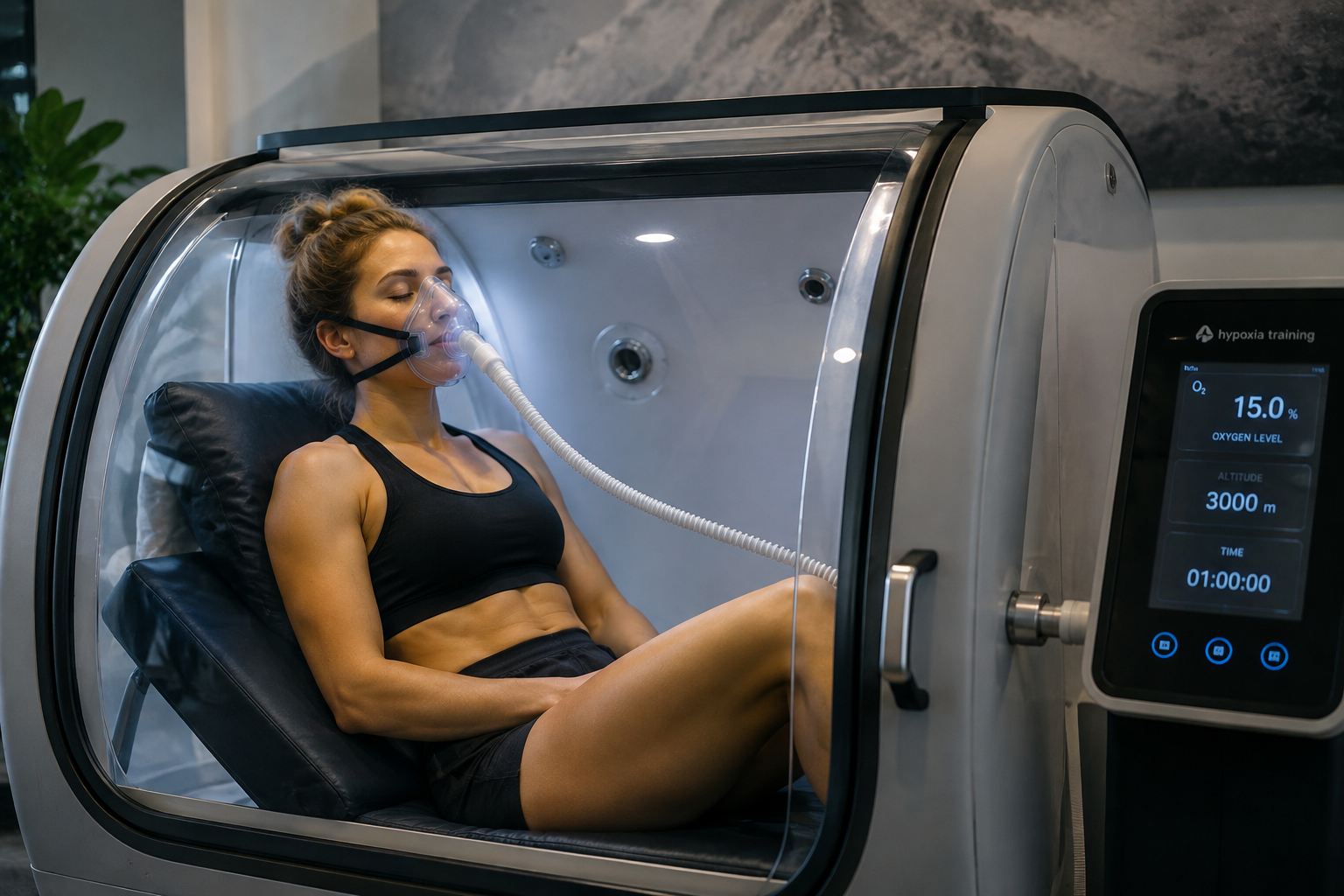
Nutrition and supplementation for hypoxia training: what to eat to support adaptation to simulated altitude
Hypoxia training represents a strategy increasingly used by advanced athletes and performance enthusiasts who want to introduce new physiological stimuli into their preparation. The reduced oxygen availability typical of simulated high-altitude environments requires a specific response from the body, involving processes related to oxygen transport, energy metabolism, and the management of stress produced by exercise.
To obtain the maximum benefit from a hypoxic chamber program, it is not enough to correctly schedule training sessions. Nutrition also plays a fundamental role because it provides the nutrients necessary to support the adaptations required by hypoxic exposure. An inadequate diet can, in fact, limit the body's ability to respond to the stimulus and reduce the quality of the program.
The integration of training, nutrition, and recovery allows for a more complete approach to performance. Elements such as iron, antioxidants, and hydration become particularly important for those who use simulated altitude protocols and want to effectively support hematological and metabolic adaptations.
- The role of nutrition in adaptation to hypoxia
- Iron and oxygen transport during altitude training
- How to structure a diet for hypoxia training
- Antioxidants and management of oxidative stress at altitude
- The importance of hydration during hypoxic protocols
- When to consider specific supplementation for hypoxia
- Common dietary mistakes in hypoxia training
- Building a nutritional strategy for performance in hypoxia
The role of nutrition in adaptation to hypoxia
Exposure to a hypoxic environment modifies the body's demands because the organism must work in conditions characterized by lower oxygen availability. This stimulus activates a series of adaptive responses that involve different systems, from oxygen transport to cellular energy production.
Proper nutrition represents the necessary support so that these processes can occur effectively. Training creates the stimulus, but it is the available nutrients that provide the resources useful for supporting recovery and subsequent adaptations.
For those who use a hypoxic chamber as part of a performance program, diet must therefore be considered an integral part of the programming. Nutrition and training must work together to obtain a balanced response.
Nutrients involved in adaptive processes
Various nutrients participate in the mechanisms involved in adaptation to simulated altitude. Proteins, minerals, vitamins, and antioxidant compounds contribute to the maintenance of physiological functions necessary during periods of intense training.
A varied and balanced diet represents the foundation for ensuring the body has the necessary resources without relying exclusively on supplementation.
Balance between stimulus and recovery
Hypoxia introduces an additional element of controlled stress into the sports program. For this reason, recovery becomes even more important.
An adequate diet allows for the support of energy restoration and promotes better management of accumulated fatigue.
Iron and oxygen transport during altitude training
Iron is one of the most important minerals when talking about adaptation to altitude because it is involved in the production of hemoglobin, a protein fundamental for oxygen transport in the blood.
During hypoxic exposure, the body increases the demand for efficiency in oxygen transport. Adequate iron availability therefore contributes to the proper functioning of the processes that allow for effective oxygen utilization.
A deficiency of this mineral can represent a limit to the ability to adapt and negatively influence the quality of training.
The relationship between iron and altitude
The link between iron and altitude is particularly important in athletes who use hypoxic exposure protocols. Iron metabolism must be monitored especially when training is intense and frequent.
A balanced diet should include food sources of iron adequate to individual needs, considering the type of activity performed and the overall training volume.
Food sources of iron
Iron can be introduced through various foods, both of animal and plant origin. A varied diet allows for an increased probability of meeting daily requirements.
Management of nutrition must, however, be personalized based on the athlete's characteristics and any specific needs.
How to structure a diet for hypoxia training
An effective hypoxia diet must provide sufficient energy to support training while simultaneously ensuring nutrients useful for recovery processes.
Reducing energy intake too much during a period of hypoxic exposure can compromise the body's ability to adapt to the stimulus and increase the perception of fatigue.
The composition of the diet must therefore be built considering training intensity, personal goals, and the frequency of sessions in the hypoxic chamber.
Carbohydrates and energy availability
Carbohydrates represent an important energy source, especially during high-intensity activities. Insufficient availability can negatively influence the quality of sessions.
Carbohydrate management must be adapted to the type of training and the time of day when hypoxic exposure is performed.
Proteins and muscle recovery
Proteins contribute to the maintenance and recovery of muscle mass after exercise.
An adequate protein intake supports the repair processes necessary, especially when the overall training load increases.
Antioxidants and management of oxidative stress at altitude
Intense physical activity naturally produces reactive molecules associated with normal metabolic processes. In conditions of hypoxia, this aspect can take on an even more relevant role because oxygen availability and cellular metabolism are modified.
Antioxidants present in food contribute to the management of oxidative stress produced by exercise, helping the body maintain a balance between the production and neutralization of reactive species.
A complete nutritional strategy must therefore include foods rich in protective compounds without turning supplementation into a substitute for a balanced diet.
Managing oxidative stress at altitude
Exposure to simulated altitude requires careful management of the overall stress generated by training.
Fruits, vegetables, and foods rich in micronutrients can help support normal cellular functions.
The right balance of antioxidants
Antioxidants must be included within an overall strategy that also considers training and recovery.
A balanced approach allows for supporting performance without unnecessarily altering the body's normal adaptive processes.
The importance of hydration during hypoxic protocols
Hydration is an element often underestimated in hypoxia training programs. Proper fluid availability contributes to the maintenance of physiological functions involved in performance and recovery.
During intense or prolonged sessions, a reduction in hydration status can negatively influence the perception of effort and the ability to sustain the planned load.
For this reason, hydration must also be scheduled in relation to training and individual characteristics.
Before the hypoxic session
Arriving adequately hydrated for the session allows for better handling of the training stimulus.
Nutritional preparation prior to the hypoxic chamber represents an important part of the session's quality.
During and after training
Replenishing fluids after the session contributes to recovery and the maintenance of physiological balance.
Needs may vary based on the duration of the activity and environmental conditions.
When to consider specific supplementation for hypoxia
Supplementation can represent additional support when the diet cannot completely cover certain needs. However, it must be considered within a personalized program.
There is no single protocol valid for everyone: requirements depend on the level of training, goals, and individual characteristics.
A professional assessment can help identify any areas on which to intervene.
Situations in which to consider additional support
Periods of intense training, high frequency of hypoxic exposure, or particular sports needs may require greater nutritional attention.
Supplementation should, in any case, complement an already adequate dietary base.
Personalizing the strategy
Every athlete has different needs, and personalization represents the most important principle.
An individual approach allows for avoiding generic choices that are not consistent with goals.
Common dietary mistakes in hypoxia training
One of the most frequent mistakes consists of underestimating the importance of nutrition during a hypoxic program. Training creates the stimulus, but recovery depends on the available resources.
Another mistake concerns the search for quick solutions through supplements without proper organization of the daily diet.
An effective strategy must start from the basics and integrate any support only when truly necessary.
Reducing calories too much
An excessive energy deficit can compromise recovery and reduce the quality of training.
Energy balance must be evaluated in relation to personal goals.
Neglecting vitamins and minerals
Micronutrients such as iron and antioxidant compounds perform important functions in the physiological processes involved in performance.
A diet that is not varied can limit the support necessary during hypoxic exposure.
Building a nutritional strategy for performance in hypoxia
Nutrition represents a fundamental element for enhancing the benefits of a hypoxic chamber program. A correct strategy allows for supporting the body's adaptations and better handling the overall training load.
Iron, antioxidants, hydration, and an adequate energy intake are components that must be considered within an organized and consistent approach.
For those who use hypoxia as a tool for performance improvement, integrating training and nutrition means creating the best conditions to transform the simulated altitude stimulus into a structured and sustainable path.
Comments (0)