
Trolley
You have no items in your shopping cart

 Budgets
 Dumbers
 Discs
Discs
 Benches
 Racks and Rigs
 Weights Holders
 Isotonic machines
 Calisthenics
 Cardio
 Kettlebells
 Flooring
 Gym Set
 Accessories
 Combat
 ARTI MARZIALI
 CONTAINER GYM
 Tug-Of-War
 Used Gym Equipment
 PILATES MACCHINARI
 GINNASTICA ARTISTICA
 CAMPI DA PADEL
 Prodotti in Pronta Consegna
 Informazioni
 IRONMAN
 Gift Card
- Donatif
- General information
- 0 I like it
- 10 Views
- 0 comments
- gym flooring, safety flooring, gym safety, shock-absorbing materials
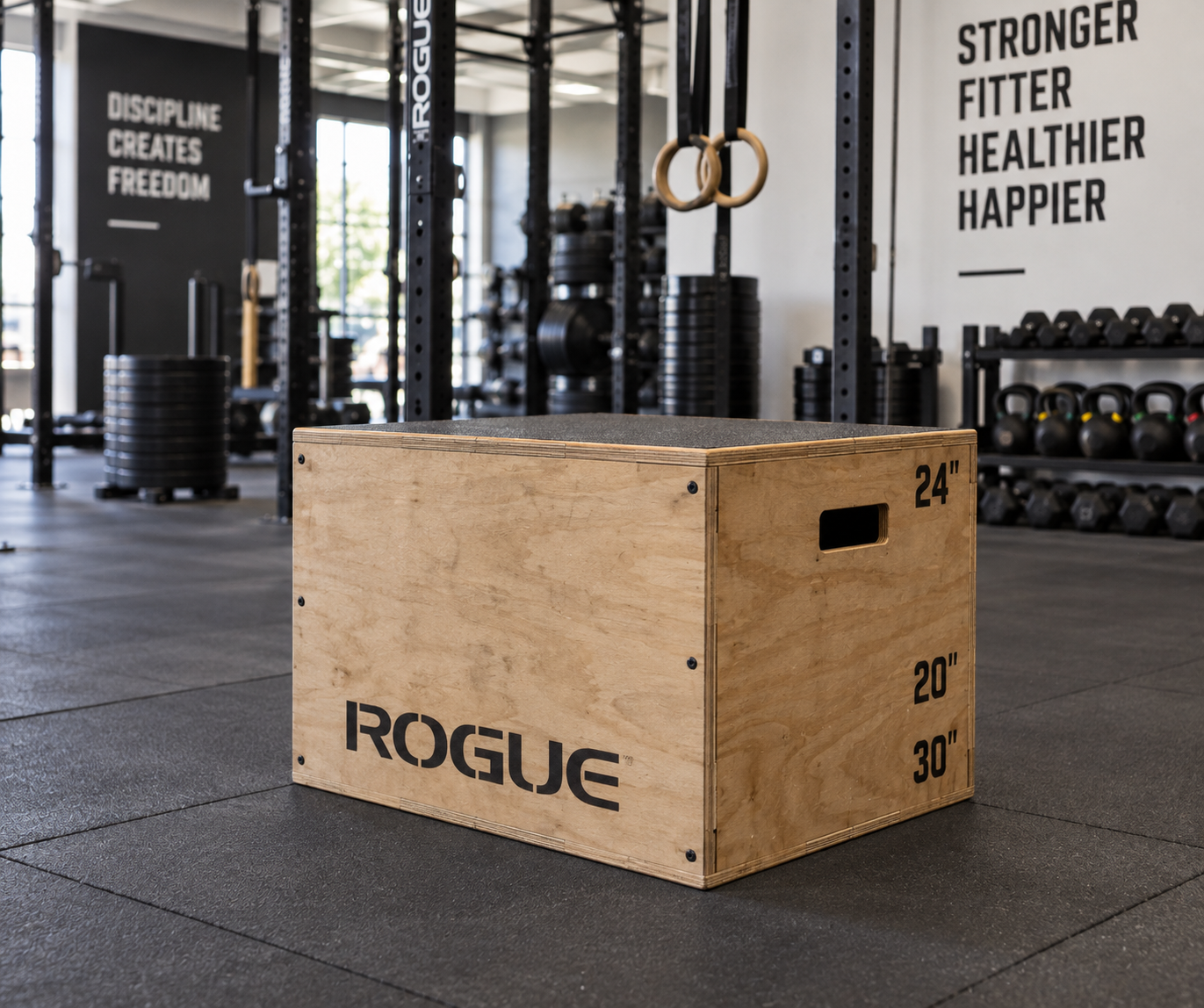
Plyo box safety: how to prevent tipping and sliding
Safety during plyometric exercises depends on a combination of factors that include equipment quality, correct positioning, execution technique, and checks performed before each use. A stable plyo box reduces the risk of accidents but does not eliminate the need to follow proper procedures.
The most frequent issues involve the structure tipping over during a jump, sliding on the floor, incorrect landings, and choosing a height unsuitable for the user's level. For this reason, it is important to evaluate objective criteria before purchasing and to follow a verification routine before every workout.
This guide brings together practical criteria for choosing a plyo box, checking its stability, and using it more safely both in home gyms and professional fitness centers, focusing exclusively on operational safety aspects.
- Quick answer
- What are the main risks
- Safety requirements
- Pre-use checks
- Common mistakes to avoid
- Materials and stability
- Space and flooring
- How to choose the most suitable model
Quick answer
Plyo box safety depends above all on structural stability, grip on the floor, material integrity, and the use of a height consistent with the user's level. Before each session, it is advisable to check that the box has no play, deformations, or slippery surfaces.
A stable box must remain firm even when subjected to lateral stress with moderate manual pressure. Any movement or wobbling represents a warning sign to investigate before working out.
The choice of equipment must always consider the type of exercises planned, the frequency of use, and the environment in which it will be used.
How to check stability
Before use, it is advisable to push the box from multiple sides, checking that the corners do not lift and that the structure rests evenly on the floor.
Why grip matters
A stable support surface reduces the risk of shifting during the jump, especially when performing repeated high-intensity sets.
What are rum principais
Tipping can occur when the athlete's weight is applied near the edge or when the structure has a base that is too small relative to its height.
Sliding primarily affects smooth, dusty floors, or surfaces not designed for sports activities. Even a perfectly constructed box can lose grip if placed on an unsuitable surface.
Incorrect landing represents another frequent cause of loss of balance and can increase the risk of impact against edges or falls.
When the risk of tipping increases
Jumps with excessive run-ups, landings very close to the edge, or explosive exercises with changes of direction increase the stress on the structure.
Causes of sliding
Dust, moisture, worn-out shoes, and floors with poor grip represent the most common conditions that promote box shifting.
Safety requirements
A good plyo box must use materials suitable for the expected intensity and offer a construction capable of maintaining its shape even after repeated use.
Surfaces must be regular and free of protruding elements that could create accidental impact points during ascent and descent.
For those considering a purchase, it can be useful to consult the section dedicated to gym accessories to compare different available solutions.
Soft or wooden plyo boxes
Soft models reduce impact in case of accidental contact, while wooden ones generally offer a more rigid response. The choice depends on the type of training and the user's experience.
3-in-1 plyo box
Multi-sided models allow you to change the height by rotating the box. It is important to verify that each configuration maintains the same stability as the previous one.
Pre-use checks
A quick inspection before training allows you to identify any issues before they become a risk.
Checking for cracks, loose elements, worn surfaces, and debris on the floor takes only a few minutes but contributes to overall safety.
In professional environments, these checks can be incorporated into standard equipment maintenance procedures.
Visual inspection
Check that the structure has no deformations, damage, or moving parts not intended by the design.
Floor check
The presence of a clean and dry shock-absorbing floor improves the grip of both the box and footwear.
Common mistakes to avoid
One of the most frequent mistakes is immediately selecting a height above one's capabilities instead of progressively increasing the difficulty.
Rushing through sets also often leads to poorly controlled landings and incomplete footing on the box surface.
Neglecting maintenance or continuing to use a damaged box unnecessarily increases operational risk.
Heights that are too high
Plyo box heights must be consistent with the user's experience, technique, and training goals.
Speed without control
Correct execution prioritizes landing precision and movement control over simply increasing the height.
Materials and stability
Materials influence both the durability of the equipment and its behavior during repeated exercises.
A well-designed structure distributes the load evenly and limits unwanted movements during support.
The quality of the finishes also helps maintain a constant level of safety over time.
Build quality
Solid joints and regular surfaces help keep the box stable throughout its entire lifecycle.
Periodic maintenance
Timely replacement of damaged components prevents minor defects from turning into safety problems.
Space and flooring
The box should be placed in an area free of obstacles that allows for ascent, landing, and descent without interference.
The available space must allow for natural movements, avoiding the risk of colliding with other equipment or people.
A regular surface improves overall stability and reduces the risk of accidental shifting.
How much space is needed
It is advisable to maintain a free area around the box sufficient to perform the complete movement safely, adapting it to the planned exercise and environmental characteristics.
Importance of the surface
A clean, dry floor designed for sports use is one of the fundamental conditions for reducing the risk of slipping.
How to choose the most suitable model
For a gym or sports center, the choice should consider intensity of use, number of users, scheduled maintenance, and ease of equipment inspection.
Evaluating price exclusively can lead to overlooking important elements such as stability, build quality, and durability over time. A comprehensive evaluation also considers spare parts availability, simplicity of maintenance, and consistency with the training program.
When comparing different models, it is useful to check materials, base dimensions, surface finish, usability on different floor types, and the presence of clear instructions for assembly, use, and maintenance. If applicable, you should consult the manufacturer's manual and verify compliance with technical standards and relevant safety standards for sports equipment, avoiding basing your choice exclusively on commercial features.
Decision-making criteria
Comparing stability, material quality, ease of inspection, and intended use allows for a more informed investment.
Professional use
In facilities with intensive use, it is advisable to schedule documented periodic checks and promptly replace equipment that shows signs of wear or loss of stability.
Comments (0)