
Trolley
You have no items in your shopping cart

 Budgets
 Dumbers
 Discs
 Benches
 Racks and Rigs
 Weights Holders
 Isotonic machines
 Calisthenics
 Cardio
 Kettlebells
 Flooring
 Gym Set
 Accessories
 Combat
 ARTI MARZIALI
 CONTAINER GYM
 Tug-Of-War
 Used Gym Equipment
 PILATES MACCHINARI
 GINNASTICA ARTISTICA
 CAMPI DA PADEL
 Prodotti in Pronta Consegna
 Informazioni
 IRONMAN
 Gift Card
- Donatif
- General information
- 0 I like it
- 163 Views
- 0 comments
- gym flooring, safety flooring, gym safety, shock-absorbing materials
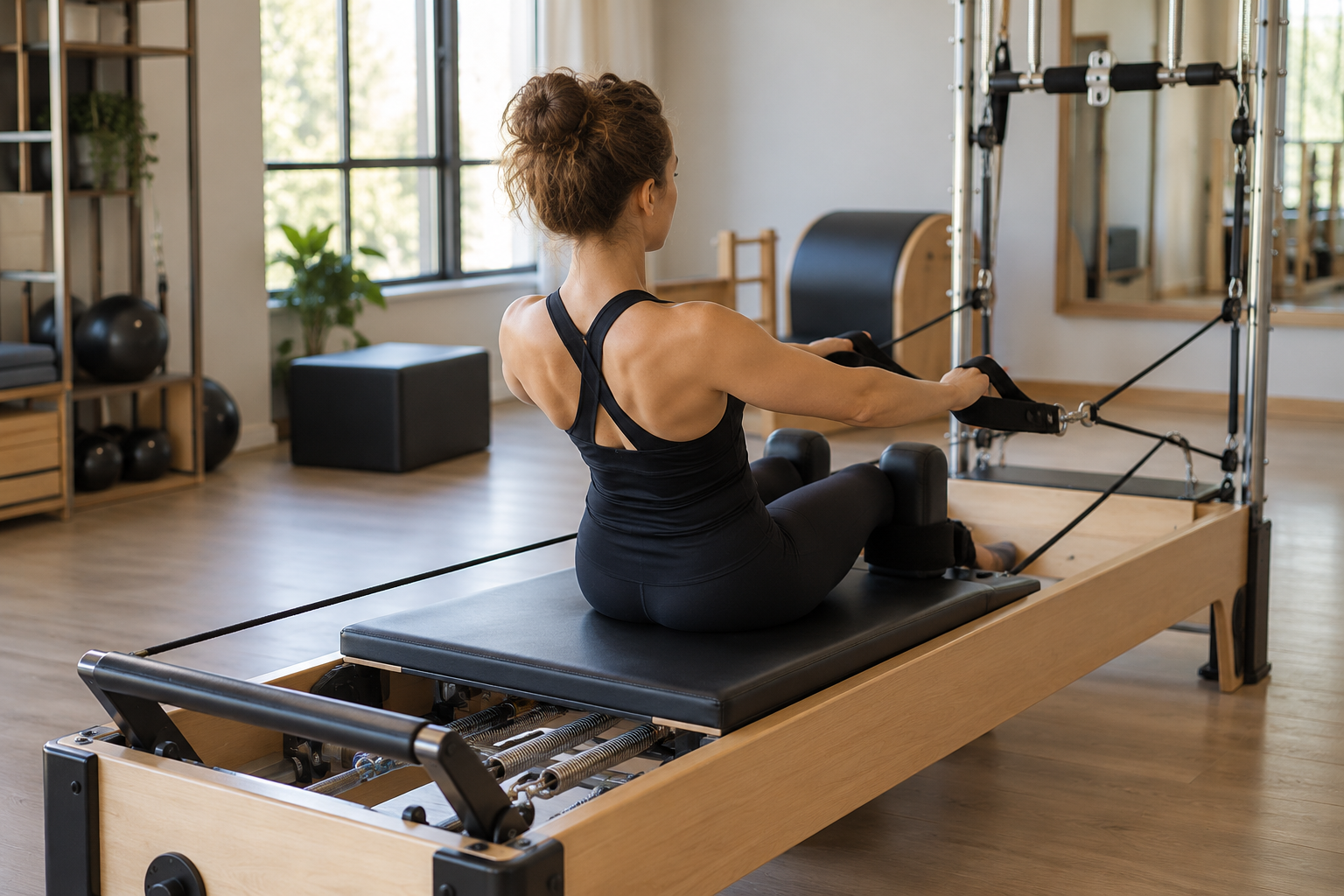
Postural Gymnastics Equipment: Designing a Functional Studio
A studio dedicated to postural gymnastics does not need a standard list of tools. The equipment must start from the proposed activities, the skills of those conducting the sessions, and the characteristics of the people attending the space. Even simple items require space, instructions, and cleaning procedures.
Choosing postural gymnastics equipment in a professional studio therefore means organizing an environment where the professional can observe movement and adapt the proposal. Mats, small tools, and machinery can play different roles, but no product automatically corrects posture.
This guide helps the owner define functions, dimensions, and management criteria. Postural gymnastics does not replace an evaluation or healthcare treatment when necessary: activities must respect qualifications, skills, and individual needs.
Before purchasing, it is useful to describe a typical session, from welcoming to tidy-up. This sequence shows where a person changes position, where the instructor must pass, and which materials must be accessible. Choices thus become connected to daily use rather than just the characteristics of a checklist.
- Define the studio service
- Organize the available space
- Mats and supports
- Small tools for various exercises
- Machinery and dedicated workstations
- Cleaning, maintenance, and storage
- Build progressive equipment
Define the studio service
People, objectives, and format
Describe who will attend the studio, what activities will be proposed, and whether the sessions will be individual or group. The instructor must be able to observe each person and modify an exercise when necessary. A space designed for individual appointments may require a different layout than one intended for small groups.
Avoid defining needs solely based on age or a generic postural label. Experience, ability to move, preferences, and goals change from person to person. An initial interview and the professional's procedures help establish which activities are appropriate and which information requires further exploration.
Boundaries and collaboration
Those who conduct activities must operate within their own competencies and refer the person to a healthcare professional when the situation requires it. New or persistent pain, unusual symptoms, and clinical doubts should not be interpreted as problems to be solved simply by purchasing a tool.
Commercial instructions and exercise proposals must use proportionate language: improving movement awareness or offering training opportunities are different goals from promising cures. This clarity also guides purchasing, avoiding tools selected on the basis of unproven results.
Organize the available space
Movement and observation area
Measure the actually usable surface considering doors, pillars, furnishings, and paths. Draw the footprint of each workstation and the space necessary for movements in different directions. The professional must be able to observe and reach the person without crossing another participant's exercise area.
For floor activities, consider the transition from a sitting or standing position to the mat and back, with appropriate assistance if necessary. In a group, leave space to adapt the exercise as well. Useful capacity does not necessarily coincide with the maximum number of mats that fit in the room.
Access and environmental conditions
Evaluate accessibility, lighting, air exchange, and surfaces in relation to the intended use and applicable regulations. Paths must remain free even when small tools are distributed. Cables, bags, and equipment temporarily placed on the floor can interfere with access.
If you plan for machinery, consult manuals and instructions for dimensions, assembly, and maintenance spaces. When the configuration requires building or system checks, involve competent professionals. A preliminary floor plan does not replace the necessary assessments for the specific room.
Mats and supports
Choosing an appropriate base
The mat must be compatible with the exercises, the underlying surface, and users' needs. Dimensions, stability, material, and ease of cleaning are criteria to be evaluated together. Greater thickness may be comfortable in some positions but change the feeling of support in others.
Try the most frequent activities with the planned equipment, verifying that the mat remains positioned according to the instructions. For those who encounter difficulty working on the floor, adaptations or a different workstation may be needed. The professional decides the solution based on the person and the possibilities offered by the environment.
Cushions, blocks, and rests
Supports of different heights and shapes can help modify a position or make a movement more accessible. They must be stable and suitable for the function indicated by the manufacturer. A soft cushion, a rigid block, and a bench are not automatically interchangeable.
During the trial, observe if the support moves, if the person manages to reach it, and if they can get out of the position with control. Keep sufficient quantities for the group without cluttering passageways. Each variant should have a precise purpose that the instructor can explain.
Small tools for various exercises
Elastic bands and light resistances
Elastic bands and tubes can introduce a gradable resistance or offer a reference during movement. The choice depends on the exercise and the person's ability to control return and grip. Differences in color or name do not ensure equivalence between manufacturers: consult the model's instructions.
Before use, check for cuts, cracks, and signs of wear according to the instructions. Do not attach an elastic band to an unintended point nor stretch it beyond declared limits. If an item is damaged, remove it and replace it with an appropriate product.
Balls, rods, and accessories
Balls and rods can serve as references for position, coordination, or movement, according to the professional's proposal. Size, surface, and stability influence use. An unstable ball may require assistance or an alternative; it is not necessary for every user or goal.
Before proposing a variant, evaluate free space and the ability to control the tool. Keep instructions simple and observe how the person reacts, without presenting an accessory as indispensable to achieve a result. Put materials away immediately after the session to keep pathways accessible.
Machinery and dedicated workstations
When to evaluate a machine
A piece of machinery can expand adjustment and resistance possibilities when it is consistent with the service and the training of the user. Before choosing, describe the exercises you intend to propose, the number of people, and the modifications necessary for different profiles. Declared versatility must translate into effectively usable functions.
Evaluate access, adjustments, instructions, maintenance, and operating space in addition to price. Ask for a demonstration and test daily operations with the staff. A complex machine may require preparation and training time that affects session organization.
Pilates configurations and alternatives
Pilates equipment represents a category to examine when the studio's activities and skills justify it. Functions vary among models: request specifications, limits, and instructions, and verify whether the configuration responds to the exercises that will actually be conducted.
A machine is not mandatory to propose every movement activity. In some contexts, small tools and supports can meet needs; in others, an adjustable workstation can offer useful options. Comparison must consider people, skills, and space rather than a supposed universal ideal equipment.
Cleaning, maintenance, and storage
Daily procedures
Define who cleans contact points, with which products, and at what times. Follow the material instructions, because aggressive detergents or moisture can damage coverings and elastics. A workable procedure between consecutive sessions is more useful than a rule that is difficult to apply.
Periodically check seams, surfaces, adjustment systems, and accessories according to the manufacturer's indications. Identify products to remove from use if they show damage and assign someone the task of handling the report. Cleaning does not replace the required technical maintenance.
Storing without obstruction
Organize shelves and containers so that the most used materials are reachable without lifting or risky movements. Mats and small tools must be able to be dried and stored according to instructions. Do not compress or expose materials to conditions discouraged by the manufacturer.
For machinery, provide the necessary space for checks and assistance. Keep manuals, identification numbers, and supplier references in a place known to the staff. A simple inventory helps recognize missing components and plan replacements before they interrupt activities.
Building progressive equipment
Priorities and field testing
Start from the essential functions for the already defined services and compare multiple configurations with the same criteria. A grid can report planned exercises, users, space, adjustments, cleaning, and maintenance. If information is missing, ask the supplier instead of attributing a feature based on the product name.
An initial phase with essential equipment allows observing how workstations are used, provided it already meets service requirements. Gather feedback from professionals and users on access and ease of use; an individual preference does not prove clinical efficacy, but it can signal a practical problem.
Reviewing choices over time
After opening, compare actual activities with hypothetical ones: which accessories are used, where clutter forms, and how much time cleaning requires. If the number of participants changes, update the layout and procedures before adding equipment.
The choice remains consistent when each element has a function, a space, and a person responsible for its management. Keep supply conditions and verify warranty and assistance of the chosen models. The objective is an adaptable studio, readable for staff and comfortable for the people who frequent it.
Comments (0)