
Trolley
You have no items in your shopping cart

 Budgets
 Dumbers
 Discs
Discs
 Benches
 Racks and Rigs
 Weights Holders
 Isotonic machines
 Calisthenics
 Cardio
 Kettlebells
 Flooring
 Gym Set
 Accessories
 Combat
 ARTI MARZIALI
 CONTAINER GYM
 Tug-Of-War
 Used Gym Equipment
 PILATES MACCHINARI
 GINNASTICA ARTISTICA
 CAMPI DA PADEL
 Prodotti in Pronta Consegna
 Informazioni
 IRONMAN
 Gift Card
- Donatif
- General information
- 0 I like it
- 0 Views
- 0 comments
- gym flooring, safety flooring, gym safety, shock-absorbing materials
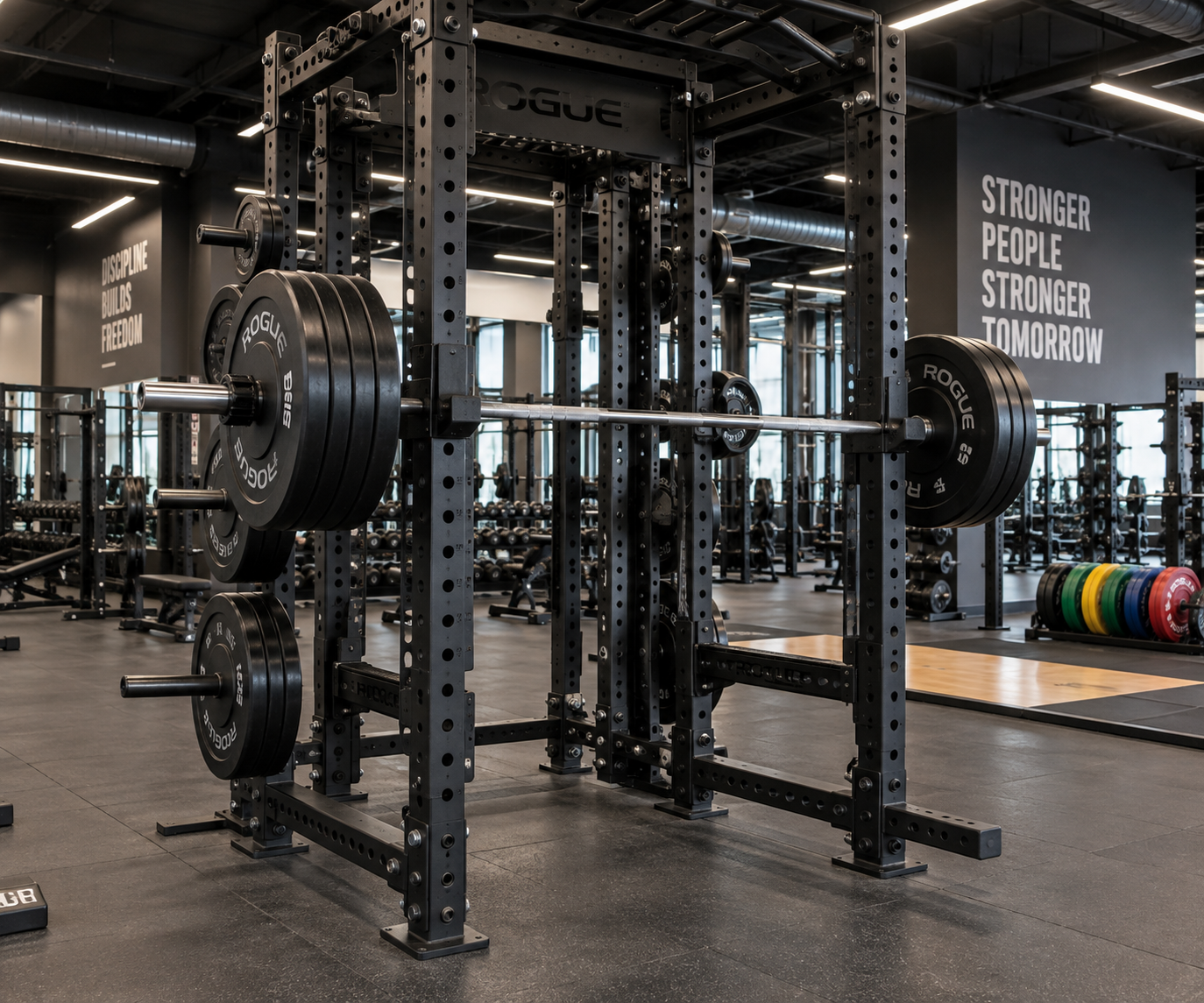
Power power rack maintenance: checks on fasteners and painting
Maintenance of a power rack includes periodic checks of fasteners, structure, painting and components subject to wear, always following the instructions provided by the manufacturer. A preventive maintenance program helps keep the equipment efficient, promptly identify any anomalies and preserve its characteristics over time.
A power rack is subjected to repeated stress during exercises like squats, bench presses and other barbell movements. For this reason it is important to regularly check both structural elements and surface finishes, verifying any signs of deterioration before they require more demanding interventions.
This guide describes what checks to perform, how to recognize the main signs of wear and how to organize routine maintenance without replacing the instructions contained in the manufacturer's technical documentation.
- Which components to check
- How to check fasteners
- Painting inspection
- Cleaning and routine maintenance
- Signs of wear
- Frequency of checks
- Maintenance checklist
- How to plan maintenance
Which components require more attention?
Periodic checks should involve all structural elements and components subject to frequent use.
Among the most important aspects are fasteners, uprights, crossbars, safety systems, barbell supports, installed accessories and the overall stability of the structure.
A systematic check allows you to promptly identify any loosening, deformations or signs of wear before they can compromise the correct use of the equipment.
Why check the structure?
The load-bearing structure represents the main element of the rack and should be inspected by verifying integrity, stability and absence of visible deformations.
Do accessories also require checks?
Yes. Pull-up bars, additional supports, plate holder systems and other accessories should be checked according to the manufacturer's instructions.
How to check fasteners?
Fastening points represent one of the most important elements during routine maintenance.
It is advisable to periodically check the correct tightening of bolts, nuts and structural connections exclusively following the methods reported in the manufacturer's manual.
Any component that shows loosening or anomalies should be checked before continuing to use the rack.
Which elements to check?
Uprights, crossbars, structural connections, safety systems and accessory fastening points represent the areas that require greater attention.
How often to check fasteners?
The frequency depends on the intensity of use and must follow the maintenance schedule provided by the manufacturer.
Why check the painting?
The painting contributes to the protection of metal surfaces and can provide indications on the general state of the structure.
Deep scratches, impacts, chipping or signs of deterioration deserve a check to evaluate any restoration interventions according to the manufacturer's instructions.
Regular cleaning also facilitates the identification of any anomalies on surfaces.
When to intervene?
If the surface shows evident damage it is appropriate to follow the procedures indicated by the manufacturer for coating maintenance.
Why check for any signs of corrosion?
Visual inspection allows early identification of surface alterations that may require further checks.
How to perform routine cleaning?
Regular cleaning helps preserve the rack structure and facilitates periodic inspections.
It is advisable to use products compatible with the materials indicated in the technical documentation, avoiding substances that could damage treated surfaces.
To see the different configurations available you can consult the professional power racks category.
Which products to use?
Detergents should be compatible with the materials and finishes provided by the manufacturer.
Why clean regularly?
A clean surface makes it easier to spot wear, scratches and other signals that require deeper investigation.
Which signs indicate the need to intervene?
The main signs include loosening of fasteners, deformations, damage to the painting, anomalous noise and wear of moving components or accessories.
Any difficulties in adjustments or safety systems also deserve a technical check before continuing use.
Promptly identifying these signs facilitates preventive maintenance.
When to suspend use?
If damaged components, structural anomalies or non-functioning safety systems are detected, it is advisable to interrupt use until technical verification.
Why use compatible spare parts?
Spare parts compatible with the installed model help maintain the characteristics foreseen by the manufacturer.
How often to carry out checks?
The frequency of checks depends on the intensity of use and the instructions reported in the manufacturer's maintenance schedule.
In professional structures it is advisable to carry out frequent visual checks and plan in-depth technical inspections according to the official documentation.
Recording the interventions carried out facilitates future maintenance planning.
Which checks to perform every day?
Structure stability, support integrity, general state of the painting and absence of loose components represent useful checks before use.
Why schedule maintenance?
Regular planning allows you to organize interventions and monitor the evolution of the equipment's state.
Compact maintenance checklist
| Component | Check |
|---|---|
| Fasteners | Fastening check |
| Structure | Stability and integrity |
| Painting | Scratches and deterioration |
| Safety systems | Operation and adjustments |
| Accessories | Compatibility and fastening |
| Cleaning | General surface conditions |
This checklist constitutes a useful reference to organize periodic checks and should be integrated with the maintenance schedule provided by the manufacturer.
Verification methods can vary depending on the model and must always be confirmed by consulting the official technical documentation.
Which documents to consult?
Installation, use and maintenance manuals, technical data sheets and official manufacturer documentation represent the main sources to define checks, frequencies and intervention methods.
Which errors to avoid?
Neglecting small loosenings, using products not compatible with surfaces, modifying the structure or postponing scheduled maintenance are among the most common errors.
How to organize an effective maintenance program?
Correct management of the power rack involves frequent visual checks, scheduled fastener checks, painting monitoring and recording of interventions carried out. This approach facilitates preventive maintenance and helps keep the equipment in the conditions foreseen by the manufacturer.
Before purchase it is also useful to evaluate ease of access to fastening points, availability of spare parts, completeness of technical documentation and simplicity of maintenance operations. These aspects affect the overall management cost throughout the entire life cycle of the equipment.
FAQ
Do fasteners need to be checked frequently? The frequency depends on the use of the rack and must follow the maintenance schedule indicated by the manufacturer.
Does the painting also have a technical function? In addition to the aesthetic aspect, it contributes to the protection of metal surfaces and deserves periodic checks.
When is it appropriate to replace a component? When the manufacturer foresees it or when checks highlight wear or anomalies incompatible with correct use.
What is the most reliable source to plan maintenance? The installation, use and maintenance manual provided by the manufacturer represents the main reference for checks, frequencies and scheduled interventions.
Comments (0)