
Trolley
You have no items in your shopping cart

 Budgets
 Dumbers
 Discs
 Benches
 Racks and Rigs
 Weights Holders
 Isotonic machines
 Calisthenics
 Cardio
 Kettlebells
 Flooring
 Gym Set
 Accessories
 Combat
 ARTI MARZIALI
 CONTAINER GYM
 Tug-Of-War
 Used Gym Equipment
 PILATES MACCHINARI
 GINNASTICA ARTISTICA
 CAMPI DA PADEL
 Prodotti in Pronta Consegna
 Informazioni
 IRONMAN
 Gift Card
- Donatif
- General information
- 0 I like it
- 361 Views
- 0 comments
- gym flooring, safety flooring, gym safety, shock-absorbing materials
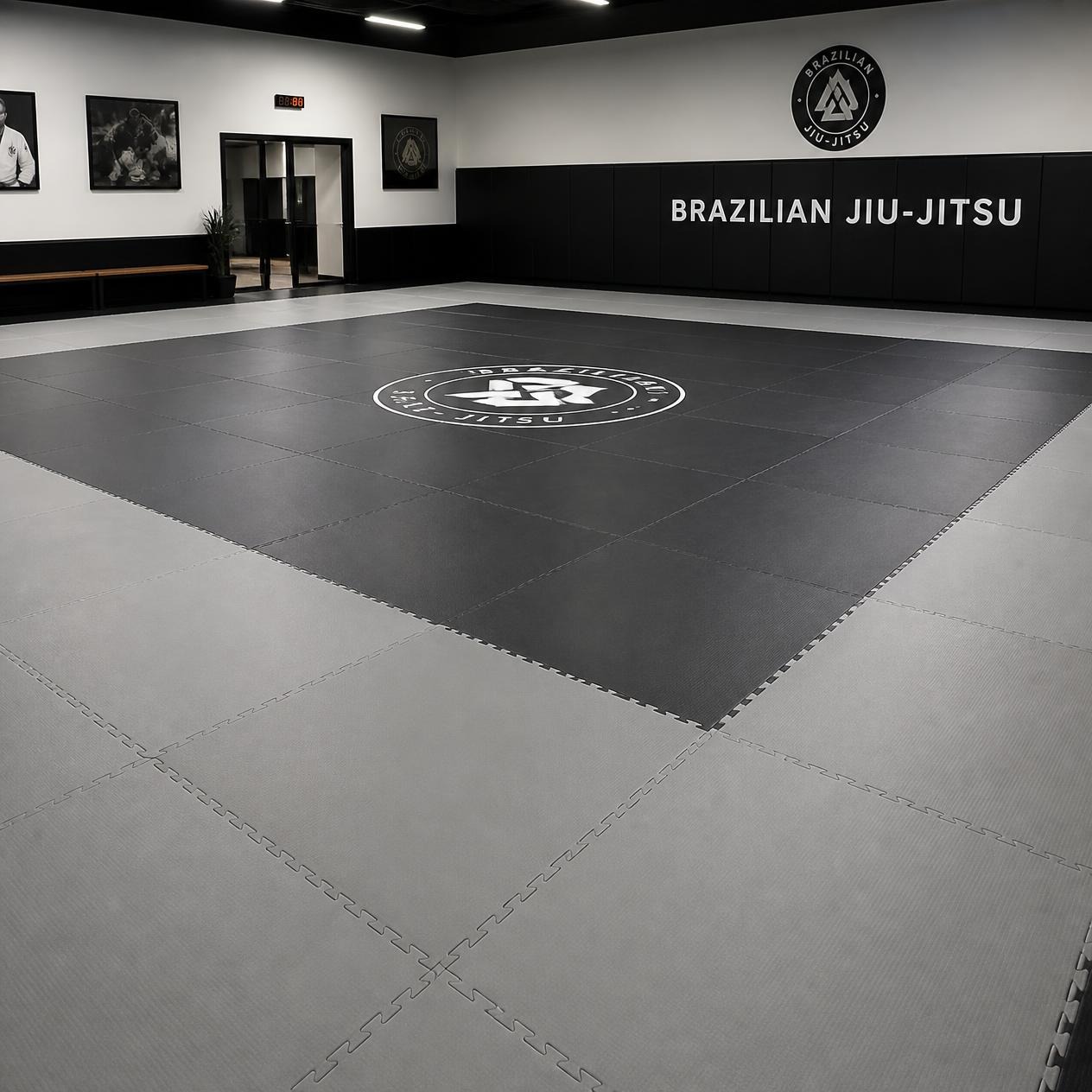
Professional BJJ Tatami: A Guide to Choosing Thickness and Density
The BJJ tatami represents one of the most important elements for safety, training quality, and the longevity of the investment within a Brazilian Jiu-Jitsu, MMA, or grappling gym. Unlike other martial arts, BJJ involves a high number of takedowns, controlled falls, ground work, and constant body movement, characteristics that impose very specific technical requirements when choosing flooring.
Many fitness industry entrepreneurs tend to consider the tatami as a simple surface to train on, when in reality it is a true protective device that influences athlete comfort, injury prevention, and the perception of the entire facility's quality. Investing in a professional product means offering a safer environment, reducing wear over time, and adding value to your sports center.
In this guide, we will analyze the main technical criteria that allow you to identify the ideal tatami for Brazilian Jiu-Jitsu, focusing on the correct balance between thickness, density, grip, resistance, and durability, while also highlighting why BJJ requirements are different compared to disciplines like Karate, Taekwondo, or traditional martial arts.
- Why BJJ requires a different tatami
- How to choose the correct thickness
- The importance of density
- Grip and stability during combat
- Materials and build quality
- Installation and maintenance
- How to evaluate the investment
- Choosing the best tatami for your gym
Why BJJ requires a different tatami
Brazilian Jiu-Jitsu develops primarily through ground fighting, with continuous transitions, guard passes, joint locks, and numerous grappling phases in which athletes distribute weight on their knees, hips, shoulders, and back. This intensive use requires flooring capable of absorbing impacts while maintaining stable support.
A tatami designed exclusively for disciplines based on strikes and standing movements might be too rigid or excessively soft, compromising control during movement and increasing athlete fatigue.
For this reason, it is essential to choose a solution specific to grappling, capable of ensuring protection without compromising technique.
Takedowns and falls
During a BJJ session, athletes face numerous falls resulting from takedowns and throws. A surface with adequate absorption capacity reduces the stress transmitted to the joints and helps limit the risk of trauma.
Stability in ground fighting
The ground fighting phase requires a stable base that allows you to maintain balance, pressure, and control of the opponent without sinking too deeply into the material.
How to choose the correct thickness
Martial arts tatami thickness represents one of the most important parameters in the design of an area dedicated to Brazilian Jiu-Jitsu. The ideal thickness depends on the intensity of the training, the presence of takedowns, and the technical level of the users.
For recreational activities, thinner solutions may be sufficient, while in professional gyms, it is advisable to adopt surfaces designed to support intensive and continuous use.
Greater thickness does not automatically guarantee greater safety: the correct balance with foam density actually determines the real behavior of the tatami during impacts.
Balance between comfort and protection
Flooring that is too soft makes footing unstable, while one that is too rigid increases the forces transmitted during falls. The choice must therefore favor the best possible compromise.
User level
Beginners, competitors, and children may require different configurations. Analyzing the profile of your members helps to identify the most effective solution.
The importance of density
Jiu jitsu tatami density directly influences the material's ability to maintain its characteristics over time. High density allows for limiting permanent deformation and loss of elasticity even after years of use.
Density also determines stability during fighting phases, preventing the foot or knee from sinking excessively and compromising movement control.
For professional facilities, it is advisable to look toward products designed for intensive use, capable of maintaining constant performance even with numerous hours of daily training.
Greater operational life
High-density materials resist compression better and retain their original characteristics longer, reducing the need for replacement.
Consistent performance
The quality of training remains uniform over time, offering athletes a surface that is always predictable and reliable.
Grip and stability during combat
Surface grip is an often underestimated but fundamental element. Proper friction allows for rapid movements without causing sudden slips or excessive sticking during rotations.
In Brazilian Jiu-Jitsu, athletes continuously alternate contact with feet, hands, knees, and elbows. The surface texture must therefore offer uniform grip across the entire body.
The quality of the finish also affects ease of cleaning and resistance to wear caused by the continuous friction of kimonos.
Safety during movement
A well-designed surface improves control of explosive movements and reduces the risk of losing balance.
Cleaning and hygiene
Professional surfaces facilitate daily sanitization, helping to maintain high hygienic standards in the gym.
Materials and build quality
Qualitative differences between various tatamis do not depend only on the internal foam but also on surface coatings, production techniques, and the precision of the interlocking systems.
A quality BJJ anti-trauma floor must maintain its shape and performance even after thousands of hours of use, resisting compression, humidity, and continuous cleaning cycles.
Build quality also translates into better gym aesthetics and greater satisfaction perceived by members.
Professional coatings
The best coatings resist abrasion and facilitate routine maintenance without deteriorating rapidly.
Precision of interlocking systems
Well-made interlocking systems prevent gaps between modules and improve surface continuity during training.
Installation and maintenance
The quality of installation influences the result as much as the material itself. Proper laying ensures stability, safety, and long life for the entire system.
It is important to verify the flatness of the subfloor, provide for any safety edging, and use fastening systems suitable for the expected intensity of use.
Scheduled maintenance allows you to preserve the investment, maintaining high aesthetic and functional standards for many years.
Proper installation
Installation performed by qualified personnel reduces the risk of unwanted tatami movement during training.
Routine maintenance
Daily cleaning and periodic checks allow you to preserve the hygiene, safety, and durability of the flooring.
How to evaluate the investment
Price should not be the only selection criterion. A cheap product might require frequent replacements and generate higher costs in the medium term.
Analyzing durability, warranty, certifications, support, and material quality allows for a more complete assessment of the total cost of ownership.
For many facilities, it is advantageous to rely on specialized suppliers who know how to correctly size the solution based on the gym's goals. A good choice consists of also evaluating the solutions available for professional martial arts tatami, comparing technical characteristics and build quality.
Long-term value
A higher initial investment can translate into lower maintenance costs and greater member satisfaction.
Gym image
A professional surface communicates attention to safety and helps strengthen the reputation of the sports center.
Choosing the best tatami for your gym
Choosing the ideal tatami requires a technical analysis that takes into account the practiced discipline, intensity of use, athlete level, and the facility's growth prospects. Evaluating only the price risks leading to decisions that are not advantageous in the medium and long term.
For a Brazilian Jiu-Jitsu gym, it is essential to focus on products that offer the correct balance between shock absorption, stability, durability, and ease of maintenance. Only a surface designed specifically for grappling is able to support the daily demands of intensive training.
Investing in professional materials means reducing the risk of injury, improving the member experience, preserving the value of the sports facility, and building a structure capable of standing out for quality, reliability, and attention to safety.
Comments (0)