
Trolley
You have no items in your shopping cart

 Budgets
 Dumbers
 Discs
Discs
 Benches
 Racks and Rigs
 Weights Holders
 Isotonic machines
 Calisthenics
 Cardio
 Kettlebells
 Flooring
 Gym Set
 Accessories
 Combat
 ARTI MARZIALI
 CONTAINER GYM
 Tug-Of-War
 Used Gym Equipment
 PILATES MACCHINARI
 GINNASTICA ARTISTICA
 CAMPI DA PADEL
 Prodotti in Pronta Consegna
 Informazioni
 IRONMAN
 Gift Card
- Donatif
- General information
- 0 I like it
- 769 Views
- 0 comments
- gym flooring, safety flooring, gym safety, shock-absorbing materials
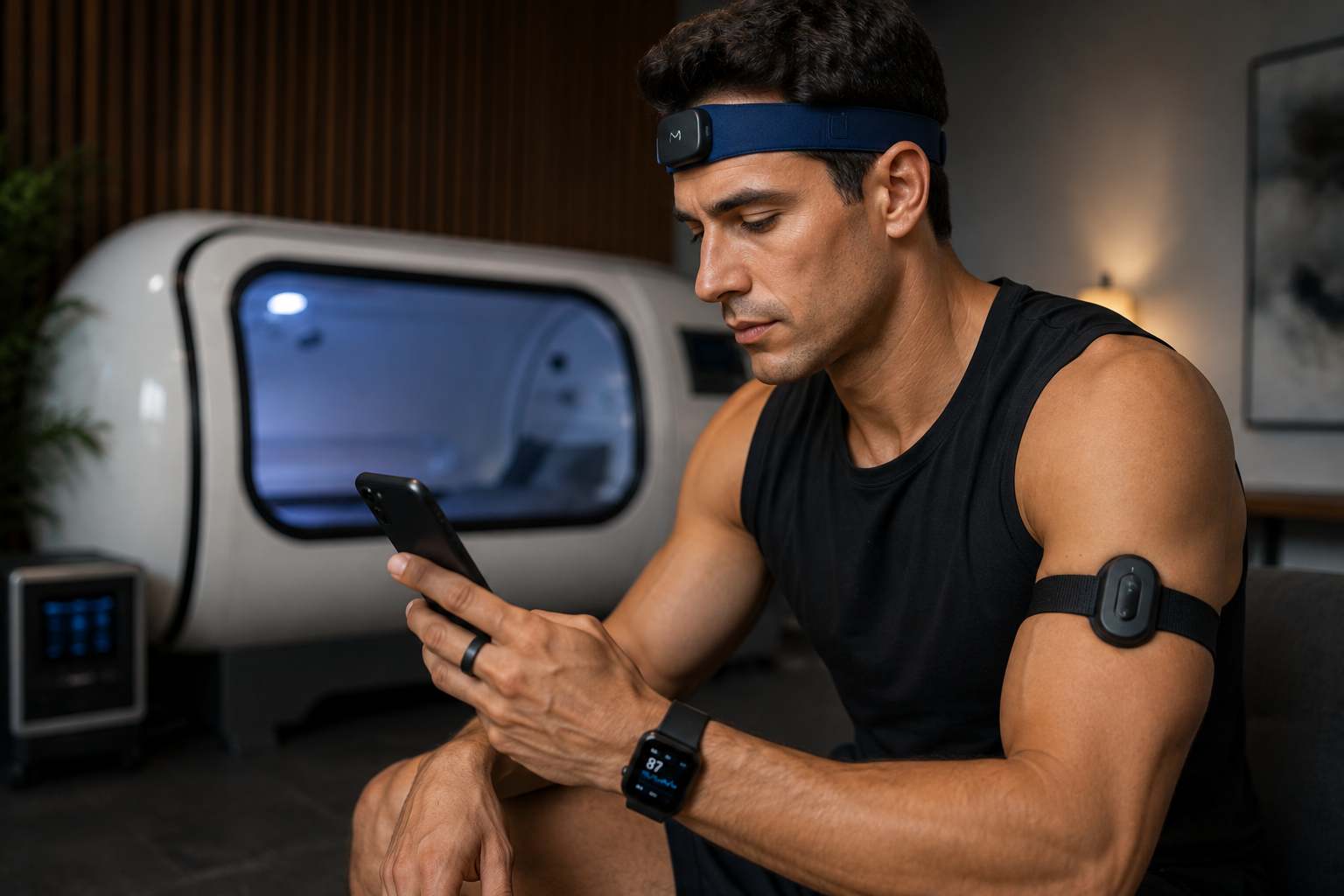
Professional Pulse Oximeters vs. Wearables: which one to choose for hypoxia?
Monitoring oxygen saturation represents one of the most important aspects for those using hypoxia training protocols, both within specialized fitness centers and during individual paths followed by coaches and professionals. The ability to accurately detect the body's response to controlled oxygen reduction allows for the adaptation of intensity, duration, and progression of sessions, transforming the collected data into useful information to improve training quality.
In recent years, smartwatches and wearable devices have made SpO2 monitoring accessible to an increasing number of users. These tools offer convenience, continuous data collection, and integration with digital platforms, features that make them attractive for those who wish to track certain physiological parameters in daily life. However, when the goal is to control training in simulated hypoxic conditions, the accuracy of the measurement becomes a decisive element.
The choice between a professional pulse oximeter for hypoxia and a wearable device therefore does not only concern the technology used, but above all the required level of reliability. In environments where saturation can change rapidly and where every piece of data influences the decisions of an athlete or a coach, understanding the differences, advantages, and limitations of the various systems allows for the construction of a safer and more effective protocol.
- The role of SpO2 monitoring in hypoxia
- Differences between pulse oximeters and wearables
- Accuracy of SpO2 measurement
- Limitations of smartwatches in hypoxia
- Advantages of professional pulse oximeters
- How to choose the right monitoring
- Investment in reliable data for training
The role of SpO2 monitoring in hypoxia
Hypoxia training is based on the ability to expose the body to a reduced availability of oxygen through controlled environments or specific systems. During these sessions, observing the athlete's physiological response allows for verifying how the organism reacts to the stimulus and correctly setting the difficulty level of the protocol.
Peripheral oxygen saturation, indicated as SpO2, is one of the parameters most used to evaluate the immediate effect of hypoxic exposure. An accurate value allows the professional to better interpret the individual response and potentially modify stay times, recovery periods, and work intensity.
In a professional context, the collected data should not be considered a simple number displayed on the screen, but a decision-making tool. The quality of monitoring, in fact, influences the coach's ability to create personalized programs and reduce the margin of error in training management.
Importance of reliable physiological data
When working with athletes following structured protocols, small detection errors can lead to incorrect interpretations of the individual response. An imprecise SpO2 value could suggest a program modification that is not actually necessary or hide a physiological response that deserves more attention.
For this reason, professional tools are designed to provide more consistent readings even in situations characterized by movement, variations in peripheral blood flow, and different environmental conditions.
Continuous monitoring and training control
Saturation control takes on particular value during sessions where the athlete is exposed to different levels of hypoxia. The ability to observe the response in real-time allows for keeping the protocol within the expected parameters and intervening when necessary.
An effective monitoring system therefore becomes an integral part of the training experience, along with the hypoxic chamber, the generator, and other tools used to create a controlled environment.
Differences between pulse oximeters and wearables
Professional pulse oximeters and wearable devices both use optical technologies to estimate blood oxygen saturation, but they are designed with different purposes. The former are primarily created as dedicated measurement tools, while smartwatches are multi-function devices designed to integrate numerous data points related to daily activity.
The main difference, therefore, concerns design priority. A professional device concentrates resources on the quality of the reading, signal stability, and the immediate return of the measured value. A wearable, on the other hand, must balance SpO2, heart rate, notifications, battery life, and numerous other functions.
This does not mean that smartwatches are not useful, but that their role must be interpreted correctly. They are very valid tools for general monitoring, while during advanced hypoxic protocols, it may be necessary to rely on systems specifically designed for physiological measurement.
Technical differences of sensors
Professional pulse oximeters use sensors optimized to detect the passage of light through tissue and analyze the relationship between oxygenation and blood characteristics. The quality of the sensor, signal management, and processing algorithms contribute to the final accuracy.
Wrist-worn devices, however, must face numerous variables, such as arm movement, device positioning, and contact with the skin that is not always perfect. These factors can influence the quality of the collected signal.
Professional use and daily use
An athlete who uses a hypoxic chamber or follows a specific program with a coach has different needs compared to a person who occasionally checks some parameters during the day. In the first case, the measurement must support immediate operational decisions.
The choice of tool must therefore be linked to the goal. The more the data influences the training program, the higher the required level of reliability must be.
Accuracy of SpO2 measurement
Accuracy represents the main element of comparison between different monitoring technologies. During hypoxia training, saturation can vary in response to the intensity of the effort, the duration of exposure, and the individual characteristics of the athlete.
An accurate device must be able to provide consistent data even when the value changes rapidly. This allows the professional to distinguish a real physiological response from a simple variation due to the sensor's limit.
The quality of the measurement becomes even more important when the protocol involves precise goals and controlled progressions over time. Reliable data, in fact, allows for building a path based on concrete evidence.
Factors that influence measurement
Several elements can modify the quality of the SpO2 reading, including movement, extremity temperature, sensor position, and individual peripheral circulation characteristics. Professional tools are designed to better manage these conditions.
The correct application of the device remains fundamental regardless. Even the best sensor requires appropriate use to provide useful data.
Accuracy of the wrist pulse oximeter
The accuracy of the wrist pulse oximeter is a highly debated topic because wearables have significantly improved the quality of sensors in recent years. However, the context of use determines the real value of the measurement.
During static activities or occasional checks, they can represent a practical solution, while in situations where the data guides a professional hypoxic protocol, it is important to consider tools with dedicated features.
Limitations of smartwatches in hypoxia
Smartwatches have revolutionized the way users collect information about their physical activity. They are convenient tools, always available, and capable of integrating data from numerous sensors. However, their use during hypoxic training requires careful evaluation.
One of the main limitations concerns the fact that the device is worn on the wrist, an area more subject to movement compared to other detection methods. During intense exercises, this element can influence signal quality.
Furthermore, many wearables perform periodic measurements and are not necessarily designed to follow rapid variations during a specific session. For a coach working with real-time data, this difference can be significant.
Why the wearable may provide incomplete data
A multi-function device must manage numerous objectives simultaneously. Energy autonomy, comfort, and small size may require compromises compared to tools dedicated exclusively to measurement.
This makes the wearable very useful for general monitoring, but less suitable as the sole reference in protocols where saturation represents a central parameter.
When to use a smartwatch
Smartwatches can be effectively integrated as a complementary tool. They can help collect information on the athlete's lifestyle, recovery, and daily activity.
The most effective choice often consists of using each technology for what it was designed for, combining the convenience of wearables and the reliability of professional tools.
Advantages of professional pulse oximeters
A professional pulse oximeter for hypoxia is designed to offer reliable measurement in contexts where saturation control is an integral part of the training process. Its main function is to provide precise and immediately usable data.
For gyms, advanced fitness centers, and professionals who follow athletes, this means being able to work with more solid information and build more personalized programs.
The reliability of the device also contributes to improving the perception of professionalism of the service offered, showing attention to the quality of the path and the user's safety.
Support for the coach and the athlete
The data collected during sessions allows the coach to analyze the individual response and make more informed decisions. This monitoring-based approach favors more precise management of loads and progressions.
For advanced athletes, having reliable information means better understanding their own body and optimizing the relationship between training stimulus and recovery.
Integration with biofeedback accessories
Hypoxia biofeedback accessories allow for the creation of a more complete monitoring ecosystem. By integrating different data, it is possible to obtain a broader view of the organism's response.
This strategy is particularly useful in centers that want to offer high value-added services and differentiate themselves through a technology-based approach.
How to choose the right monitoring
The choice of the correct tool must start from the analysis of the intended use. A professional center that offers hypoxia training will have different needs compared to an amateur athlete interested only in personal checks.
The frequency of use, the level of users, and the role of data in programming are fundamental elements for identifying the most appropriate solution.
Investing in monitoring means improving the quality of the entire service, because better data allows for better decisions.
Main evaluation criteria
Aspects to consider include accuracy, reading speed, sensor reliability, ease of use, and compatibility with the operational context. Each element contributes to the overall value of the tool.
A careful initial evaluation allows for avoiding purchases based exclusively on the popularity of the device or additional features.
Balance between technology and goals
The best technology is that which is consistent with the result one wants to achieve. A wearable can be perfect for some purposes, while a professional system can be indispensable in others.
Understanding this difference allows for building a more effective and quality-oriented approach.
Investment in reliable data for training
In the hypoxia training sector, the quality of the information collected directly influences the ability to offer a professional service. Oxygen saturation is not just a parameter to be displayed, but a tool that supports the management of the athlete's path.
Choosing adequate tools means reducing uncertainty and increasing the precision of decisions. Reliable monitoring allows coaches and sports facilities to work with greater safety, creating protocols more consistent with individual needs.
The difference between a device designed for daily control and one developed for professional applications becomes evident when the data must guide a structured training process. For this reason, correctly evaluating technology, accuracy, and reliability represents a fundamental step for those who want to integrate hypoxia as an advanced service.
Quality of service and zero risk
Reducing the margin of error in data collection means offering a more controlled experience to users. In a sector where personalization is increasingly important, reliable tools become a distinctive element.
The choice of a professional system therefore represents an investment in the quality of the service and in the trust built with the athletes.
Decisions based on real data
A data-driven approach allows for transforming every session into a source of useful information. Correctly monitoring the response to hypoxia helps to progressively improve protocols and results.
For gyms and professionals who want to stand out, the availability of reliable data represents an essential component of a modern and technologically advanced service.
Comments (0)