
Trolley
You have no items in your shopping cart

 Budgets
 Dumbers
 Discs
Discs
 Benches
 Racks and Rigs
 Weights Holders
 Isotonic machines
 Calisthenics
 Cardio
 Kettlebells
 Flooring
 Gym Set
 Accessories
 Combat
 ARTI MARZIALI
 CONTAINER GYM
 Tug-Of-War
 Used Gym Equipment
 PILATES MACCHINARI
 GINNASTICA ARTISTICA
 CAMPI DA PADEL
 Prodotti in Pronta Consegna
 Informazioni
 IRONMAN
 Gift Card
- Donatif
- General information
- 0 I like it
- 1 Views
- 0 comments
- gym flooring, safety flooring, gym safety, shock-absorbing materials
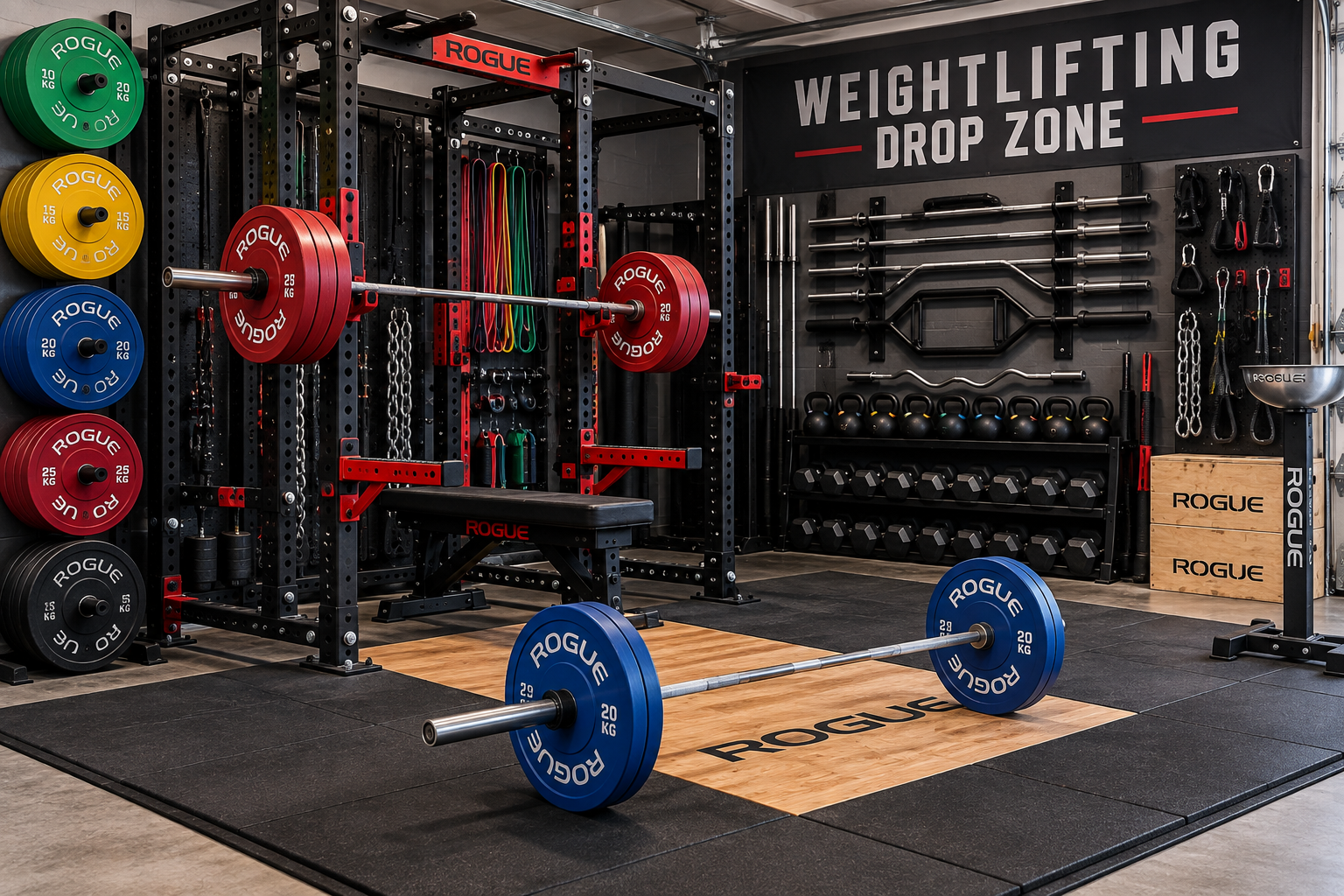
Weightlifting equipment safety: drop zone and suitable flooring
In weightlifting, the safety of the station depends on the design of the entire training area and not exclusively on the quality of the barbell or bumper plates. During the execution of the snatch and the clean and jerk, the controlled release of the barbell is an anticipated situation in the discipline and requires a free fall zone, a dedicated platform, and flooring designed for this type of use.
When the surface is insufficient or the space configuration is not adequate, the probability of damaging equipment and flooring increases, or the management of the training area is compromised. For this reason, it is important to design the station following verifiable technical criteria and respecting the instructions provided by the equipment manufacturers.
Before purchasing, it is advisable to evaluate the compatibility between the barbell, bumper plates, and platform, space organization, access routes, and scheduled maintenance of the entire area dedicated to weightlifting.
- What are the main risks?
- How to design the drop zone
- Why flooring is fundamental
- Safety checklist
- Pre-workout checks
- Mistakes to avoid
- Maintenance of the weightlifting area
- How to plan the investment
What are the main risks in a weightlifting area?
The most frequent critical issues stem from insufficient space design or the use of flooring that is not suitable for the discipline. A training area that is too small can limit the athlete's movement and make it difficult to manage the barbell during the release.
Also, the presence of obstacles near the platforms, traffic routes shared with other activities, or improperly positioned storage systems can reduce the functionality of the area.
Prevention therefore begins with layout design and the choice of mutually compatible components.
Why is the drop zone important?
During Olympic lifts, the barbell must be manageable within a zone free of obstacles, designed for the intended use of the discipline.
Which obstacles should be avoided?
Equipment, furnishings, and traffic routes should not interfere with the stations dedicated to weightlifting.
How to properly design the drop zone?
The area designated for exercises should include a dedicated platform and sufficient operational space to allow the complete execution of the snatch and clean and jerk without interference from other stations.
The platforms should be placed according to an orderly layout that allows athletes to train simultaneously while maintaining access paths separate from the work areas.
The configuration should also provide a dedicated space for storing bumper plates so as to keep the operational surface clear.
Why plan the layout?
A rational arrangement facilitates workouts, improves area supervision, and reduces interference between users.
How to position the platforms?
The platforms should be integrated into the overall room design while maintaining uniformity in the organization of the stations.
Why is flooring fundamental?
Technical flooring represents one of the main elements in the design of a weightlifting area. In addition to contributing to the protection of the underlying surface, it promotes the integration of the platforms and the proper organization of the room.
The choice of flooring should be made considering the instructions provided by the manufacturer and the compatibility with the installed platform system.
Before creating the area, it is also advisable to evaluate the characteristics of the existing structure and any design requirements of the building.
What function does the flooring serve?
An adequate surface contributes to the protection of the area intended for training and to the integration of the station with the rest of the gym.
Why verify compatibility?
Platforms and flooring should be designed to work together according to the specifications declared by their respective manufacturers.
Station safety checklist
Before each session, it is useful to check the main elements of the area dedicated to weightlifting.
| Check | What to verify |
|---|---|
| Platform | Stability and surface conditions |
| Barbell | Integrity and compatibility |
| Bumper plates | General conditions and correct use |
| Flooring | Absence of evident damage |
| Drop zone | Space free of obstacles |
| Accessories | Order and correct positioning |
This list represents a preliminary check that should be integrated with the procedures indicated in the equipment manuals.
Each component must be used in compliance with the instructions provided by the manufacturer.
Why consult the manuals?
The manufacturer's instructions constitute the main reference for installation, use, and maintenance of the equipment.
Is it useful to log checks?
Maintaining a history of verifications facilitates the management of area maintenance over time.
What checks should be performed before the workout?
Before starting the session, it is advisable to verify that the area is completely clear, that the platform is stable, and that the barbell is compatible with the bumper plates used.
Storage systems should also be checked to ensure they do not obstruct the training zone.
Why perform a visual check?
Preliminary inspections help to quickly identify any damage or anomalies present in the area.
How much does order matter?
An orderly station makes training smoother and facilitates the management of equipment during sessions.
What mistakes to avoid?
One of the most frequent mistakes consists of underestimating the space necessary for Olympic exercises or using a surface not designed for this type of activity.
It is also advisable to avoid configurations in which traffic areas directly cross the platforms or accessories are left in the training zone.
Failing to verify compatibility between the barbell, bumper plates, and platform can also compromise the correct functioning of the station.
Why not reduce spaces too much?
Adequate design facilitates the athlete's movements and contributes to keeping the area organized.
Why verify equipment compatibility?
Using compatible components allows for the creation of a station consistent with the overall gym project.
How to manage the maintenance of the weightlifting area?
Maintenance should include periodic checks of platforms, barbells, bumper plates, storage systems, and flooring. Operations must be carried out following the instructions provided in the manufacturers' manuals.
Cleaning the area facilitates inspections and helps keep the station orderly throughout the day.
Documenting interventions allows for more precise scheduling of any replacements or extraordinary checks.
Why keep the station clean?
An orderly surface makes it simpler to identify any anomalies and eases the management of the technical area.
How much do periodic checks matter?
Scheduled verifications help preserve the functionality and durability of the equipment over time.
How to plan a safe weightlifting area over time?
Effective design stems from the integration of layout, flooring, platforms, and compatible equipment. Considering space organization and scheduled maintenance from the beginning allows for the development of an area that is easily manageable even with intensive use.
Carefully evaluating the barbell drop zone, bumper plates, weightlifting platform, and configuration compatibility makes it possible to create a more functional station.
To complete the area, it can be useful to integrate a supply of bumper plates compatible with the barbell and with the overall room project, maintaining coherence between equipment, flooring, and the future development of the structure.
Comments (0)