
Trolley
You have no items in your shopping cart

 Budgets
 Dumbers
 Discs
Discs
 Benches
 Racks and Rigs
 Weights Holders
 Isotonic machines
 Calisthenics
 Cardio
 Kettlebells
 Flooring
 Gym Set
 Accessories
 Combat
 ARTI MARZIALI
 CONTAINER GYM
 Tug-Of-War
 Used Gym Equipment
 PILATES MACCHINARI
 GINNASTICA ARTISTICA
 CAMPI DA PADEL
 Prodotti in Pronta Consegna
 Informazioni
 IRONMAN
 Gift Card
- Donatif
- General information
- 0 I like it
- 9 Views
- 0 comments
- gym flooring, safety flooring, gym safety, shock-absorbing materials
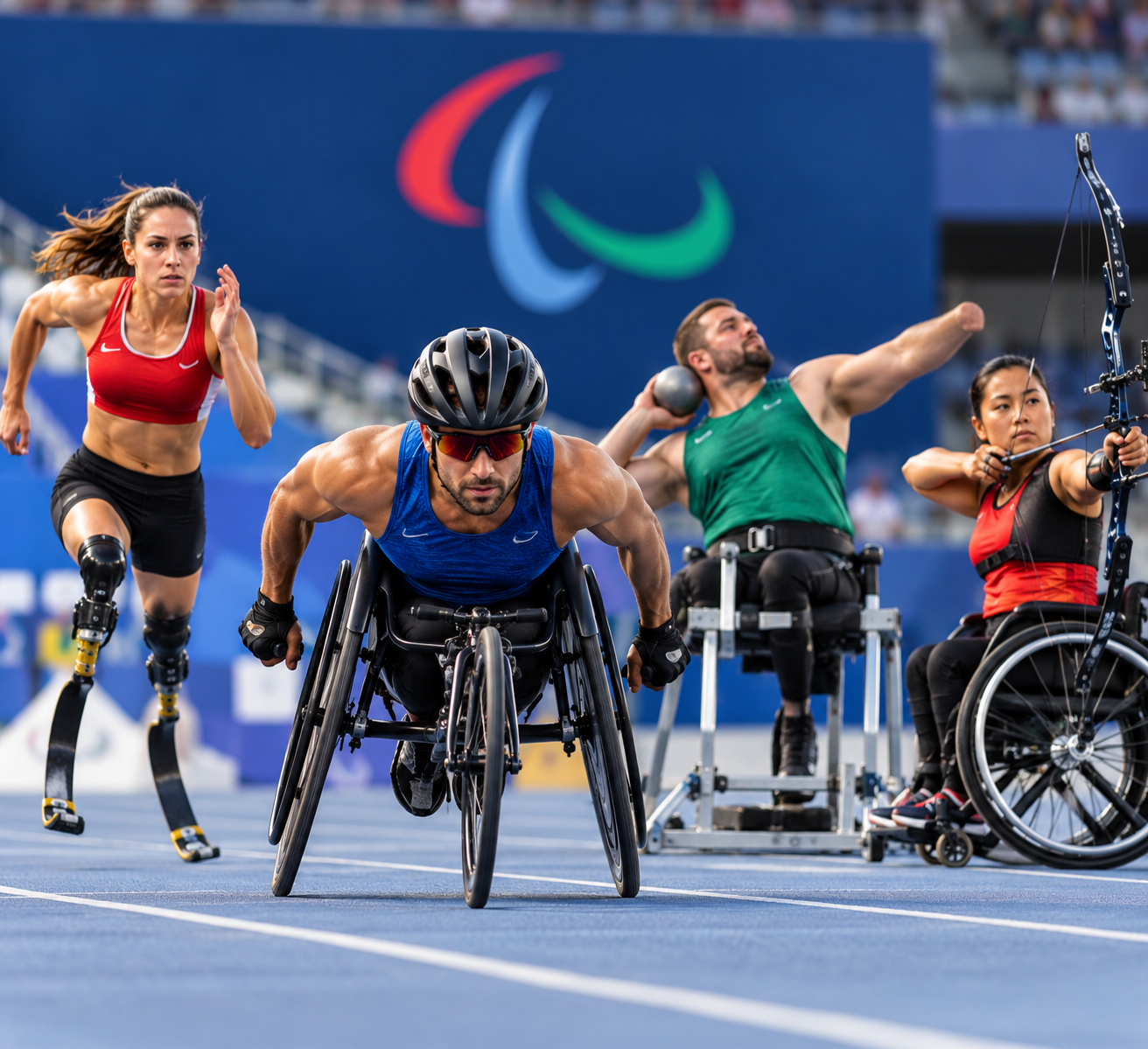
Safety in Paralympic Sport: How to Eliminate Physical Barriers and Choose Compatible Equipment
Paralympic sport and safety mean designing environments where people with different needs can train under conditions of accessibility, autonomy, and risk control. Eliminating physical barriers and using compatible equipment helps improve the usability of the gym and reduce operational issues during sports activities.
Safety does not depend solely on the quality of the equipment. Layout, pathways, signage, flooring, staff training, and maintenance are elements that decisively contribute to the overall quality of the sporting experience. Integrated design allows for identifying and reducing obstacles even before they can impact the daily use of the facility.
For public facilities, fitness centers, sports associations, and structures dedicated to inclusive sports, it is therefore essential to adopt verifiable criteria when choosing equipment and organizing spaces, avoiding improvised solutions or adaptations that could compromise accessibility and safety.
- Quick answer
- What are the main risks
- Safety requirements
- Pre-use checks
- How to check equipment compatibility
- Errors to avoid
- FAQ
- Planning safety and improvements
How to improve safety in Paralympic sport?
A safe facility provides continuous pathways, adequate maneuvering areas, easily usable equipment, suitable flooring, periodic checks, and trained staff. Every element should be designed to encourage the use of the facility without introducing avoidable obstacles.
Safety must be verified during design, prior to equipment installation, and through scheduled checks throughout the useful life of the facility.
A systematic evaluation of the entire environment is generally more effective than analyzing individual pieces of equipment considered separately.
Safety objective
The objective is to reduce physical and organizational barriers by improving accessibility, continuity of pathways, and ease of use of the equipment.
Operational approach
Design, maintenance, and staff training should be developed as parts of a single safety management system.
What are the main risks?
Physical barriers represent one of the most frequent critical issues. Interrupted pathways, temporary obstacles, insufficient spaces, and uncoordinated arrangement of equipment can limit the use of the facility.
Even accessible equipment may turn out to be incompatible with the facility's needs when it requires complex adjustments or does not allow easy use under expected operating conditions.
Additional critical issues may stem from insufficient maintenance, unclear signage, or space organization that is inconsistent with user flow.
Physical barriers
Obstacles along pathways, elevation changes, clutter, and irrational arrangement of stations can compromise accessibility and functionality of the gym.
Incompatible equipment
Before purchasing, it is advisable to check adjustments, access methods, technical documentation, and compatibility with the existing layout.
What safety requirements must be verified?
Equipment should be installed according to the manufacturer's instructions and used exclusively for its intended purpose.
Pathways must remain constantly clear, and operational areas should guarantee sufficient space for using the stations without interference with other users.
When applicable, compliance with national regulations on the elimination of architectural barriers, current building requirements, and technical indications regarding sports facilities should be verified.
Space organization
A rational distribution of stations facilitates movement and reduces the possibility of creating congestion points during activity.
Surfaces and flooring
Sports flooring should be continuous, maintained in good condition, and consistent with the intended use of the facility.
What checks to perform before use?
A periodic checklist helps to quickly verify the conditions of the facility.
| Element | Check |
|---|---|
| Pathways | Absence of obstacles |
| Equipment | Adjustments and fasteners working |
| Flooring | Surface intact and continuous |
| Signage | Clear and legible |
| Maneuvering areas | Free from clutter |
| Documentation | Manuals available |
Verifications should be repeated according to a defined schedule and recorded when required by the facility's internal procedures.
Daily checks
Before opening, it is useful to quickly check pathways, equipment, and common areas.
Scheduled checks
In-depth inspections allow for identifying anomalies that might not be immediately visible during routine checks.
How to check equipment compatibility?
Each new piece of equipment should be evaluated against available space, internal pathways, user types, and planned activities.
It is advisable to favor modular configurations that allow progressive updates without radically modifying the facility's organization.
To learn more about solutions dedicated to sports facilities, you can consult professional gym equipment.
Technical documentation
Manufacturer manuals constitute the main reference for installation, use, and maintenance.
Layout integration
Each piece of equipment should fit harmoniously into the general organization of the gym without reducing accessibility and functionality.
Which errors should be avoided?
One of the most frequent errors consists of adding new equipment without previously checking pathways and maneuvering spaces.
Another error concerns the failure to plan maintenance or periodic checks required by the manufacturer.
It is also advisable to avoid configurations that require continuous movement of mobile equipment to allow normal use of the gym.
Uncoordinated layout
A random arrangement of stations can compromise accessibility and operational management.
Insufficient training
Staff should know operational procedures, assistance methods, and the correct use of the equipment present.
FAQ
Does safety depend only on equipment?
No. Layout, pathways, maintenance, and facility organization also significantly impact it.
When should checks be performed?
Before daily use and according to a schedule of periodic verifications defined by the facility and the manufacturers' instructions.
Is it possible to improve an existing gym?
Yes. Many interventions can be progressively scheduled by working on layout, pathways, equipment, and operational organization.
How to plan safety and improvements?
Planning should start with an analysis of the existing facility, the activities carried out, and user needs. Only afterwards is it appropriate to define priority interventions on pathways, equipment, training, and maintenance.
When applicable, main references include national regulations on the elimination of architectural barriers, current building provisions, technical indications of the Italian Paralympic Committee for competent activities, manufacturer manuals regarding installation, use, and maintenance of equipment, and standards applicable to sports facilities. Each project should be verified based on the intended use of the facility.
A continuous improvement program allows for progressively updating the facility while maintaining high levels of accessibility, safety, and service quality, avoiding fragmentary interventions and favoring more efficient management in the long term.
Comments (0)