
Trolley
You have no items in your shopping cart

 Budgets
 Dumbers
 Discs
Discs
 Benches
 Racks and Rigs
 Weights Holders
 Isotonic machines
 Calisthenics
 Cardio
 Kettlebells
 Flooring
 Gym Set
 Accessories
 Combat
 ARTI MARZIALI
 CONTAINER GYM
 Tug-Of-War
 Used Gym Equipment
 PILATES MACCHINARI
 GINNASTICA ARTISTICA
 CAMPI DA PADEL
 Prodotti in Pronta Consegna
 Informazioni
 IRONMAN
 Gift Card
- Donatif
- General information
- 0 I like it
- 0 Views
- 0 comments
- gym flooring, safety flooring, gym safety, shock-absorbing materials
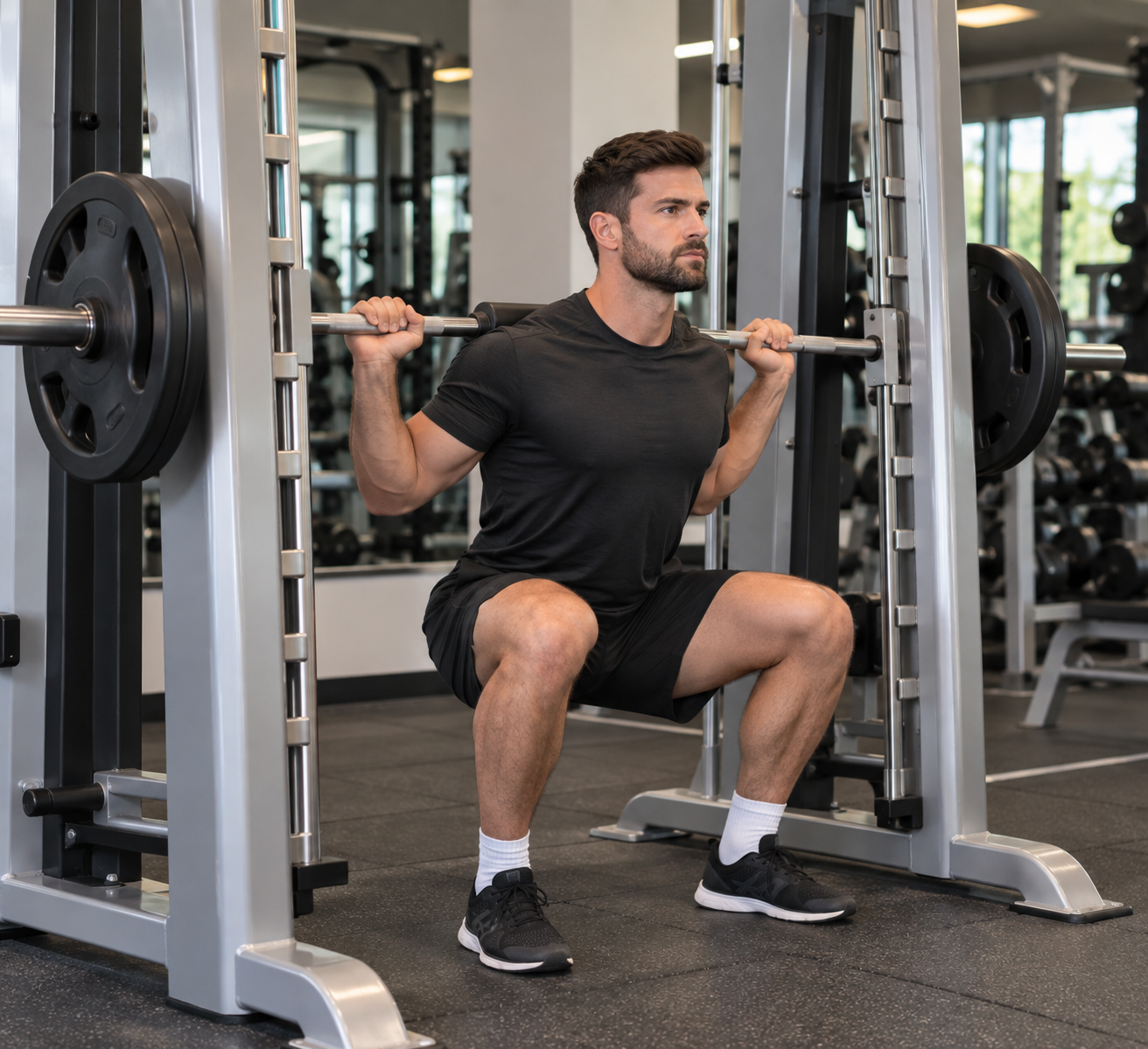
Smith machine maintenance: a practical guide for guide rails and bearings
Maintaining the smith machine is essential to preserve the smooth movement of the guided barbell, reduce component wear, and maintain high safety standards during workouts. Dirty guide rails, worn bearings, or loose fasteners can compromise movement and increase the risk of failure.
The operational response is simple: schedule periodic checks, regularly clean the guide rails following the manufacturer's instructions, verify the correct functioning of the bearings, and inspect all fastening elements. Preventive maintenance allows you to promptly identify anomalies before they require more complex interventions.
This guide compiles verifiable criteria, practical checks, and organized procedures to manage smith machine maintenance in a professional gym or home gym, without overlapping with articles dedicated to the general operation of the machine.
- Quick answer
- What to check
- Frequencies and signs of wear
- Cleaning and maintenance
- When to replace or intervene
- Preventive actions
- Evaluating a machine that is easy to maintain
- FAQ
How to properly perform smith machine maintenance?
Maintenance should focus primarily on guide rails, bearings, sliding systems, and structural fastening points. Every check should be performed following the instructions provided in the manufacturer's manual.
Before each use, it is advisable to verify that the barbell moves smoothly along the entire range of motion without friction, abnormal noises, or irregular movements.
Scheduled maintenance reduces machine downtime and helps maintain consistent performance over time.
What criteria to use?
Check the cleanliness of the guide rails, verify the absence of play in the bearings, inspect the fasteners, and log every intervention performed.
Why follow the manual?
Each model may require different procedures, products, and maintenance intervals. The manufacturer's instructions always represent the primary reference.
Which components require the most attention?
Guide rails are the elements most exposed to dust, residue, and wear due to daily use.
Bearings must ensure smooth sliding without vibrations, binding, or lateral play.
Bolts, nuts, locking systems, safety stops, and anchorage points must also be checked regularly.
Guide rail inspection
Surfaces must be clean, free from evident deformations, and without marks that could compromise sliding fluidity.
Bearing inspection
Metallic noises, abnormal resistance, or barbell wobbling may indicate the need for a technical inspection.
How often should checks be performed?
The frequency depends on the intensity of machine usage. A gym with high traffic requires more frequent checks compared to a home gym.
Before each day of use, it is useful to perform a visual check of the machine's general condition.
Scheduled interventions must follow the maintenance plan indicated by the manufacturer and take into account the number of hours of use.
Daily checks
Verify the barbell travel, the presence of dirt on the guide rails, and the correct operation of safety devices.
Scheduled checks
More in-depth checks include inspecting fasteners, the condition of the bearings, and structural integrity.
How to clean guide rails and sliding systems?
Guide rails must be kept clean using products compatible with the manufacturer's instructions. The accumulation of dust and residue can increase friction and accelerate wear.
Before cleaning, any debris present along the entire path of the barbell should be removed.
Lubricants and detergents must be used exclusively when provided for by the manufacturer and in the manner indicated in the technical documentation.
Routine cleaning
Remove dust and dirt with non-abrasive tools, avoiding products that could damage the sliding surfaces.
Lubrication
Not all guide rails require lubrication. The correct procedure depends on the type of system adopted by the machine.
When is it necessary to replace components or request assistance?
If the barbell does not slide smoothly despite cleaning, or if there is abnormal play in the bearings, it is advisable to stop using the machine.
Deformations, evident wear of the guide rails, or damage to safety systems also require a technical check.
Component replacement should be carried out using compatible spare parts and according to the procedures established by the manufacturer.
Signs of wear
Persistent friction, vibrations, increasing noise, and difficulty sliding represent signs that deserve further investigation.
When to contact customer service?
Any intervention involving structural elements or safety systems should be performed by qualified personnel.
What preventive actions increase the lifespan of the machine?
Well-organized preventive maintenance reduces the risk of sudden breakdowns and extends the useful life of the equipment.
Keeping the workout area clean limits the accumulation of dust on the guide rails, while proper use reduces stress on moving components.
Logging checks, cleanings, and replacements facilitates the planning of future interventions.
Maintenance log
Recording the date, type of intervention, components checked, and any anomalies allows you to monitor the evolution of the machine's condition.
Operator training
Instructors and technical staff should know the control procedures provided by the manufacturer to quickly identify any problems.
How to choose a smith machine that is easy to maintain?
When evaluating a new machine, it is useful to consider not only performance but also component accessibility, spare parts availability, and the quality of technical documentation.
A structure designed to facilitate routine interventions reduces maintenance time and improves the gym's operational continuity. To learn more about the category of isotonics machines, it is also advisable to compare the maintenance aspects declared by the manufacturers.
Complete manuals, available technical assistance, and well-documented maintenance procedures represent important elements in the overall evaluation of the investment.
Indicators to compare
Ease of access to guide rails, simplicity of adjustment, availability of components, and construction quality affect long-term maintenance.
Technical documentation
Before purchasing, it is advisable to check for the presence of the maintenance manual, the spare parts list, and official operating instructions.
FAQ
Is it necessary to clean the guide rails after every workout?
Not always. In environments with intense use, it is advisable to carry out at least a daily visual check and periodic cleaning according to the manufacturer's instructions.
Do bearings always need to be lubricated?
No. Some systems use components that do not require periodic lubrication. You must strictly follow the manufacturer's instructions.
How to recognize a problem with the guide rails?
Irregular sliding, unusual noise, persistent friction, and lateral movements of the barbell represent signs to investigate.
What sources to consult for maintenance?
The most reliable information is the machine manual, the manufacturer's technical documentation, and any references to applicable standards declared by the manufacturer. The structure of this guide follows an answer-first approach with verifiable criteria, consistent with the brief provided.
Comments (0)