
Trolley
You have no items in your shopping cart

 Budgets
 Dumbers
 Discs
Discs
 Benches
 Racks and Rigs
 Weights Holders
 Isotonic machines
 Calisthenics
 Cardio
 Kettlebells
 Flooring
 Gym Set
 Accessories
 Combat
 ARTI MARZIALI
 CONTAINER GYM
 Tug-Of-War
 Used Gym Equipment
 PILATES MACCHINARI
 GINNASTICA ARTISTICA
 CAMPI DA PADEL
 Prodotti in Pronta Consegna
 Informazioni
 IRONMAN
 Gift Card
- Donatif
- General information
- 0 I like it
- 9 Views
- 0 comments
- gym flooring, safety flooring, gym safety, shock-absorbing materials
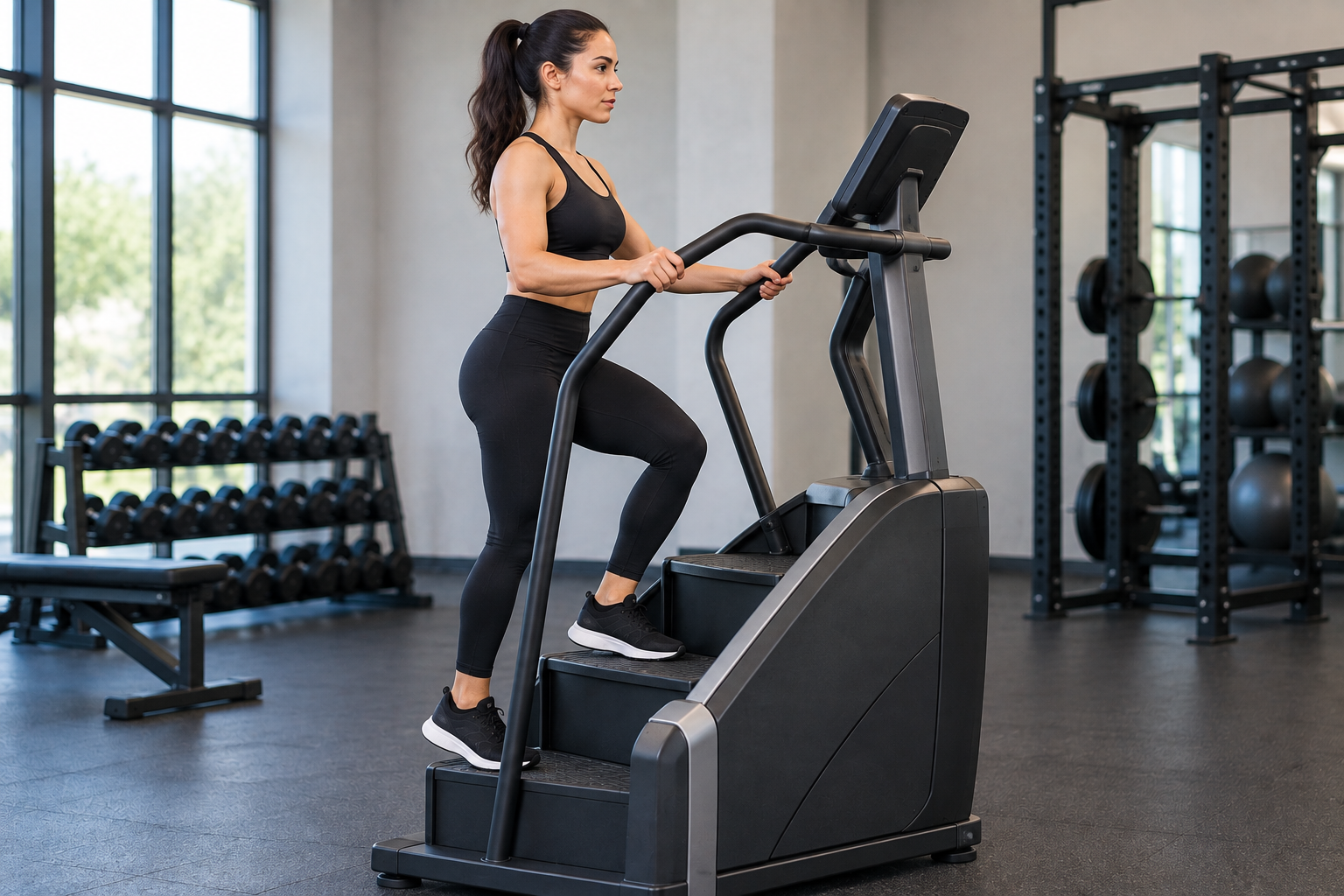
Stair climber vs stepper: differences, use, and selection criteria
The stair climber and the stepper are two cardio equipment pieces designed to simulate the movement of climbing, but they use different mechanics and training methods. The stair climber employs a continuous ladder with moving steps, while the stepper uses two alternating footplates. The choice should be based on verifiable criteria such as intended use, available space, installation requirements, usage methods, and user characteristics, avoiding comparisons based solely on perceived intensity.
Both machines find use in gym cardio areas, but present different needs from a design, operational, and maintenance standpoint. Understanding these differences makes it possible to organize a fitness room more consistent with the facility's goals and the users' profile.
This guide compares stair climber and stepper by illustrating technical differences, operating modes, practical selection criteria, errors to avoid, and safety aspects. When applicable, it is advisable to consult manuals, technical datasheets, and official manufacturer documentation, which represent the primary sources for dimensions, installation, maintenance, and correct use.
- What are the main differences
- How the two machines work
- When to choose stair climber or stepper
- Which criteria to compare
- How to use the machines correctly
- Errors to avoid
- Safety and maintenance
- How to evaluate the investment
What are the differences between stair climber and stepper?
The stair climber reproduces a continuous climb through moving steps, while the stepper uses two footplates that move alternately simulating a vertical step.
The main difference therefore concerns the movement mechanics and the equipment design. The stair climber recreates a true sequence of steps, while the stepper proposes an alternating movement on pedals.
Both machines allow cardio workouts, but respond to different design needs.
Movement differences
The stair climber develops a continuous climb with moving steps, while the stepper keeps the feet on footplates that oscillate alternately.
Constructive differences
The two machines feature different configurations for dimensions, transmission systems, and installation requirements.
How do stair climber and stepper work?
Both allow adjusting the training intensity through the systems provided by the manufacturer.
The stair climber controls the speed of the moving ladder, while the stepper modifies the resistance of the footplates' movement according to the model's characteristics.
Operating modes may vary and must always be verified in the manufacturer's technical documentation.
Stair climber operation
The machine generates a continuous sequence of steps that requires a constant climb adjustable via the available controls.
Stepper operation
The stepper allows an alternating movement of the footplates while maintaining a stable position during exercise.
When to choose a stair climber and when a stepper?
The choice should start from the facility's goals and the users' profile instead of commercial features alone.
The stair climber can be indicated when you want to propose dedicated equipment for continuous climbing simulation and leg conditioning.
The stepper can represent an appropriate solution when looking for a machine with generally different dimensions and an alternative movement mode.
When to choose the stair climber
It can prove suitable for expanding the variety of the cardio area with a specific machine dedicated to simulating stair climbing.
When to choose the stepper
It can be a consistent choice based on available space, gym scheduling, and user characteristics.
Which criteria to compare before choosing?
An effective comparison should consider technical characteristics, installation requirements, and usage methods.
It is useful to evaluate dimensions, weight capacity, available adjustments, maintenance, operational space, and compatibility with the gym layout.
Information must be derived from the official technical datasheets of the models actually compared.
Summary comparison
1. Type of movement.
2. Footprint and installation requirements.
3. Required height.
4. Adjustment systems.
5. Ease of maintenance.
6. Intended use.
7. Compatibility with the gym project.
User profile
The choice should take into account user experience and the goals set for the fitness area.
How to use the two machines correctly?
Before starting the workout, it is advisable to check the correct functioning of the machine and read the manufacturer's instructions.
Each model may provide different start, stop, and intensity adjustment procedures.
Following the technical documentation allows using the equipment according to the manufacturer's intended methods.
Initial checks
Before the session, check the stability of the machine, the condition of the supporting surfaces, and the correct functioning of the adjustment systems.
Workout progression
Intensity should be increased gradually while always maintaining control of the movement.
What errors should be avoided?
One of the most common errors consists in considering stair climber and stepper as identical machines without evaluating differences in operation and installation.
Another critical issue concerns choosing the equipment without checking available space, room height, and manufacturer technical requirements.
It is also advisable to avoid unauthorized modifications or the use of accessories not compatible with the installed model.
Underestimating dimensional requirements
Before purchase, it is necessary to check footprint, operational space, and installation conditions reported in the technical documentation.
Comparing price only
A complete evaluation should also include maintenance, build quality, availability of spare parts, and intended use.
What safety and maintenance aspects to consider?
Both machines require scheduled checks according to what is indicated by the manufacturer.
Verifications should include mechanical components, electronic systems, supporting surfaces, and parts subject to wear.
Regular cleaning also contributes to maintaining the functionality and durability of the equipment.
Periodic checks
Before use, it is advisable to check the machine's stability, the correct functioning of the adjustment systems, and the absence of obvious anomalies.
Manufacturer manuals
Manuals constitute the main reference for installation, maintenance, and correct use of the equipment.
How to evaluate the investment between stair climber and stepper?
The choice should consider facility goals, build quality, space availability, maintenance, spare parts, installation requirements, and user profile. A complete evaluation allows selecting the machine most consistent with the cardio area project while avoiding decisions based exclusively on commercial features.
To explore the different solutions dedicated to cardiovascular training, you can consult the cardio machines category, useful for comparing different types of equipment based on the facility's needs.
Before purchase, it is advisable to consult manuals, technical datasheets, installation instructions, and official manufacturer documentation, which represent the primary sources for dimensions, weight capacity, configuration, maintenance, and use. A comparison based on verifiable criteria allows choosing between stair climber and stepper in a way consistent with the gym project without extending the comparison beyond what is supported by available technical data.
FAQ: are stair climber and stepper the same machine?
No. Both simulate a climbing movement, but use different mechanics and feature different construction characteristics.
FAQ: which one requires more space?
It depends on the model. It is always necessary to compare dimensions and installation requirements reported in the manufacturer's technical documentation.
Comments (0)