
Trolley
You have no items in your shopping cart

 Budgets
 Dumbers
 Discs
 Benches
 Racks and Rigs
 Weights Holders
 Isotonic machines
 Calisthenics
 Cardio
 Kettlebells
 Flooring
 Gym Set
 Accessories
 Combat
 ARTI MARZIALI
 CONTAINER GYM
 Tug-Of-War
 Used Gym Equipment
 PILATES MACCHINARI
 GINNASTICA ARTISTICA
 CAMPI DA PADEL
 Prodotti in Pronta Consegna
 Informazioni
 IRONMAN
 Gift Card
- Donatif
- General information
- 0 I like it
- 7 Views
- 0 comments
- gym flooring, safety flooring, gym safety, shock-absorbing materials
Tatami vs SBR Rubber: Which to Choose for Your Combat Area?
Choosing flooring represents one of the most important investments for anyone managing a gym dedicated to combat sports. MMA, Boxing, Karate, Judo, and related disciplines require surfaces with different technical characteristics, capable of ensuring athlete safety, comfort during training, and long durability even under intensive use.
Many academy owners face a recurring dilemma: gym tatami vs rubber. Although both solutions are designed for sports environments, they present substantial differences in terms of shock absorption, density, grip, hygiene, maintenance, and intended use. Understanding these aspects allows for an investment that is truly consistent with the facility's needs.
In this guide, we analyze in detail the advantages, limitations, and applications of the two surfaces, comparing technical performance and management costs to help gym owners, fitness centers, and martial arts academies choose the most suitable solution.
- Why flooring is fundamental
- Characteristics of tatami
- Characteristics of SBR rubber
- Comparison between surfaces
- Which to choose for each discipline
- Hygiene and maintenance
- Durability and investment
- How to evaluate the best solution
Why flooring is fundamental
Flooring is not just an aesthetic element but constitutes an essential component of a sports facility's safety. An adequate surface reduces the risk of trauma, improves stability during movement, and contributes to the quality of daily training.
The required characteristics change significantly based on the discipline practiced. Sports involving throws and falls require high impact absorption capacity, while striking disciplines prioritize stability, elastic return, and wear resistance.
A wrong choice can increase maintenance costs, reduce athlete comfort, and compromise the professional image of the facility.
Athlete safety
A surface designed for sports reduces the risk of injuries caused by repeated impacts, slipping, or loss of balance during intensive training.
Performance during training
Grip, elasticity, and stability directly influence the quality of technical movements, improving the daily work of athletes and instructors.
Characteristics of tatami
Tatami is the most widespread solution in martial arts thanks to its high capacity to absorb shocks and distribute the forces generated during falls and throws. Professional models use high-density EVA foams and embossed surfaces that improve grip.
Density represents one of the most important parameters when choosing a professional MMA tatami. Materials that are too soft compromise stability, while high densities ensure greater durability and better performance.
Modularity also allows for the quick replacement of individual tiles in case of wear, reducing maintenance costs in the long term.
Importance of density
An adequate density offers the correct balance between cushioning and stability, proving decisive in disciplines that involve ground fighting.
Operational advantages
Simple installation, modularity, and ease of replacement make tatami particularly appreciated in professional academies.
Characteristics of SBR rubber
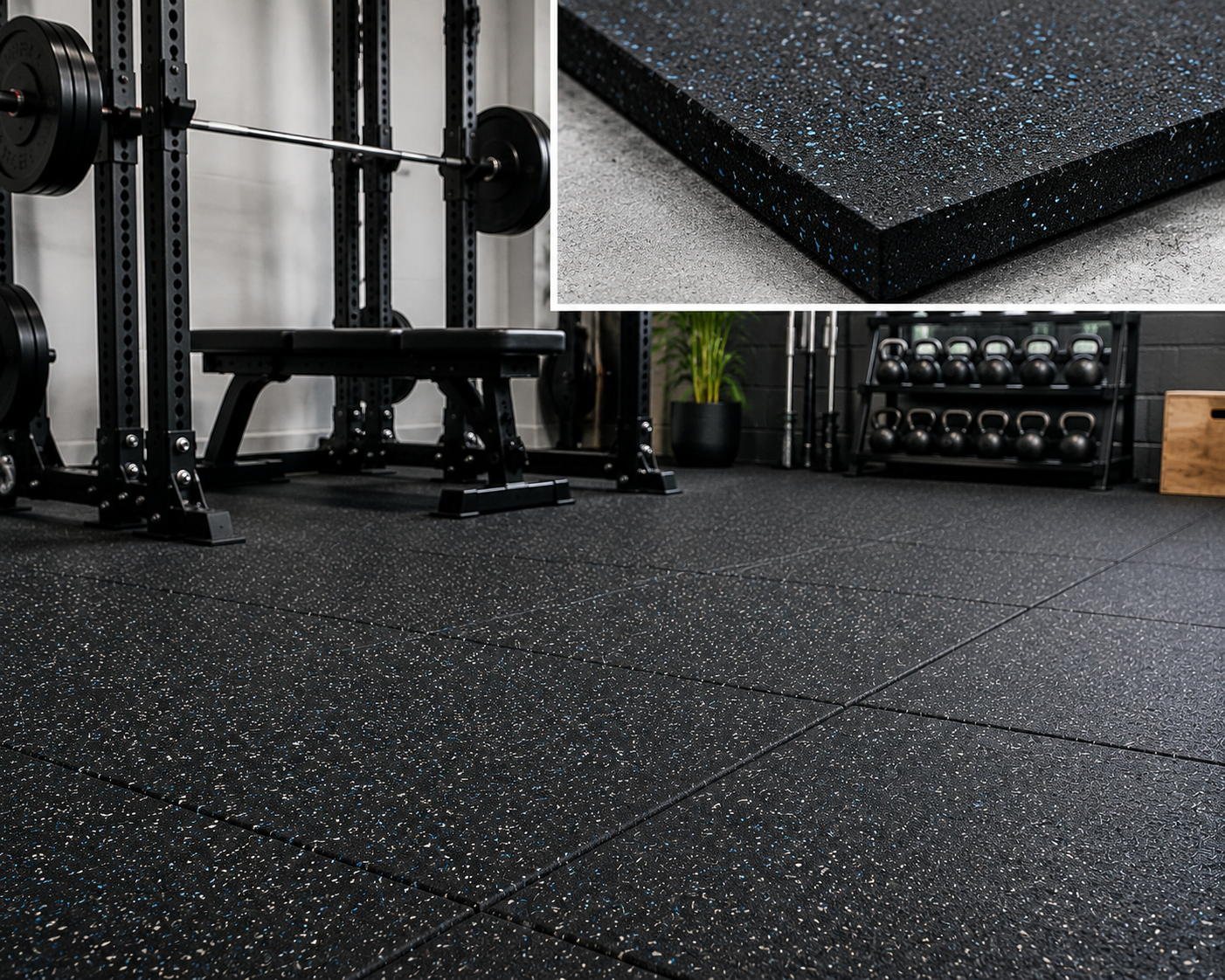
SBR rubber is primarily created for weight rooms and functional areas, but it is also used in some areas dedicated to combat sports thanks to its high resistance to abrasion.
A modern rubber boxing floor ensures excellent stability during explosive movements, absorbs some vibrations, and resists heavy traffic very well.
Rubber generally presents greater rigidity compared to tatami and is therefore less suitable for disciplines with frequent falls or throws.
Wear resistance
SBR rubber withstands high loads, continuous user traffic, and use with equipment without quickly losing its characteristics.
Stability and grip
The surface ensures excellent footing during the rapid movements typical of boxing and athletic training.
Comparison between surfaces
Analyzing density, shock absorption, comfort, and durability, substantial differences emerge between the two solutions. Tatami prioritizes athlete protection during contact with the ground, while rubber offers greater rigidity and mechanical resistance.
From a grip perspective, both surfaces can offer high performance, provided that professional products designed for sports use are chosen.
The decision should be based primarily on the prevalent discipline and the type of activity carried out in the gym.
Shock absorption
Tatami is superior in managing impacts thanks to its expanded structure that effectively disperses energy.
Abrasion and durability
SBR rubber excels in abrasion resistance, especially in high-traffic areas and during continuous use.
Which to choose for each discipline
Grappling disciplines such as Judo, Brazilian Jiu Jitsu, and MMA generally require high-density tatami to protect athletes during falls.
In traditional boxing, where fighting occurs mainly in an upright position, rubber can represent a valid alternative, especially in areas dedicated to athletic preparation.
For Karate and other traditional martial arts, the choice depends on the intensity of contact and the type of training performed daily, carefully evaluating the most suitable karate tatami density.
MMA and Grappling
Throws make tatami the most suitable solution to ensure comfort and safety during ground techniques.
Boxing and striking disciplines
Rubber can offer a stable support for footwork, heavy bags, and athletic preparation, while tatami remains preferable in areas dedicated to sparring with falls.
Hygiene and maintenance
Hygiene represents a fundamental aspect, especially in disciplines practiced barefoot or with frequent skin contact with the floor.
Modern surfaces are designed to facilitate daily cleaning and limit the absorption of liquids, but the quality of the materials significantly affects performance over time.
Choosing professional products reduces the risk of premature deterioration and facilitates compliance with hygiene protocols.
Daily cleaning
Specific detergents and regular sanitization programs contribute to maintaining high hygiene standards.
Preventive maintenance
Periodic checks allow for the quick identification of any worn elements, preserving the safety and durability of the facility.
Durability and investment
The initial cost represents only a part of the overall investment. It is important to consider durability, frequency of replacement, maintenance, and impact on gym operations.
Certified professional products generally guarantee greater operational continuity and lower costs over the entire life cycle.
Many centers choose to differentiate surfaces by installing tatami in combat areas and rubber in zones dedicated to athletic preparation, getting the most out of both solutions.
Total cost of ownership
Evaluating only the purchase price can lead to disadvantageous decisions in the medium and long term.
Return on investment
Quality flooring improves the user experience, adds value to the facility, and reduces extraordinary interventions.
How to evaluate the best solution
Before purchasing, it is advisable to carefully analyze the disciplines practiced, intensity of use, number of users, and future goals of the facility. Every gym presents different needs, and the choice must be supported by an in-depth technical evaluation.
Relying on specialized suppliers and choosing professional solutions allows for high performance, greater safety, and superior durability over time. To learn more about the various solutions dedicated to sports flooring, you can consult the gym tatami vs rubber options available for professional facilities.
A well-planned investment allows you to offer athletes a safe, high-performing environment that complies with the needs of different disciplines, improving the academy's competitiveness and ensuring value in the long term.
Comments (0)