
Trolley
You have no items in your shopping cart

 Budgets
 Dumbers
 Discs
Discs
 Benches
 Racks and Rigs
 Weights Holders
 Isotonic machines
 Calisthenics
 Cardio
 Kettlebells
 Flooring
 Gym Set
 Accessories
 Combat
 ARTI MARZIALI
 CONTAINER GYM
 Tug-Of-War
 Used Gym Equipment
 PILATES MACCHINARI
 GINNASTICA ARTISTICA
 CAMPI DA PADEL
 Prodotti in Pronta Consegna
 Informazioni
 IRONMAN
 Gift Card
- Donatif
- General information
- 0 I like it
- 28 Views
- 0 comments
- gym flooring, safety flooring, gym safety, shock-absorbing materials
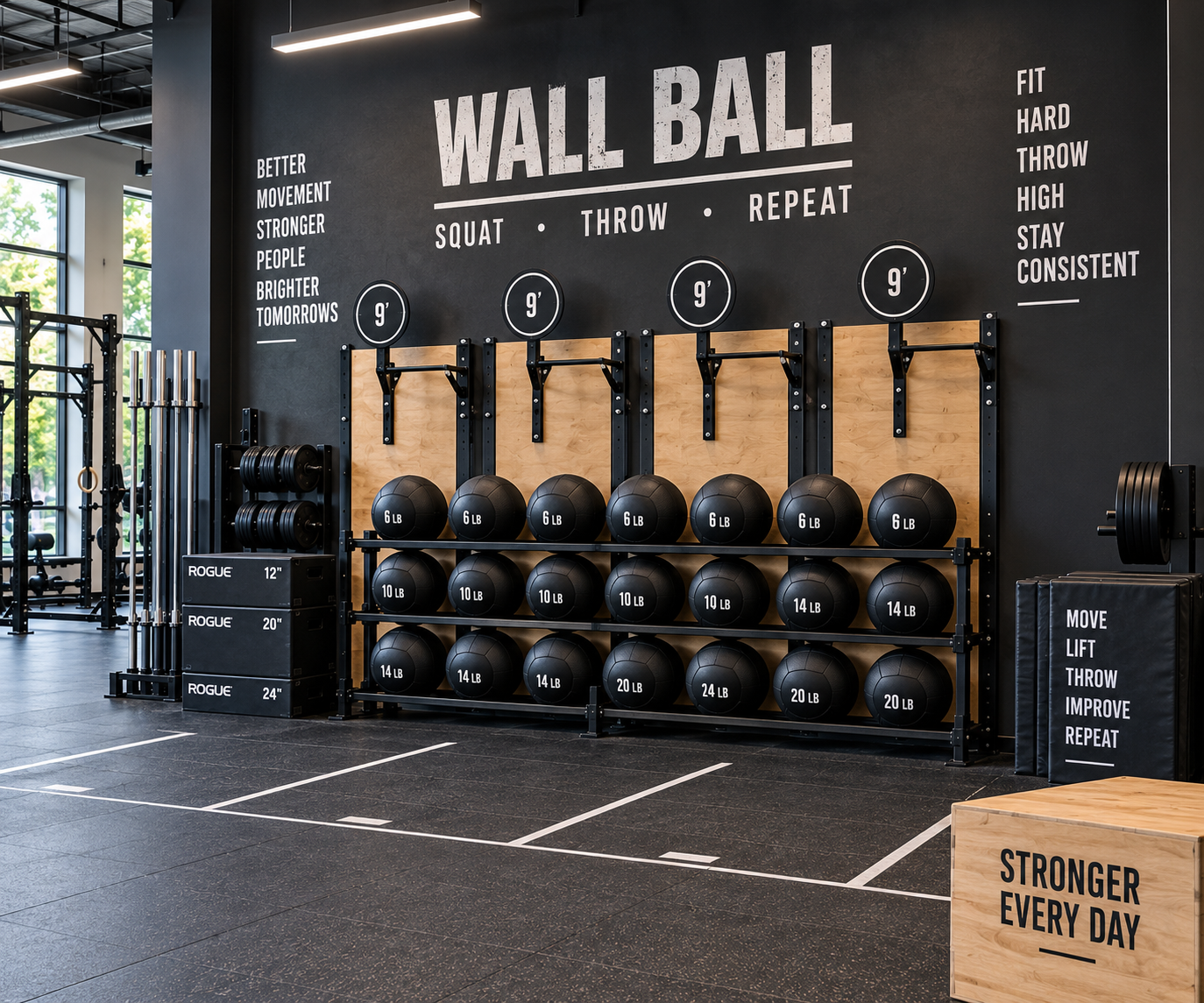
Wall ball maintenance: cleaning and seam inspection
Proper maintenance of the wall ball helps preserve its performance over time, maintain a good level of safety during training, and reduce the risk of premature wear. Most procedures take only a few minutes and can be performed as part of the normal equipment inspection routine.
The most important operations involve cleaning the cover, inspecting the seams, checking the padding, and proper storage after use. These checks are particularly relevant in gyms and fitness centers where equipment is used daily by multiple people.
This guide provides practical criteria for checking the condition of a wall ball, identifying the main signs of wear, and understanding when it is appropriate to intervene or replace the product, without addressing aspects already covered in guides dedicated to technique or weight selection.
- Quick answer
- What to check
- Frequencies and signs of wear
- Cleaning and routine maintenance
- Inspection table
- When to intervene or replace
- Standards and references
- How to preserve your investment
How to keep a wall ball in good condition
Routine maintenance consists of regularly cleaning the cover, checking the seams and external surface, verifying that the shape remains uniform, and storing the tool in a dry environment. Small frequent checks make it possible to promptly identify any anomalies.
A properly maintained wall ball offers a safer grip, better stability during throwing, and greater durability over time.
Before each workout, it is advisable to perform a quick visual inspection of the tool.
Pre-use check
Check that the cover is intact, that the seams show no openings, and that the shape remains regular.
Proper storage
Always store the wall ball in a clean, dry environment away from heat sources or excessive humidity.
Which elements to check periodically
The seams represent one of the first elements to inspect because they are subjected to continuous stress during throwing and catching exercises.
It is also important to observe the outer cover, checking for the absence of deep abrasions, cuts, or deformations that could compromise the grip.
Finally, it is necessary to check that the distribution of the padding remains uniform and that the diameter of the tool does not show obvious deformations.
Seam inspection
The seams must appear continuous, with no loose threads or visible openings.
Cover verification
Surface stains are generally less relevant than cuts, cracks, or structural damage.
How often to perform checks
The frequency depends on the intensity of use. In a professional gym, it is advisable to perform a visual inspection before use and more thorough checks at scheduled intervals.
In home gyms, a periodic complete check may be sufficient, especially if the tool is used less frequently.
Every check should be recorded in sports facilities that manage numerous pieces of equipment to facilitate scheduled maintenance.
Intensive use
The greater the number of daily sessions, the greater the attention that must be dedicated to inspections.
Home use
Even with occasional use, it is appropriate to regularly check the condition of the equipment.
How to clean the wall ball properly
For routine cleaning, you should always follow the manufacturer's instructions. In general, it is preferable to use a soft, slightly damp cloth and detergents compatible with the cover material.
After cleaning, it is advisable to let the wall ball dry completely before storing it, avoiding direct exposure to heat sources that could alter the materials and seams.
Proper maintenance also includes cleaning the training area and the shock-absorbing flooring, so as to limit the accumulation of dirt on the cover.
Products to use
Use exclusively products compatible with the materials indicated by the manufacturer.
Drying
Before storage, verify that the tool is completely dry.
Recommended inspection table
This table summarizes the main elements to verify.
| Element | Check | Recommended action |
|---|---|---|
| Seams | Visual integrity | Do not use the tool if openings are present. |
| Cover | Absence of deep cuts | Clean regularly and check for any damage. |
| Padding | Uniform distribution | Check for any deformations. |
| Shape | Profile regularity | Suspend use in case of obvious alterations. |
A simple checklist makes maintenance activities more consistent, especially in facilities with numerous pieces of equipment.
Inspection log
In gyms, it is useful to note the date of verifications and any interventions performed.
Pre-workout check
A visual inspection takes a few seconds but helps quickly identify any problems.
When to intervene or replace the wall ball
If the seams are damaged, the cover has openings, or the padding no longer maintains a uniform distribution, it is advisable to suspend use until the condition of the tool is evaluated.
A permanent deformation of the shape or an evident loss of functionality may indicate that the wall ball no longer guarantees the characteristics expected by the manufacturer.
Continuing to use worn equipment increases the risk of issues during squat and throw exercises.
When to intervene
Always evaluate the possibility of maintenance only if provided by the manufacturer and compatible with the type of damage.
End of usage cycle
When the tool no longer maintains its original characteristics, it is appropriate to proceed with replacement.
Standards and technical references
For maintenance and cleaning procedures, one must first refer to the instructions provided by the wall ball manufacturer, which indicate compatible materials, storage methods, and usage limits.
Sports facilities should integrate these instructions with periodic equipment checks and internal inspection procedures, especially in the presence of intensive use.
Where maintenance logs are provided, it is useful to document checks and replacements to keep the condition of the equipment under control.
Manufacturer's manual
Following official instructions helps preserve the characteristics of the tool over time.
Internal procedures
Scheduling regular checks improves equipment management in professional gyms.
How to preserve the value of your equipment
Constant maintenance reduces deterioration due to daily use and helps keep the wall ball efficient for longer.
To organize a tidy functional training area, it can be useful to also integrate a selection of gym accessories dedicated to the storage and management of equipment, preventing products from remaining in contact with unsuitable surfaces.
A combination of regular cleaning, scheduled checks, and proper storage represents the most effective approach to protect the investment made and ensure continuity of use.
Comments (0)