
Trolley
You have no items in your shopping cart

 Budgets
 Dumbers
 Discs
Discs
 Benches
 Racks and Rigs
 Weights Holders
 Isotonic machines
 Calisthenics
 Cardio
 Kettlebells
 Flooring
 Gym Set
 Accessories
 Combat
 ARTI MARZIALI
 CONTAINER GYM
 Tug-Of-War
 Used Gym Equipment
 PILATES MACCHINARI
 GINNASTICA ARTISTICA
 CAMPI DA PADEL
 Prodotti in Pronta Consegna
 Informazioni
 IRONMAN
 Gift Card
- Donatif
- General information
- 0 I like it
- 23 Views
- 0 comments
- gym flooring, safety flooring, gym safety, shock-absorbing materials
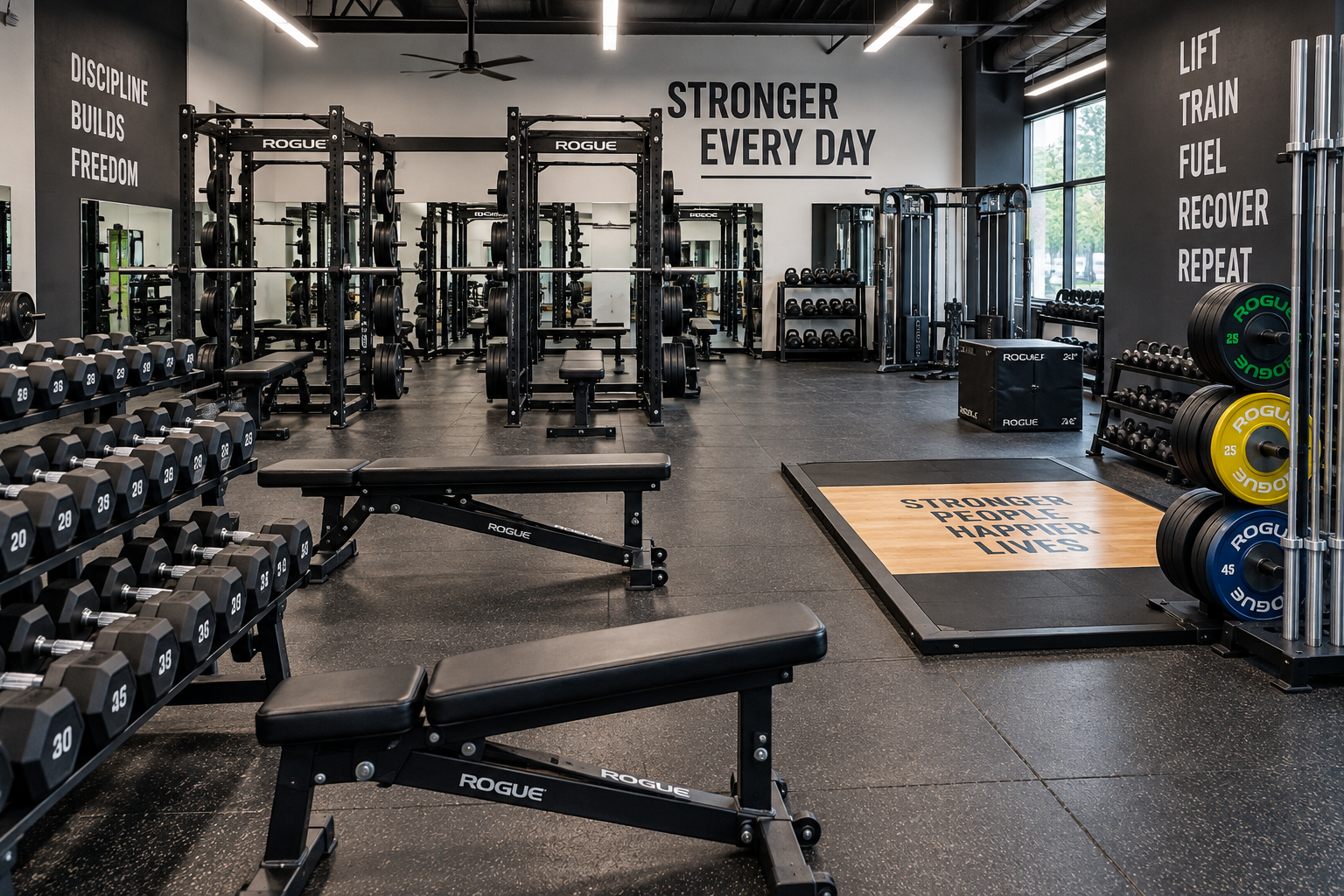
Weight room maintenance: inspections and cleaning
Proper weight room maintenance consists of performing scheduled checks, regular cleaning, and technical inspections of equipment to ensure safety, operational continuity, and investment longevity. Activities must follow manufacturer instructions, be documented, and be adapted to the facility's intensity of use.
In a commercial gym, maintenance is not exclusively about repairing faults. An effective program allows for the timely identification of signs of wear, the prevention of machine downtime, and the preservation of high perceived quality for users.
Inspections must cover equipment, flooring, weight storage systems, accessories, and transit areas. Preventive management reduces the risk of incidents and facilitates the scheduling of technical work without compromising the gym's daily operations.
- What to check during inspections
- How frequently to perform checks
- How to organize cleaning and maintenance
- How to recognize signs of wear
- When to service or replace equipment
- How to document maintenance
- Errors to avoid
- Maintenance as an investment
What to check during inspections?
Inspections must verify the general condition of the equipment, the stability of the structures, the correct functioning of mobile components, and the integrity of elements subject to wear. Each check should be performed following the instructions in the manufacturer's technical manuals.
Special attention should be devoted to racks, benches, adjustment systems, isotonic machine cables, pulleys, locking pins, and accessories used daily by users.
Flooring also requires regular checks to identify any deformations, detachments, surface wear, or loss of anti-slip properties.
Checking structures
It is advisable to periodically check equipment stability, the absence of deformations, any corrosion, and the correct positioning of fastening elements.
Checking fasteners
The tightening of bolts, screws, and mechanical components must be checked according to the intervals indicated by the manufacturer, especially in equipment subject to high stress.
How frequently to perform checks?
The frequency of inspections depends on the gym's intensity of use, the number of users, and the type of installed equipment. There is no single interval valid for every facility.
Visual checks can be carried out daily by staff, while in-depth technical checks should follow the maintenance plan provided by the manufacturer.
Any extraordinary intervention, equipment relocation, or layout modification requires a re-verification of operating conditions.
Daily checks
Before opening, it is advisable to check for damaged components, unstable equipment, misplaced accessories, and obstacles along pathways.
Scheduled checks
Technical inspections should be planned according to a documented calendar that takes into account the manufacturer's recommendations and the actual use of the equipment.
How to organize cleaning and maintenance?
Cleaning represents an essential component of preventive maintenance. Removing dust, chalk residue, sweat, and dirt helps preserve materials, upholstery, and mechanical components.
The products used must be compatible with the treated surfaces and comply with manufacturer guidelines to prevent premature deterioration of padding, coatings, and plastic parts.
Caring for weight room flooring requires special attention because it contributes to user safety and subfloor protection. To learn more about dedicated solutions, you can consult the gym flooring category.
Surface cleaning
Contact surfaces should be sanitized regularly using products suitable for the materials present in the weight room.
Equipment organization
Returning plates, dumbbells, and accessories to their respective racks helps keep pathways clear and facilitates cleaning operations.
How to recognize signs of wear?
Unusual noises, mechanical play, adjustment difficulties, deteriorated upholstery, and deformed components are indicators that require technical investigation.
In the case of cable machines, it is important to periodically check the condition of ropes, pulleys, and sliding systems. For racks and benches, it is fundamental to verify the stability and integrity of support points.
Flooring must also be observed to identify sagging, cuts, detachments, or loss of surface characteristics.
Components subject to wear
Bearings, cables, upholstery, grips, and adjustment systems require frequent checks because they are among the most heavily stressed elements.
Signs not to underestimate
Any anomaly that could compromise user safety should result in the immediate suspension of equipment use until technical verification.
When to replace or service?
The decision to repair or replace equipment must be made by considering the condition of the components, the availability of spare parts, and the manufacturer's instructions.
Continuing to use a machine that exhibits evident defects can increase the risk of breakdown and compromise user safety.
Interventions must be carried out by competent personnel using spare parts that comply with the required technical specifications.
Scheduled repair
Intervening at the first signs of deterioration often makes it possible to limit costs and reduce machine downtime.
Equipment replacement
When it is not possible to restore the required safety conditions, replacement represents the most appropriate solution.
How to document maintenance?
Every activity should be recorded in a dedicated logbook containing the date, equipment involved, type of check, interventions performed, and any anomalies found.
Updated documentation facilitates the planning of subsequent maintenance and allows for the reconstruction of the intervention history for each machine.
Records are also useful for verifying compliance with the maintenance plan provided by the facility.
Inspection logbook
A standardized logging system makes it easier to monitor the overall condition of the weight room.
Intervention history
Keeping a history allows for the identification of components subject to recurring wear and the planning of any preventive replacements.
What errors should be avoided?
One of the most frequent errors consists of performing interventions only after a fault appears, completely neglecting preventive maintenance.
Other critical issues concern the use of cleaning products incompatible with the materials, failure to check fasteners, and the absence of records for activities performed.
Even modifying the layout of equipment without verifying stability, operating spaces, and flooring conditions can compromise the proper functioning of the weight room.
Lack of prevention
Scheduled maintenance is generally more effective than interventions performed exclusively in case of emergency.
Failure to follow manuals
Manufacturer manuals represent the primary reference for frequencies, control methods, and permitted operations.
Why is maintenance an investment?
Scheduled management of weight room maintenance helps extend the useful life of equipment, improve service continuity, and contain costs resulting from sudden breakdowns. Preventive maintenance also makes it possible to offer a safer and more orderly environment, increasing user confidence in the quality of the facility.
Before defining the maintenance plan, it is advisable to gather all manufacturer instructions, prepare an inspection schedule, and regularly update technical documentation. For frequencies, operating methods, and components to check, it is appropriate to refer to individual equipment manuals, applicable standards, and the guidance of designated maintenance professionals, avoiding the adoption of standard procedures that are identical for every gym.
Comments (0)