
Trolley
You have no items in your shopping cart

 Budgets
 Dumbers
 Discs
Discs
 Benches
 Racks and Rigs
 Weights Holders
 Isotonic machines
 Calisthenics
 Cardio
 Kettlebells
 Flooring
 Gym Set
 Accessories
 Combat
 ARTI MARZIALI
 CONTAINER GYM
 Tug-Of-War
 Used Gym Equipment
 PILATES MACCHINARI
 GINNASTICA ARTISTICA
 CAMPI DA PADEL
 Prodotti in Pronta Consegna
 Informazioni
 IRONMAN
 Gift Card
- Donatif
- General information
- 0 I like it
- 2274 Views
- 0 comments
- stress reduction, improved self-esteem, physical and mental well-being, gym training
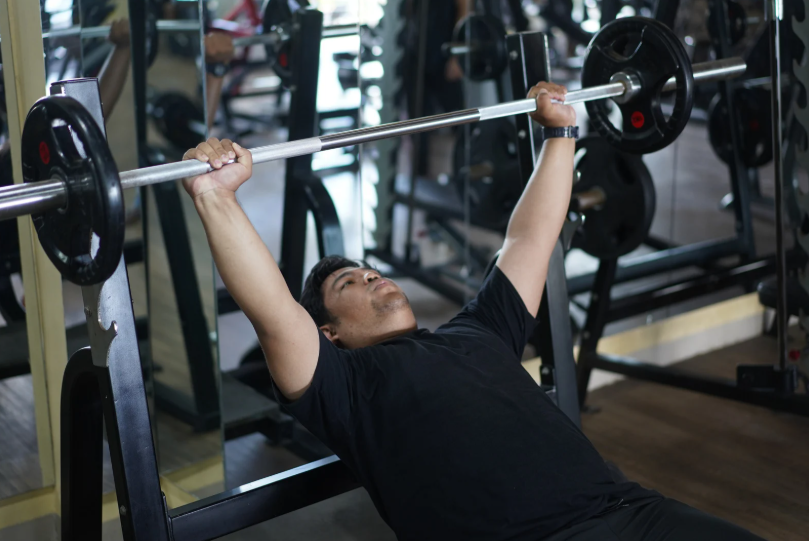
How to set up a small yet credible strength area with bench, rack and supports
Creating a compact strength area does not mean giving up professionalism. On the contrary, more and more micro-gyms and fitness centers are choosing smart configurations that optimize space and budget without compromising perceived quality. The key point is not the quantity of equipment, but the consistency of the setup and its actual functionality.
When space is limited, every choice must be strategic. A well-designed minimal configuration can convey solidity, order, and reliability—essential elements for building trust with clients without excessive or unnecessary investment.
- Why a compact strength area can still be professional
- The truly essential elements in a minimal setup
- How to organize space for maximum results
- Use scenarios: what you can really offer with a minimal setup
- How to avoid an unprofessional or improvised setup
- From selection to configuration: building a solid investment
Why a compact strength area can still be professional
One of the most common mistakes is thinking that credibility requires a large, fully equipped strength area. In reality, what is perceived as professional is the consistency between space, equipment, and actual use. A well-organized micro-gym communicates more expertise than an overcrowded and disordered facility.
Credibility comes from tangible elements: structural solidity, logical layout, and ease of use. Even with a few components, if well integrated, it is possible to create a smooth and reliable user experience, avoiding the sense of improvisation that often penalizes smaller setups.
The myth of the fully equipped gym
Many operators start with the idea that everything must be purchased immediately, but this pressure often leads to mistakes. A minimal configuration is not a limitation, but a way to build a modular system that grows over time without waste.
Investing gradually allows you to truly test how the space and equipment are used, avoiding redundant or unused purchases. This approach reduces risk and improves the sustainability of the investment.
Perceived credibility vs. quantity of equipment
Perceived quality is not linked to the number of machines, but to their functional coherence. A stable bench, a solid rack, and an organized space immediately communicate reliability.
On the contrary, a disorganized environment or mismatched equipment creates doubt. Simplicity, when designed intentionally, becomes a distinctive element and strengthens user trust.
The truly essential elements in a minimal setup
To build an effective strength area, it is crucial to focus on a few key elements. Choices should be guided by versatility and the ability to cover multiple training scenarios with minimal footprint.
A well-designed essential setup allows you to deliver a complete experience while avoiding redundancy and maintaining high operational quality.
Adjustable bench: the operational core of the strength area
The adjustable bench is the centerpiece of the entire configuration. Its ability to adapt to different inclines enables a wide range of exercises, making it indispensable in a limited space.
A stable and well-built bench enhances the perception of safety and quality—key factors in conveying professionalism even in compact environments.
Rack: structure and safety in a small space
The rack defines the strength area. It allows safe barbell training and significantly expands exercise possibilities, even within a few square meters.
A compact yet solid rack is a strategic investment, combining safety, versatility, and space optimization, and becoming the central element of the entire area.
Supports and storage: order and functionality
Plate and barbell storage solutions are often underestimated, yet they play a crucial role. They keep the space organized and make daily equipment use more efficient.
An organized environment improves not only operational efficiency but also visual perception. Order becomes an integral part of perceived quality.
How to organize space for maximum results
The arrangement of elements is what transforms simple equipment into a true functional strength area. Even a few square meters can become highly effective if properly designed.
Each piece of equipment should have a precise position, avoiding overlap and ensuring freedom of movement during training.
Effective minimal layout
An effective layout places the rack at the center, with the bench easily movable and storage positioned laterally. This setup allows for intuitive and fluid use of the space.
The simplicity of the layout reduces adaptation time and improves user experience, making the area immediately understandable and usable.
Spacing, flow, and real usage
Distances between equipment must be carefully planned to ensure safety and comfort. Even a few centimeters can make the difference between a functional and a limiting space.
Considering usage flow helps avoid user interference and keeps the strength area consistently organized and accessible.
Use scenarios: what you can really offer with a minimal setup
A minimal configuration does not limit your offering—it makes it more focused. With a bench, rack, and supports, you can cover most fundamental strength exercises.
This type of setup is ideal for environments where efficiency matters more than quantity, such as micro-gyms or personal training studios.
Complete basic strength training
Squats, bench press, military press, and their variations: with just a few elements, you can build complete and balanced programs. The key is equipment versatility.
This approach allows you to deliver a professional service even with limited resources while maintaining a high-quality experience.
Operational versatility
The combination of essential equipment allows you to adapt to different user levels, from beginners to intermediate athletes. This increases the value of the space without increasing complexity.
A compact yet well-designed strength area becomes a flexible and scalable tool over time.
How to avoid an unprofessional or improvised setup
The main risk in micro-gyms is creating a space that feels temporary or poorly maintained. This can undermine client trust and reduce perceived service value.
Avoiding these mistakes means carefully planning every detail, from equipment selection to layout.
Common mistakes in micro-gyms
Among the most frequent mistakes are cluttered equipment and lack of consistency between elements. This creates confusion and reduces the effectiveness of the space.
Another common issue is underestimating storage, which instead plays a crucial role in maintaining order and functionality.
Visual consistency and client perception
Visual consistency is key to conveying professionalism. Coordinated equipment and a clean space immediately communicate reliability.
Client perception is built through details: an organized and well-structured environment strengthens trust and enhances the overall experience.
From selection to configuration: building a solid investment
Setting up a minimal strength area requires a rational approach focused on protecting your investment. Every purchase should have a clear role within the system.
This helps avoid waste and builds a solid foundation for future expansion.
Purchase priorities
Priorities should follow a functional logic: first structural elements, then accessories. This ensures a solid and immediately usable base.
Investing in quality for key components reduces risk and increases the longevity of the entire setup.
Future evolution of the strength area
A well-designed minimal setup is already prepared for growth. Additional elements can be integrated gradually without disrupting the original layout.
This approach allows sustainable expansion while maintaining consistency and functionality—key elements for a credible and professional strength area.
Comments (0)