
Trolley
You have no items in your shopping cart

 Budgets
 Dumbers
 Discs
Discs
 Benches
 Racks and Rigs
 Weights Holders
 Isotonic machines
 Calisthenics
 Cardio
 Kettlebells
 Flooring
 Gym Set
 Accessories
 Combat
 ARTI MARZIALI
 CONTAINER GYM
 Tug-Of-War
 Used Gym Equipment
 PILATES MACCHINARI
 GINNASTICA ARTISTICA
 CAMPI DA PADEL
 Prodotti in Pronta Consegna
 Informazioni
 IRONMAN
 Gift Card
- Donatif
- General information
- 0 I like it
- 2116 Views
- 0 comments
- stress reduction, improved self-esteem, physical and mental well-being, gym training
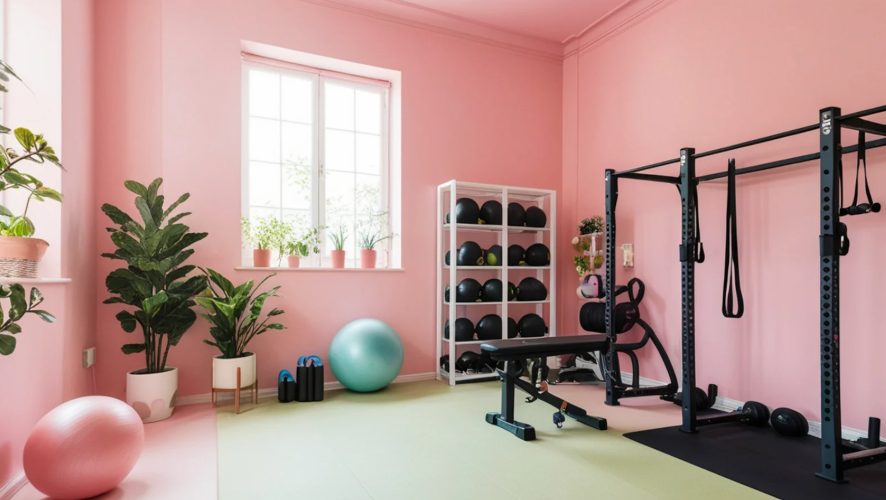
Essential Equipment for a Professional Micro Gym: Minimal Yet Solid Setup
When designing a micro gym or a personal trainer studio, the main challenge is not filling the space, but making it immediately credible, functional, and durable. The most common mistake is thinking you need to buy everything right away, ending up wasting budget and creating an inconsistent environment. In reality, a well-designed minimal setup can convey more solidity than an overcrowded and disorganized gym.
The key is to focus on real priorities: choosing a few pieces of equipment with a concrete impact on usability, perception, and longevity. This approach allows you to move from impulsive purchasing to a conscious professional setup, reducing risk and protecting your investment over time.
- Why perceived solidity matters as much as functionality
- Real priorities: what you actually need to start
- Elements that define a professional perception
- How to choose fewer but better equipment pieces
- Practical configuration of an effective micro gym
Why perceived solidity matters as much as functionality
In a limited space, every element communicates something. A well-designed micro gym must immediately convey order, strength, and reliability. This is not just about aesthetics, but about the feeling a user gets upon entering: a solid space is perceived as safer and more professional, even before using the equipment.
For a personal trainer or a small studio, visual credibility is a strategic asset. A stable rack, proper flooring, and coherent equipment choices communicate competence and attention to detail. On the contrary, an improvised setup raises doubts, even if it is technically functional.
Visual impact in a small space
In a micro gym, every choice is amplified. Low-quality or inconsistent equipment becomes immediately noticeable. For this reason, it is essential to focus on elements that convey structure and coherence, avoiding temporary or unstable solutions.
Visual perception must align with the actual user experience. A tidy environment, with well-positioned and proportionate equipment, creates a sense of control and professionalism that strengthens client trust.
Immediate credibility for clients and users
Anyone entering a PT studio evaluates its reliability within seconds. The presence of essential yet professional equipment reduces resistance and facilitates decision-making. This is particularly important in semi-B2B contexts, where perception directly influences the value of the service.
A well-selected minimal setup is not only sufficient, but can become a strength if it communicates clarity and intentionality.
Real priorities: what you actually need to start
Defining priorities means identifying what allows you to cover the widest range of exercises with minimal space. In a micro gym, every piece of equipment must have a clear function and frequent use. The goal is to build a solid foundation, avoiding unnecessary additions in the early stages.
Essential equipment is not extensive, but it must be chosen carefully. Its quality and versatility determine the real effectiveness of the space.
Core structure: the rack as the operational center
The rack is the core of a micro gym. It allows you to perform fundamental exercises such as squats, bench press, and pull-ups, ensuring safety and modularity. It is the element that immediately defines the professional level of the space.
Choosing a stable and well-built rack means investing in safety and durability. It is a decision that directly impacts both perception and daily use.
Bench and dumbbells: versatility and exercise coverage
The combination of a adjustable bench and dumbbells allows you to cover a wide range of exercises, adapting to different training levels. This versatility is essential in a small space, where each piece of equipment must be fully utilized.
Investing in quality dumbbells and a stable bench makes it possible to build complete workouts without the need for complex machines.
Elements that define a professional perception
Beyond the main equipment, there are elements that deeply influence how the space is perceived. Often underestimated, these details help create a coherent and professional environment.
Neglecting them means compromising the overall experience, even when the primary equipment is solid.
Flooring: safety, acoustics, and durability
Rubber flooring is one of the smartest investments. It protects surfaces, reduces noise, and increases safety during training. It also contributes to giving the space a professional appearance.
Proper flooring communicates attention to detail and enhances the perceived experience, making the environment more functional and welcoming.
Organization: weight storage and visual order
An organized environment is synonymous with professionalism. Using a weight rack helps keep the space clean and structured, making equipment easily accessible.
Visual order reduces clutter and improves usability, increasing the perception of control and reliability.
How to choose fewer but better equipment pieces
The main mistake is thinking that more equipment means higher quality. In reality, it is the coherence of the setup that makes the difference. Choosing fewer but well-designed pieces allows you to achieve better results with a more controlled investment.
This approach reduces risk and enables scalable growth over time.
Quality vs quantity: avoiding the most common mistake
Buying many low-cost items often leads to disappointing results. Quality affects safety, durability, and perception. It is better to have fewer elements that are reliable and robust.
A conscious choice helps avoid frequent replacements and maintains a high standard over time.
Investing for long-term durability
A good investment is based on durability and reliability. Equipment must withstand intensive use and maintain its characteristics over time.
This approach protects the invested capital and ensures sustainable growth of the space.
Practical configuration of an effective micro gym
An effective setup starts with a clear understanding of the available space. The goal is to create a functional environment where each element has a logical and accessible position.
The arrangement of equipment must facilitate movement and reduce clutter, always maintaining a balance between functionality and perception.
Functional minimal layout
The ideal layout places the rack at the center, with bench and dumbbells easily accessible. Rubber flooring defines the training area, while the weight rack supports organization.
This configuration covers most needs while keeping the space tidy and professional.
Space optimization and workflow
Optimizing space means reducing waste and improving efficiency. Every movement should feel natural and unobstructed, facilitating both training and studio management.
A well-designed micro gym is not only functional, but also conveys control, reliability, and professionalism, which are essential to building a solid project from the very beginning.
Comments (0)