
Trolley
You have no items in your shopping cart

 Budgets
 Dumbers
 Discs
Discs
 Benches
 Racks and Rigs
 Weights Holders
 Isotonic machines
 Calisthenics
 Cardio
 Kettlebells
 Flooring
 Gym Set
 Accessories
 Combat
 ARTI MARZIALI
 CONTAINER GYM
 Tug-Of-War
 Used Gym Equipment
 PILATES MACCHINARI
 GINNASTICA ARTISTICA
 CAMPI DA PADEL
 Prodotti in Pronta Consegna
 Informazioni
 IRONMAN
 Gift Card
- Donatif
- General information
- 0 I like it
- 10 Views
- 0 comments
- gym flooring, safety flooring, gym safety, shock-absorbing materials
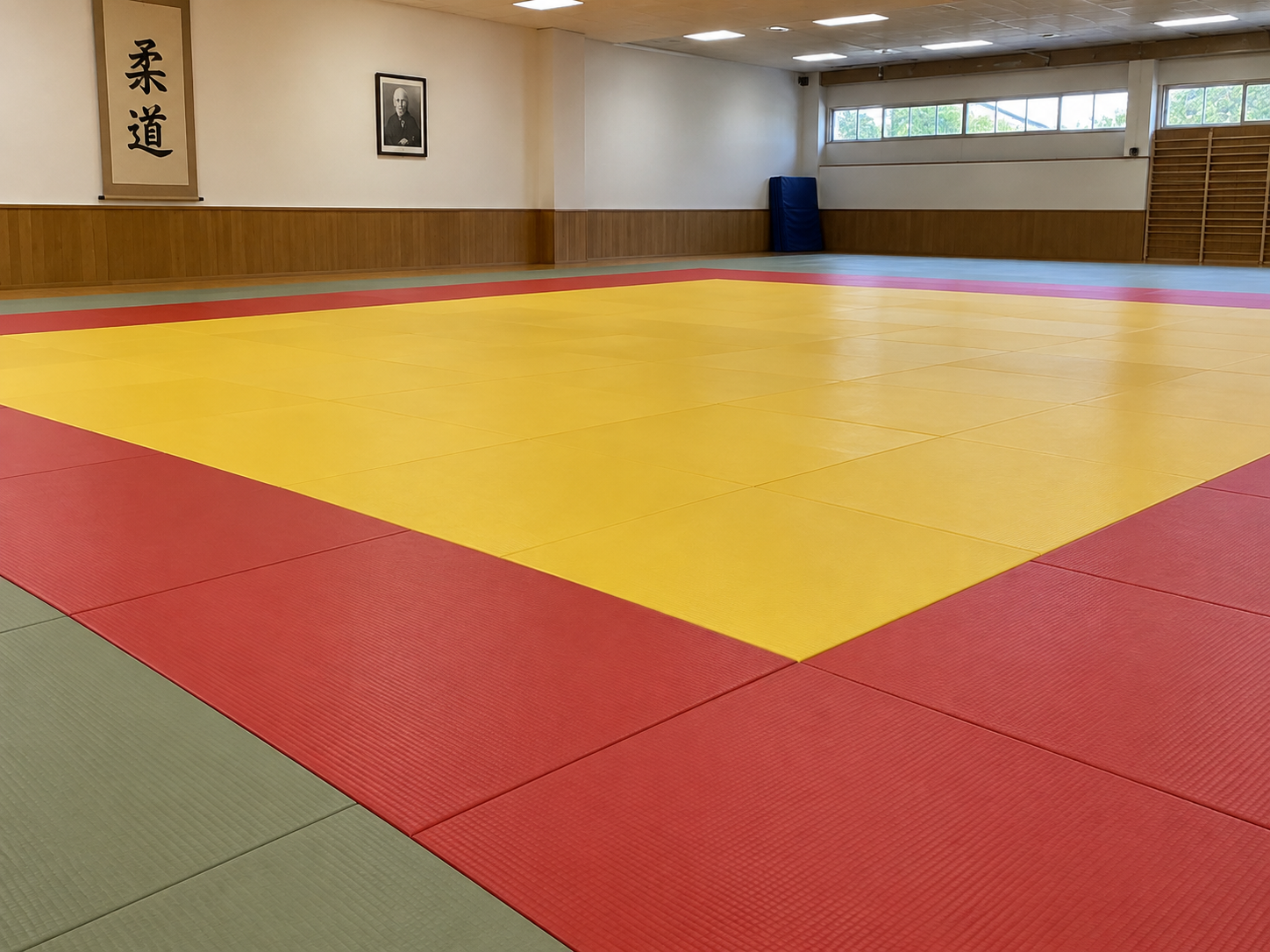
Judo tatami safety: open joints and slipping, how to prevent them
A safe judo tatami means much more than just a surface with a good level of shock absorption. Safety depends on the entire system consisting of flooring, installation, joints, maintenance, and periodic checks. Even a quality product can lose its effectiveness if installed incorrectly or used without regular inspections.
Among the most frequent critical issues in dojos and gyms dedicated to judo are open joints, misalignments between modules, surfaces that tend to slip, and deterioration caused by wear or maintenance not conforming to the manufacturer's instructions. Promptly identifying these issues helps reduce risks during training and competitions.
This guide proposes a practical procedure for recognizing the main risk conditions, organizing safety checks, and defining objective criteria to maintain reliable flooring over time, without replacing the manufacturer's technical documentation or applicable federal regulations.
- Quick answer
- What are the main risks?
- What safety requirements must the tatami meet?
- What checks should be performed before use?
- Verification checklist
- Errors to avoid
- FAQ
- Long-term safety management
How to prevent open joints and slipping of the judo tatami?
Prevention is based on correct installation, periodic joint checks, verification of surface stability, and maintenance in accordance with the manufacturer's instructions. Before each use, it is advisable to visually inspect the tatami to identify gaps, unevenness, damaged elements, or anomalies that could compromise training safety.
For facilities intended for federal activities or competitions, it is also appropriate to check the regulations of the International Judo Federation and the competent national federation in addition to the technical documentation of the installed flooring.
Each check should be documented through an internal procedure to facilitate monitoring the state of the surface over time.
Objective of checks
The main purpose is to promptly identify situations that may increase the risk of tripping, loss of stability, or improper use of the flooring.
Who should carry out the checks?
In professional facilities, it is advisable to appoint a person responsible for periodic checks and recording any anomalies.
What are the main risks?
The most frequent problems concern the opening of joints, the shifting of modules, the deterioration of the surface, the loss of continuity between elements, and slippery conditions due to contamination or incorrect maintenance.
Not all phenomena depend on product quality. In many cases, they are the consequence of non-compliant installation, an irregular subfloor, or use incompatible with the intended destination of the flooring.
judo tatami thickness and density must be evaluated during the initial choice of the system because they affect the overall behavior of the surface together with the installation methods.
Open joints
Gaps between modules can result from incorrect installation, subfloor movements, wear, or repeated dismantling. Their presence requires immediate control before continuing the activity.
Surface slipping
Dirt residue, incompatible detergents, moisture, and unsuitable supports can alter the behavior of the flooring and make a verification intervention necessary.
What safety requirements must a tatami meet?
Flooring intended for judo must be installed on a stable and regular base, maintain continuity between modules, and present surface conditions compatible with the planned activity.
The configuration must also provide adequate safety areas, borders when necessary, and wall protections if required by the facility's setup.
how to choose a judo tatami also means checking the availability of technical documentation, installation instructions, and indications regarding periodic maintenance.
Importance of installation
Installation conforming to the manufacturer's instructions reduces the risk of unwanted flooring movements during use.
Environmental conditions
Temperature, humidity, and the state of the subfloor should be compatible with the indications reported in the technical documentation of the installed system.
What checks to perform before use?
Before each session, it is advisable to perform a quick visual inspection of the entire area verifying the continuity of the surface and the absence of anomalous elements.
For facilities used daily, it can be useful to prepare a standard checklist to be filled out before activities begin.
In a project dedicated to combat disciplines, it is possible to integrate the tatami with a complete solution of martial arts equipment designed consistently with the needs of the structure.
Visual check
Verify that there are no open joints, deformed modules, raised borders, or missing elements.
Functional check
Make sure the surface is stable, uniform, and free of anomalous movements during normal use.
Safety verification checklist
A simple checklist facilitates ordinary facility management.
| Check | Objective | Recommended frequency |
|---|---|---|
| Joint verification | Identify gaps or misalignments | Before use |
| Stability check | Detect anomalous movements | Before use |
| Surface cleaning | Remove contamination | According to maintenance plan |
| Border verification | Check for any unevenness | Periodic |
| General inspection | Document any anomalies | Programmable |
Recording interventions
Noting the verifications allows monitoring the evolution of the flooring state and programming any interventions.
How to intervene
If anomalies are detected, it is appropriate to suspend the use of the affected area until the conditions provided by the manufacturer are restored.
What errors compromise safety?
Continuing activity despite open joints, using incompatible detergents, neglecting periodic checks, and ignoring installation instructions represent some of the main causes of operational problems.
Installing the flooring on an unsuitable support can also favor unwanted movements and loss of surface continuity.
how to lay and clean the judo tatami must always follow the manufacturer's instructions while how many tatamis are needed for a dojo must be defined through careful planning of the available space.
Non-compliant installation
An installation carried out without respecting the manual can compromise the stability and durability of the entire system.
Unscheduled maintenance
The lack of regular checks makes it harder to timely identify any risk conditions.
Frequently asked questions
What to do if a joint opens?
It is advisable to interrupt the use of the affected area and verify the cause following the manufacturer's instructions before resuming the activity.
Why can the tatami become slippery?
Causes may include surface contamination, unsuitable detergents, moisture, or environmental conditions incompatible with what is provided by the manufacturer.
How often should checks be carried out?
Visual checks should precede each use while in-depth inspections can be planned according to the level of use of the facility.
How to manage safety in the long term?
A safety management program allows preserving the performance of the flooring and reducing the risk of activity interruptions. Documented procedures, programmed checks, and staff training represent effective tools to maintain a high level of facility reliability.
To compare different solutions, it is useful to request technical sheets, installation manuals, maintenance instructions, and indications on the availability of spare parts. These elements allow evaluating the system throughout its entire life cycle and not just at the time of purchase.
Entrusting the safety of the dojo to regular checks, updated technical documentation, and verifications consistent with applicable regulations helps keep the surface efficient and ready to face continuous professional use.
Comments (0)