
Trolley
You have no items in your shopping cart

 Budgets
 Dumbers
 Discs
Discs
 Benches
 Racks and Rigs
 Weights Holders
 Isotonic machines
 Calisthenics
 Cardio
 Kettlebells
 Flooring
 Gym Set
 Accessories
 Combat
 ARTI MARZIALI
 CONTAINER GYM
 Tug-Of-War
 Used Gym Equipment
 PILATES MACCHINARI
 GINNASTICA ARTISTICA
 CAMPI DA PADEL
 Prodotti in Pronta Consegna
 Informazioni
 IRONMAN
 Gift Card
- Donatif
- General information
- 0 I like it
- 757 Views
- 0 comments
- gym flooring, safety flooring, gym safety, shock-absorbing materials
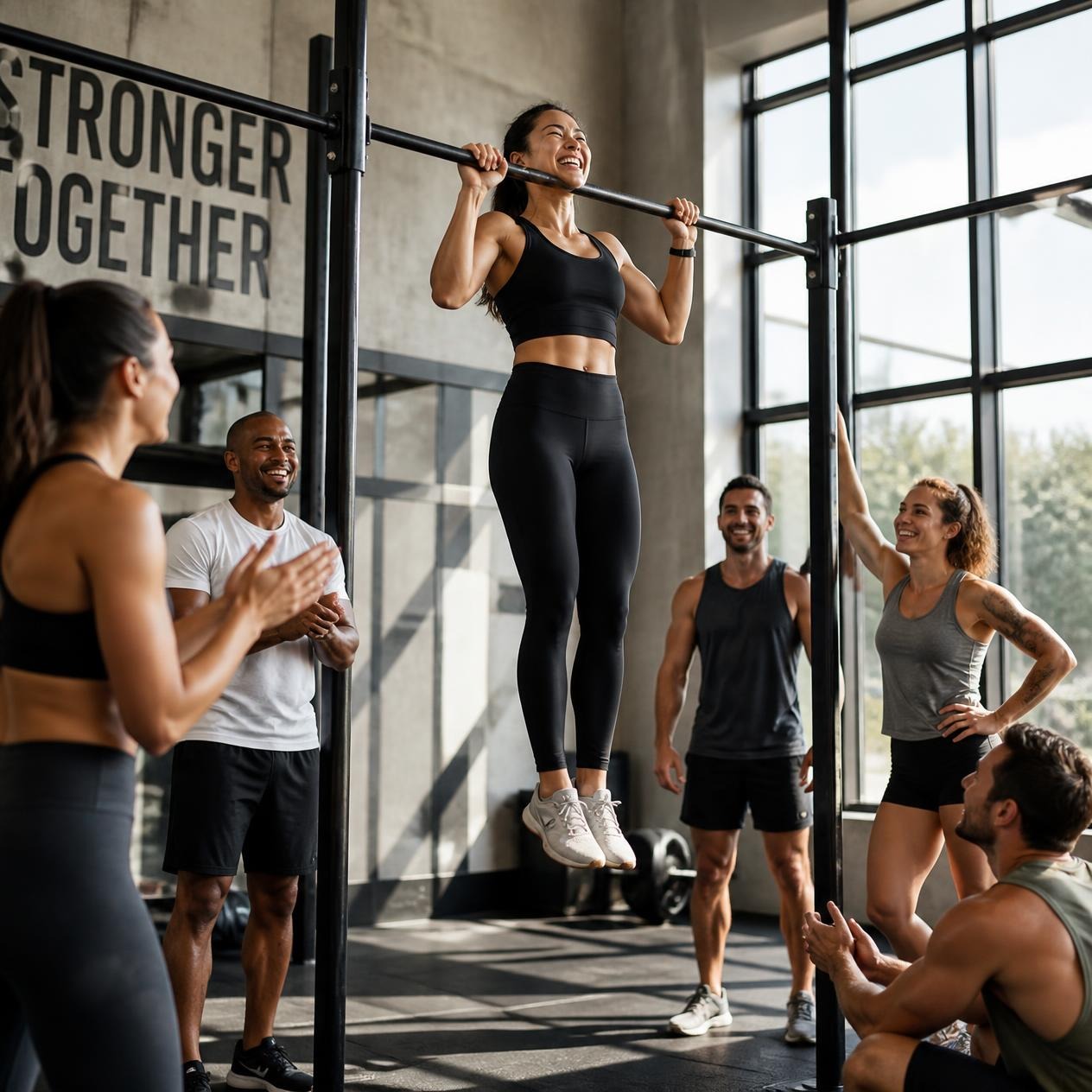
Calisthenics and Combat Sports: Integrating Functional Strength
Those who practice MMA, boxing, Brazilian Jiu-Jitsu, kickboxing, or other combat sports know that performance does not depend solely on technique. Power, explosiveness, endurance, and body control are determining qualities during every phase of a fight. For this reason, more and more athletes are incorporating calisthenics for MMA into their athletic preparation, using bodyweight exercises to develop functional strength without unnecessarily increasing body weight.
Calisthenics offers an important advantage over other training methods: it simultaneously improves relative strength, coordination, mobility, and joint stability. These characteristics translate into more efficient movements during striking, clinching, takedowns, and ground work, while maintaining high execution speed.
In this guide, we will analyze how to integrate calisthenics into a fighter's preparation, which exercises to prioritize, how to organize a weekly schedule, and which equipment to choose to build a home gym or an athletic training room truly oriented toward combat sports.
- Why calisthenics improves performance in fighting
- Functional strength in combat sports
- Fundamental exercises
- How to integrate calisthenics into the week
- Equipment for the modern fighter
- Reducing the risk of injury
- Applications for gyms and sports centers
- How to choose a professional setup
Why calisthenics improves performance in fighting
In combat sports, the ability to produce force rapidly is one of the factors that most influences performance. Every punch, kick, takedown, or grappling phase requires a perfect transfer of force between the lower limbs, the core, and the upper limbs. Calisthenics develops this very integration, training the body as a single system rather than as a sum of isolated muscles.
Unlike many traditional programs based exclusively on machines, bodyweight work improves neuromuscular control, joint stability, and the ability to manage one's own weight in any position. All of this translates into greater efficiency during combat and better movement economy.
Another advantage concerns weight management. Many fighters must meet precise weight categories and prefer to develop strength without excessively increasing body mass. Calisthenics allows for increasing relative strength while maintaining an excellent ratio between weight and performance.
More power without useless weight
Improving relative strength allows you to express greater power while maintaining agility, speed, and movement capacity throughout the entire match.
Body control in every situation
Continuous work on stabilization improves balance, coordination, and the management of transitions between one technique and another.
Athletic preparation for combat sports
The athletic preparation of a fighter must develop numerous qualities simultaneously: strength, endurance, explosiveness, mobility, and recovery capacity. No training method should completely replace technical work, but calisthenics represents an extremely effective complement.
Pull-ups strengthen the back musculature and improve control during clinching and grappling. Dips and push-ups develop the pushing chain useful in strikes and grappling phases. Isometric exercises, on the other hand, increase the ability to maintain control positions under load.
The goal is not simply to increase absolute strength, but to develop an athletic capacity directly transferable to the needs of combat.
Relative strength and performance
Being strong relative to one's body weight represents one of the main competitive advantages in sports with weight categories.
The role of the core
A stable core improves the transfer of force between the lower and upper body, increasing the effectiveness of strikes and stability in grappling phases.
Fundamental exercises for a fighter
An effective program should focus on multi-joint movements that involve large muscle chains and require high body control. Pull-ups are one of the most complete exercises for improving back and grip strength.
Parallel bar dips, push-ups in various forms, squats, lunges, and isometric work represent the foundation of any modern athletic preparation oriented toward combat. The integration of explosive exercises further increases the transfer to sports performance.
Progressions must respect the athlete's level, avoiding overly rapid increases in volume that could compromise the quality of technical training.
Training explosive bodyweight strength
Explosive pull-ups, plyometric push-ups, jump squats, and ballistic variations improve the ability to produce force in very short times.
Grip strength
Hanging, towel pull-ups, and ring work increase forearm endurance and control during clinching and grappling.
How to integrate calisthenics into the week
One of the most frequent mistakes is adding strength sessions without modifying the rest of the preparation. The result is an accumulation of fatigue that reduces the quality of technical training and increases the risk of injury.
An effective solution is to include two or three weekly sessions dedicated to calisthenics, alternated with specific striking, grappling, and sparring training. Days of higher technical intensity should be separated from those dedicated to strength development.
During the competitive period, it is advisable to reduce volume while maintaining high intensity, so as to preserve strength without compromising freshness and speed.
Example of integration
Strength sessions can be performed on days dedicated to athletic preparation, leaving room for technical training in the following days.
Adapting the program to the season
General preparation can include a higher volume of strength, while near competitions it is better to prioritize speed, recovery, and technical quality.
Equipment for the modern fighter
Complete preparation requires reliable tools designed for intense use. The combination of calisthenics structures and equipment dedicated to combat allows for the creation of an extremely versatile environment.
A reinforced pull-up bar, gymnastic rings, parallel bars, battle ropes, a boxing bag, and a medicine ball allow you to develop practically all the qualities required in combat sports. The modularity of the structures also makes it easy to adapt the setup to the needs of the gym or home gym.
For those who want a professional facility, a modular combat training structure represents a solution capable of integrating bodyweight exercises, boxing bags, and numerous accessories dedicated to athletic preparation.
Integrating bodyweight and combat
Training in the same station with bags, bars, and accessories reduces downtime and makes preparation more efficient.
A structure that grows with the athlete
Modular systems allow you to add new stations following the evolution of the preparation without replacing the entire facility.
Reducing the risk of injury
Combat disciplines subject the body to high loads. For this reason, prevention represents a fundamental component of athletic preparation.
Calisthenics improves shoulder stability, strengthens the core, and develops better joint control, helping to reduce the risk of overload resulting from the high volume of technical training.
Mobility, recovery, and gradual progression of exercises must also be an integral part of the program to maintain high performance throughout the season.
Mobility and joint control
Good mobility improves technical quality, movement speed, and the ability to absorb the stresses of combat.
Recovering intelligently
Alternating intense days and active recovery sessions allows you to maintain high quality throughout the entire preparation.
Opportunities for gyms and sports centers
Facilities that offer MMA, boxing, kickboxing, or Brazilian Jiu-Jitsu courses can significantly expand their added value by integrating areas dedicated to calisthenics and athletic preparation.
A multifunctional zone allows athletes to perform specific exercises before or after technical training, improving the overall effectiveness of the preparation without increasing the number of rooms required.
For athletic trainers and fitness center owners, investing in modular structures means offering a more complete service, differentiating themselves from the competition, and increasing the versatility of available spaces.
A multifunctional room
Integrating combat equipment and calisthenics structures allows you to host individual training, courses, and athletic preparation in the same environment.
Greater value for members
Complete preparation increases athlete satisfaction and expands work opportunities for instructors and trainers.
How to choose a professional setup
Integrating calisthenics for MMA into your preparation is a strategic choice for developing strength, explosiveness, and body control without compromising agility and speed. Bodyweight work complements technical preparation by offering a concrete advantage to both amateur and professional athletes.
A well-organized program, reliable equipment, and a structure designed to support intense training allow you to achieve lasting results while reducing the risk of injury and optimizing every session. The combination of bars, rings, boxing bags, and tools for athletic preparation allows you to build an environment capable of meeting the needs of the modern fighter.
For home gyms, gyms, and centers dedicated to combat sports, choosing modular structures and professional materials means making an investment destined to support the technical growth of athletes in the long term, offering a versatile space capable of evolving along with the new needs of physical preparation.
Comments (0)