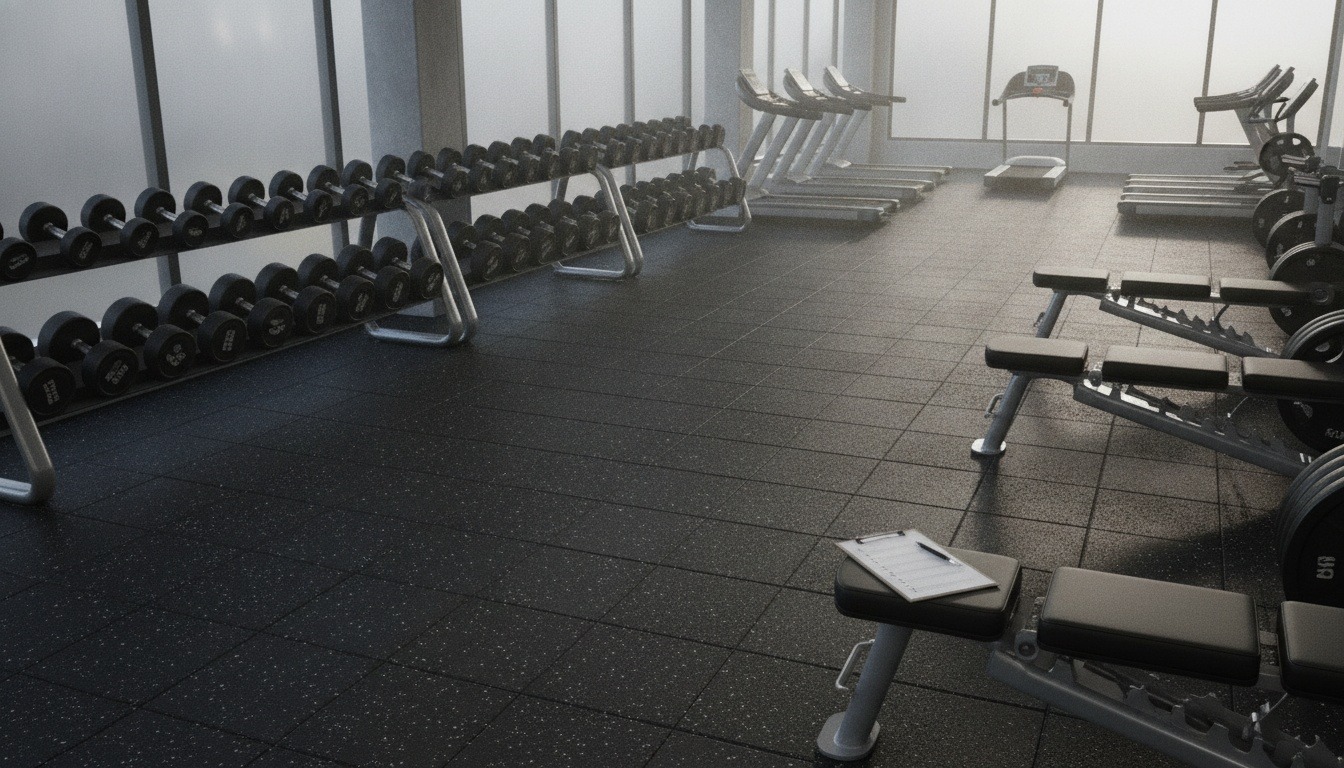
To make the most of Black Friday gym equipment deals for a commercial fitness facility, you need a written plan before you start: an inventory of the room, a ranked list of priorities and a maximum budget. A discount does not make a replacement urgent. Only the combination of wear, frequency of use and risk to the service does that.
Treat the promotional period as a planning checkpoint ahead of the new year, not as a race to buy. This guide gives you an audit procedure, a way to tell renewal from expansion, a priority matrix with examples and a checklist to bring to the table with members and staff.
You will not find offers, prices or lead times here. Terms and availability change, so check them on the product pages or request a quote. Detailed choices for each category are in the linked specialist articles.
In this article
Why do you need a plan before Black Friday?
Without a plan, the discounted price becomes the only criterion. This is anchoring bias: you compare the price with the list price instead of with the real needs of the room.
A plan protects you from three risks: capital tied up in marginal purchases, equipment that does not fit with what you already have, and equipment out of service during peak hours. Status quo bias also plays a role: you postpone replacing what is critical and buy what is simply on display.
To learn how to tell a real saving from a surface promotion, read how to recognise a genuine saving. For an overview of the season, see also the guide on how to plan your renewal before 2027.
How do you audit the gym floor in 5 steps?
- Inventory: list every piece of equipment by zone (free weights, machines, flooring, storage, cardio) with quantities and approximate purchase year.
- Condition: note visible wear, play, noise, worn parts, peeling coatings and loose threads.
- Frequency of use: for two weeks, observe which stations have queues or are always occupied and which are always free.
- Criticality: assign each item a risk level for the user and for the continuity of the service.
- Total cost: consider maintenance, spare parts, downtime and occupied space, not only the purchase price.
For technical checks on load ratings, see load testing of strength room equipment. If you doubt the safety of a piece of equipment, consult your technical manager and the manufacturer's instructions.
Quick checklist for each piece of equipment
- Are there worn or damaged parts that affect safety?
- Is it used every day or only at certain times?
- Are spare parts available?
- Is it compatible with the rest of the setup (diameters, plates, racks)?
- If it goes out of service, does the service suffer?
Renewal or expansion: how do you tell them apart?
Renewal replaces what is worn out or no longer reliable. Expansion adds new capacity or functions: more stations, a new zone, an additional discipline.
Renewal takes priority when it concerns safety and continuity. Expansion makes sense when you have data to justify it, such as recurring queues or repeated requests from members, rather than a simple impression.
If your facility combines different disciplines, you will find ideas in from mat space to strength floor for more versatile spaces. If you are considering refurbished machines alongside new ones, see renewing the strength room by mixing new and refurbished equipment.
How do you build the priority matrix?
Cross criticality with frequency of use. The table below is an illustrative example, to be adapted to your facility.
| Priority | Criterion | Examples of categories to assess |
|---|
| High | Safety risk or service downtime; daily use | Cracked or unstable flooring, racks and barbells with signs of wear, benches with failed padding |
| Medium | Gradual wear, queues at peak times | Incomplete dumbbell sets, plates to add, insufficient storage |
| Low | No criticality, occasional use | Accessories, niche equipment, gym aesthetics |
Examples by category
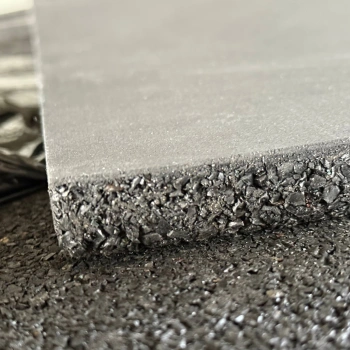
On the flooring, an area where the coating is peeling or giving way is usually high priority. Rubber tiles let you intervene zone by zone, for example the 50x50 cm tile, without redoing the whole room. For a dedicated analysis of surfaces and areas, see renewing gym flooring without wasting money.
For free weights, a set of dumbbells with missing weights creates queues and wear on the middle sizes: a typical medium-priority case. For barbells and plates, check diameter and compatibility before adding. Benches and weight racks enter the list if the layout of the room affects safety and changeover times.
The specialist articles on individual categories will help you choose the model. Here the goal is to decide whether and when to intervene, not which product to choose.
Three realistic scenarios
Neighbourhood gym with a heavily used strength room
The flooring in the lifting area is giving way and the middle dumbbell sizes are always taken. Intervention order: first the flooring of the critical zone only, then the missing weights, and finally the rest.
Personal training studio
A few square metres, different clients in the same hour. The priority is versatility and order in the space, not the number of pieces. Learn more in equipment for personal training studios.
Facility with a new strength area
Here it is expansion, not renewal. First define the number of stations and the user base, then compare guided machines with free weights, as explained in an affordable but professional strength room.
How much budget should you request and how do you present it?
Do not start from a figure: start from the ranked list. Add up the cost of the high-priority interventions, then add a share for the medium ones, leaving the low ones out until there is a concrete reason.
To present it to members or staff, bring a page with: equipment to replace and why, the effect on the service, the option of postponing, and the risks of postponing. Do not present every purchase as an investment that pays for itself: often it is necessary maintenance.
Before ordering, always ask for written confirmation of terms, availability and lead times. Some items are in stock, others are made to order, and the plan must account for this so the room is not left without equipment.
Frequently asked questions
Is Black Friday worth it for a gym?
It can be, if the purchase was already in the plan. If you buy only because there is a promotion, you risk tying up budget in marginal equipment.
What should you replace first?
Whatever affects safety and service continuity: failing flooring, equipment with worn parts, damaged benches. Then incomplete sets and finally aesthetics.
How do you avoid incompatibility between new and old equipment?
Check bar and plate diameters, rack and support dimensions, and available space. Always verify the product page.
Is it better to renew everything at once or zone by zone?
Usually zone by zone: you reduce downtime and spread the spending. The choice depends on wear and opening hours.
Practical conclusion
Before Black Friday, do the audit, complete the matrix and choose your three priority interventions. Then compare the right categories: flooring, dumbbells and barbells. If you want a second opinion on your plan or a quote tailored to your needs, contact Donatif.


 Budgets
 Dumbers
 Discs
 Benches
 Racks and Rigs
 Weights Holders
 Isotonic machines
 Calisthenics
 Cardio
 Kettlebells
 Flooring
 Gym Set
 Accessories
 Combat
 ARTI MARZIALI
 CONTAINER GYM
 Tug-Of-War
 Used Gym Equipment
 PILATES MACCHINARI
 GINNASTICA ARTISTICA
 CAMPI DA PADEL
 Prodotti in Pronta Consegna
 Informazioni
 IRONMAN
 Gift Card