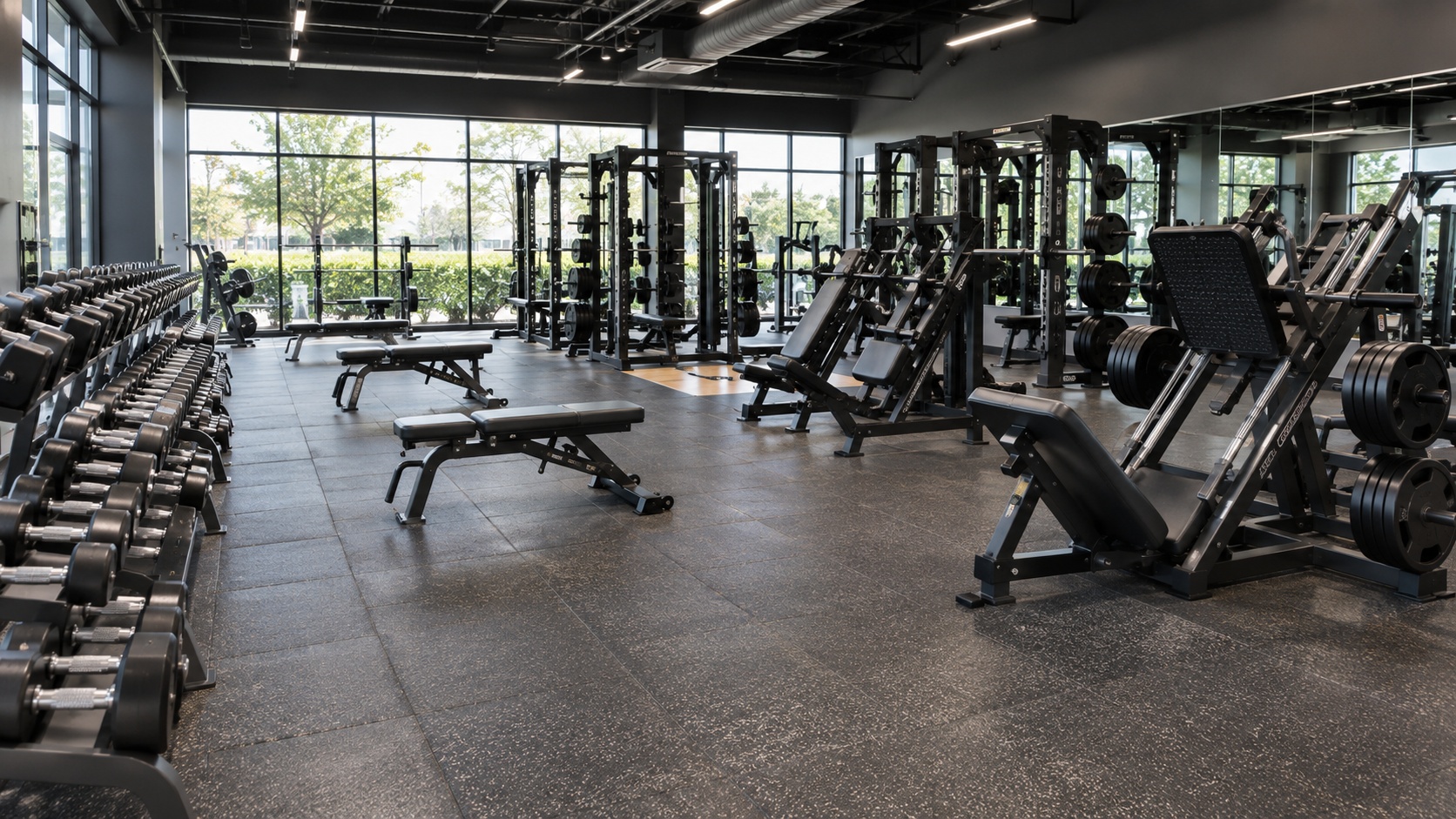
Creating a professional strength room with a controlled investment is one of the most interesting challenges for anyone managing a gym, designing new fitness spaces, or looking to expand their training offerings without incurring excessive costs. In fact, the choice of equipment impacts not only the initial budget but also the variety of available exercises, the management of user flows, operational safety, and the overall profitability of the strength-dedicated area.
One of the most important decisions concerns the relationship between selectorized machines and free weights. The former make it possible to organize specific workstations, make the execution of certain movements more straightforward, and offer easily understandable training paths. The latter guarantee greater freedom of movement, progression potential, and versatility, allowing the same tools to be used for numerous exercises and levels of preparation.
There is no universally best configuration. A strength room primarily intended for beginners and general users presents different needs compared to an area frequented by experienced athletes, personal trainers, and clients interested in strength training. The most convenient solution therefore stems from analyzing actually requested activities, available space, the number of simultaneous users, and the costs that each workstation entails throughout its lifecycle.
In this guide, we analyze how to compare the two types of equipment, what exercises they allow you to cover, how to organize spaces, and what items to include in the calculation of the total cost of a strength room. The goal is to provide technical and operational criteria useful for managers, owners, buyers, designers, and coaches who wish to create a functional, durable, and economically sustainable environment.
Selectorized machines and free weights: operational differences
The first step in properly designing a strength room is understanding that selectorized machines and free weights address different needs. Selectorized machines are designed to perform specific movements through trajectories determined by the equipment's structure. Free weights, on the other hand, allow the user to directly manage the load path, adapting the movement to their own characteristics and session goals. This difference influences exercise selection, technical learning, and workstation organization.
From an economic standpoint, it is incorrect to compare only the purchase price of individual pieces of equipment. A machine may offer an immediately identifiable and ready-to-use workstation while covering a limited number of movements. Conversely, a barbell with plates and a bench can support multiple exercises, provided that adequate accessories are available and users possess the necessary skills. Convenience therefore depends on the ratio of investment, number of effectively practicable exercises, and frequency of use.
For a commercial facility, it is also important to consider the ease with which equipment can be used by different people. The presence of adjustments, clear instructions, and easily recognizable configurations can facilitate daily management. At the same time, the freedom offered by weights requires careful planning of work areas, safety distances, and load-handling methods.
Characteristics of selectorized machines
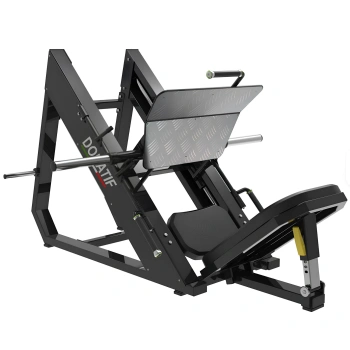
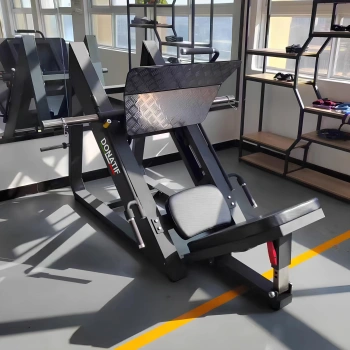
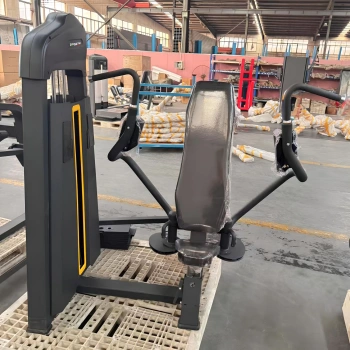
Isotonic machines make it possible to organize muscular work through workstations dedicated to specific muscle groups or movement patterns. Weight-stack versions generally allow the load to be selected through an integrated system, while other configurations may use loadable plates. The choice between these solutions must take into account adjustment practicality, structural sturdiness, quality of moving components, and the availability of technical assistance.
An important characteristic is the ability to repeat the movement following a defined trajectory. This can facilitate the integration of machines into programs aimed at less experienced users and allows staff to more easily explain how the workstation works. However, a guided trajectory does not automatically make an exercise suitable for everyone: adjustments, joint mobility, anthropometric characteristics, and individual conditions must always be considered.
Dedicated machines can also help distribute users across different workstations, preventing all activities from concentrating in the same zone. The main limitation concerns specialization: purchasing many machines means allocating a significant part of the budget and surface area to specific exercises. For this reason, it is advisable to select workstations based on real demand rather than simply the number of muscle groups you wish to declare available.
Characteristics of free weights
The free weights sector includes barbells, dumbbells, plates, kettlebells, benches, and support structures such as racks and half racks. The main advantage is the ability to use the same tools for different exercises by modifying the load, grip, position, and workstation configuration. A well-designed equipment set thus makes it possible to cover numerous movement patterns without purchasing a machine for every exercise.
However, this versatility entails certain organizational responsibilities. Loads must be available in quantities and progressions consistent with the user base, accessories must be easily retrievable, and operational zones must allow exercises to be performed without interference. Storage systems must also be provided that facilitate tidying up and reduce the presence of plates and dumbbells left in walkways.
Working with free weights often requires greater attention to execution technique and movement management. For a gym with a diverse public, this means providing appropriate indications, procedures, and levels of supervision. The flexibility of the tools represents a tangible economic advantage only when accompanied by effective room management.
Workout coverage and exercise variety
Workout coverage is one of the most important criteria when evaluating a cost-effective strength room. It is not enough to count how much equipment is present: you need to understand how many movement patterns can be trained, which muscle groups are involved, and how easily users can transition from one exercise to another. A seemingly complete room might feature overlaps between machines and gaps in other fundamental areas.
To perform a rational evaluation, it is useful to classify exercises into functional categories: push, pull, knee-dominant movements, hip-dominant movements, unilateral work, upper body exercises, and complementary core activities. This classification allows equipment to be compared based on actually supported activities rather than using the machine count as an indicator of service quality.
A balanced configuration should allow for the construction of complete programs for different types of users. It is not necessary to purchase a dedicated workstation for every exercise, but it must be verified that the combination of available equipment allows all major movement patterns to be trained without creating excessive dependencies on a single tool.
Coverage with selectorized machines
Selectorized machines can offer very effective coverage of the exercises most requested in general training. A reasoned selection can include workstations for horizontal pushing, pulling, lower limb work, and complementary exercises. In this way, users find easily recognizable paths and can follow organized programs even without continuously having to use barbells or dumbbells.
The main aspect to evaluate is functional overlap. Two different machines can involve similar muscle groups and offer partially overlapping movement patterns. If the budget is limited, purchasing both might prove less convenient than adding a workstation that covers an exercise category still missing. The choice should be driven by expected frequency of use, client requests, and coach recommendations.
It is also important to distinguish between theoretical coverage and truly available coverage. A machine may be technically suited for a given exercise but prove unusable if adjustments are not intuitive, if it does not fit the build of a portion of the user base, or if the required position is uncomfortable for users. Practical testing of equipment prior to purchase is therefore a useful step to avoid investments that are poorly aligned with operational needs.
Coverage with barbells, dumbbells, and accessories
A well-organized free weight setup allows for the development of highly diversified programs. Barbells and plates support multi-joint exercises such as squats, deadlifts, presses, and rows. Dumbbells allow for both bilateral and unilateral work, while benches expand the execution possibilities for chest, shoulder, and upper limb exercises. Kettlebells and complementary accessories can round out the offering with additional variations.
To achieve truly professional coverage, load progressions must also be considered. A too-limited selection of weights can create difficulties for both beginners and advanced users. The availability of various combinations of plates, dumbbells, and barbells must be evaluated based on planned programs and the number of people who will use the room simultaneously.
Versatility should not be confused with the ability to replace any machine. Some users prefer working on guided trajectories, while others may struggle to properly perform certain exercises with free weights. A room designed for a broad public should therefore provide a combination of tools that allows similar goals to be achieved through different methods, avoiding making a single approach to training mandatory.
Usage scenarios, users, and supervision
The choice between selectorized machines and free weights changes significantly depending on the gym's business model. A fitness center oriented toward general clientele may need easily accessible workstations and understandable training paths. Conversely, a facility focused on strength, powerlifting, or athletic preparation requires a more articulated setup of racks, barbells, plates, and accessories. In both cases, the project must start from the user profile and the services actually offered.
Another determining element is the level of available assistance. The presence of personal trainers and coaches makes it possible to integrate technically more complex exercises, organize progressions, and manage areas dedicated to free weights. In a room with limited supervision, it may instead be useful to prioritize a higher availability of intuitive workstations without sacrificing adequate space for fundamental exercises.
The evaluation should also include the distribution of attendance throughout the day. A gym may have moderate demand during most time slots and record highly concentrated peaks early in the morning and after work. At these times, the availability of sufficient workstations and the ability to alternate exercises become as important as the overall variety of the equipment.
Generalist gyms and commercial fitness centers
In a generalist gym, a significant portion of members may use structured programs and repeat the same exercises throughout the week. Selectorized machines are appealing because they allow recognizable paths to be organized and make it simpler to identify a specific workstation. An essential selection of machines for the main muscle groups can therefore represent a good foundation for the service offered.
The presence of free weights remains important nonetheless. Dumbbells, benches, and at least one area equipped with appropriate structures make it possible to expand training possibilities and respond to the needs of more autonomous users. This combination prevents the room from becoming overly dependent on specialized machines and allows different programs to be offered even to clients who frequent the same environment.
For management, it is useful to observe which workstations are used most, which often remain free, and which generate queues. This information can be gathered through staff observation, client feedback, and available usage data. Subsequent equipment purchases should respond to documented problems rather than a simple aesthetic desire to complete the room.
Personal training studios and athletic preparation
A personal training studio generally presents different needs compared to a large commercial gym. The number of simultaneous users may be smaller, but each workstation must offer good flexibility to support personalized programs. In this context, free weights, racks, and benches can take on a central role because they allow exercises to be rapidly modified according to individual goals.
Selectorized machines can still be useful for complementary work, specific exercises, and managing certain phases of the training journey. Their presence should be justified by the frequency with which they are actually used and their ability to complement the service. In a limited space, a machine that occupies a significant surface area but is used rarely can represent an inefficient investment.
In athletic preparation centers, equipment selection must start from the disciplines practiced and program requirements. Racks, barbells, plates, and dumbbells can support numerous strength activities, while machines can integrate the work with specific exercises. Technical supervision makes it easier to manage the complexity of movements, but it does not eliminate the need to define safety procedures, usage rules, and adequate spaces.
Space, layout, and flow management
The available space directly conditions the composition of the strength room and the number of pieces of equipment that can be installed. The nominal surface area of a machine or rack does not represent all the area necessary for its use. Operational footprints, access zones, adjustments, user movement, and the spaces needed to load and unload weights must all be considered.
An effective project distinguishes areas by function. Selectorized machines can be organized in dedicated workstations with clear access paths. The free weight area must instead allow for wider movements and provide sufficient distances between racks, benches, and storage zones. The layout must prevent users from crossing operational areas during exercise execution or load retrieval from interfering with other activities.
The layout must also be evaluated in relation to daily management. A tidy room facilitates staff work, makes accessory identification more immediate, and reduces the risk of material accumulating in walkways. Storage areas, circulation paths, and spaces for potential additional equipment should be planned from the outset, avoiding the use of every available square meter solely to increase the number of workstations.
Machine footprints and workstation organization
Selectorized machines can simplify space organization because each tool generally has a well-defined operational position. However, the layout must account for the ability to get on and off the machine, adjust seats and supports, and use the full range of motion without obstacles. A floor plan that considers exclusively the external dimensions of the frame risks underestimating the space actually required.
Another element concerns the arrangement of workstations in relation to flows. Grouping machines by function can help users quickly identify exercises and allow coaches to supervise multiple people in the same area. Nonetheless, excessively close configurations that compromise accessibility, operational privacy, and ease of maintenance must be avoided.
The ability to perform technical interventions represents an additional design criterion. Machines must be reachable for cleaning, checks, and maintenance without having to frequently move other equipment. Before installation, it is advisable to verify the manufacturer's indications regarding footprints, distances, transport, and assembly, as well as specific environmental conditions.
Free weight area and circulation management
The free weight area requires particularly careful planning because activities can involve loads moved in different directions. Racks must be positioned to allow access and exercise execution, while benches must be usable without obstructing neighboring workstations. The presence of dumbbells and plates also makes it indispensable to provide easily reachable storage systems.
Flooring must be chosen based on planned activities, loads used, and existing support characteristics. In zones dedicated to free weights, it is important to evaluate resistance, stability, ease of cleaning, and impact absorption characteristics. Technical specifications must be verified in relation to actual installation conditions and equipment manufacturer guidelines.
Circulation must be intuitive even during peak hours. A user who has to cross another person's working area to retrieve a dumbbell or reach a rack can create avoidable interference. For this reason, accessory storage should be integrated into the layout rather than treated as a secondary element to be added only when the room is already operational.
Total cost of a strength workstation
To correctly compare selectorized machines and free weights, it is necessary to move beyond the logic of list prices. The cost of a professional workstation actually comprises all components necessary to make it available for use and keep it efficient over time. The initial price is only one of the items to consider alongside transport, installation, accessories, maintenance, any replacement parts, and costs related to occupied space.
Furthermore, comparisons must be made on functionally equivalent configurations. Comparing a complete machine with a single barbell does not allow for a proper evaluation of exercise coverage. It is more useful to compare the cost of a selectorized workstation with that of a set of free weights that allows a similar range of exercises to be offered, including racks, supports, a bench, plates, and storage systems when necessary.
There are no universal prices applicable to any project. Brand, build quality, configuration, materials, included services, and commercial conditions can significantly alter the actual cost. For this reason, any economic analysis should use updated quotes and verifiable technical specifications, avoiding reliance on generic estimates not tied to precise products and supply conditions.
Initial investment and complete setup
A selectorized machine requires evaluating the price of the equipment, transport, assembly, and any necessary accessories. If the model uses an integrated weight stack, you must verify which components are already included in the supply and which must be purchased separately. It is also necessary to check available adjustments, structural characteristics, and technical documentation related to professional use.
A workstation with free weights may seem more economical if you consider only the cost of a barbell or bench. However, to make it truly operational, racks, supports, plates of various weights, collars, potential additional bars, and storage systems might be required. The number of users who will share the workstation also affects the required setup and the quantity of material to be purchased.
A detailed bill of materials helps avoid unexpected costs. For each solution, it is advisable to indicate the main equipment, included components, additional accessories, transport, assembly, any preparatory works, and installation costs. The buyer can thus compare different offers on a homogeneous basis and identify any differences between initial price and actual commissioning cost.
Total cost of ownership and operational return
The total cost of ownership, often referred to as TCO, considers expenses incurred throughout the equipment's entire usage period. Beyond purchase, it may include routine maintenance, replacement parts, extraordinary interventions, consumables, technical assistance, and potential downtime costs. The considered duration must be consistent with the gym's economic plan and available product information.
For selectorized machines, it is advisable to verify the characteristics of cables, pulleys, bearings, upholstery, and adjustment systems. For free weights, one must consider the condition of coatings, grips, locking systems, bushings, and contact surfaces. Not all components experience the same level of wear, and the frequency of interventions depends on usage methods and maintenance conditions.
Economic return does not necessarily coincide with the number of theoretically available exercises. A frequently used workstation that responds to concrete client demand and helps reduce queues may have higher operational value than more versatile equipment that is rarely used. To perform a realistic evaluation, it is therefore useful to cross-reference investment, frequency of use, number of served users, and management costs.
Maintenance, accessories, and equipment durability
A professional strength room must maintain adequate operational conditions even after thousands of uses. Initial equipment quality is important, but it cannot replace a maintenance and inspection program. Management must include periodic checks, cleaning, monitoring of wear-prone components, and procedures for reporting anomalies before they compromise workstation availability.
Maintenance needs differ between selectorized machines and free weights. The former may include mechanical components and transmission systems requiring specific checks. The latter feature a generally simpler structure, yet still require checks on grips, collars, welds, surfaces, supports, and storage systems. In both cases, the availability of spare parts and the quality of supplier assistance impact operational risk management.
Accessories must be included in economic and technical planning. Main equipment lacking necessary components may prove unusable or significantly limit available exercises. The completeness of the setup must therefore be verified as early as the quoting phase, avoiding subsequent purchases that increase total cost and make room organization more complex.
Checks and maintenance of selectorized machines
Selectorized machines require checks consistent with the manufacturer's instructions. Elements to check may include cables, pulleys, attachment points, upholstery, adjustment systems, and moving components. Any abnormal noise, irregular movement, or visible damage must be reported and handled according to established procedures, preventing potentially unsafe workstations from remaining available to users.
Preventive maintenance makes it possible to schedule checks and organize interventions to limit service interruptions. It is useful to keep equipment documentation, record performed interventions, and identify components requiring periodic replacement. The presence of qualified assistance and traceable spare parts represents an important criterion in supplier selection.
During commercial evaluation, it is advisable to request information on warranty conditions, exclusions, spare parts availability, and assistance procedures. Warranty duration should not be considered in isolation: you must understand which components it covers, what usage conditions it requires, and what costs may remain the gym's responsibility.
Management of free weights and complementary accessories
Free weights require periodic checks on the condition of barbells, dumbbells, plates, and support accessories. It is important to check for any deformations, grip wear, anomalies in locking systems, and coating damage. Racks and benches must be checked with attention to stability, attachment points, supports, and contact surface conditions.
Accessories to consider include barbell collars, handles, resistance bands, supports, mats, and storage systems. Not all are indispensable for every project, but their utility must be evaluated in relation to planned exercises. A correctly selected setup allows exercise coverage to be expanded without necessarily purchasing new main equipment.
Material management must be accompanied by simple operational rules. Every accessory should have a defined location, plates should be stored in an orderly manner, and damaged equipment should be identified promptly. These procedures improve organization, simplify staff work, and help preserve the value of the setup over time.
Decision matrix and recommended configurations
A decision matrix makes it possible to compare the two equipment types through homogeneous criteria. The starting point should not be personal preference for machines or free weights, but the result the gym wishes to achieve. Exercise coverage, ease of use, supervision, available surface area, overall investment, and maintenance must be analyzed together, assigning each criterion an importance consistent with the business model.
The matrix can also be used during supplier selection. For each solution, it is useful to report the number of actual workstations, covered exercises, included accessories, declared footprints, warranty conditions, and available services. Undocumented data should be marked as to be verified, avoiding automatically attributing performance or advantages to a product category.
Once information is gathered, the comparison must be applied to concrete scenarios. A generalist gym, a personal training studio, and a strength-oriented center may require different configurations even when they share the same surface area. The most rational solution is the one that best responds to prevailing needs without generating excessive costs for underutilized equipment.
Comparative matrix between selectorized machines and free weights
The following matrix summarizes the main operational differences. It does not represent an absolute ranking: every evaluation must be verified against specific models, room configuration, and required service level.
| Criterion |
Selectorized machines |
Free weights |
| Exercise coverage |
Specialized workstations for defined movements |
High versatility through various configurations |
| Ease of use |
Generally immediate after adjustment and instructions |
Depends on exercise complexity and experience |
| Load progression |
Depends on selection system and available increments |
Depends on plate and dumbbell availability |
| Supervision |
Can simplify the organization of certain paths |
Requires attention to technique and load management |
| Versatility |
Generally tied to the function of the single machine |
High, with the ability to vary exercises and configurations |
| Footprint |
Requires a dedicated surface for each workstation |
Requires operational zones, storage, and movement spaces |
| Accessories |
Depend on the model and manufacturer supply |
Can include racks, benches, plates, collars, and supports |
| Maintenance |
Checks on mechanical components and adjustment systems |
Checks on structures, grips, supports, and locking systems |
| Investment |
To be evaluated per single machine and obtained coverage |
To be calculated considering the entire workstation and accessories |
| Professional use |
Suitable for structured paths and complementary work |
Suitable for numerous strength and physical preparation programs |
Three scenarios for choosing the configuration
In the first scenario, we consider a commercial gym with a diverse clientele, a significant presence of beginners, and staff managing multiple users simultaneously. In this case, it may be advisable to prioritize a balanced setup, with a few selectorized machines dedicated to the most requested exercises and a sufficiently complete free weight area. Selection should focus on workstations that concretely improve service availability without multiplying machines with overlapping functions.
In the second scenario, we consider a personal training studio with limited surface area and predominantly individual or small-group activities. Here, a versatile setup of racks, barbells, dumbbells, benches, and accessories can offer a wide range of exercises with a contained amount of main equipment. Some selectorized machines can be included when they respond to specific program requirements or allow complementary activities to be managed more effectively.
In the third scenario, we consider a center oriented toward strength and athletic preparation, where users frequently use barbells, racks, and progressive loads. The priority may be represented by an adequate number of workstations for main exercises, a complete set of plates, and efficient storage systems. Selectorized machines can integrate the program with complementary exercises, but their quantity should be determined by actual demand and residual space.
Investing in a sustainable and professional strength room
Creating an economical yet professional strength room requires a vision that brings together technical, operational, and economic needs. Savings should not be achieved simply by buying less equipment or choosing products with the lowest initial price. Effective selection stems from the ability to identify truly necessary workstations, eliminate overlaps, and build a setup consistent with the users who will frequent the gym.
Before proceeding with purchases, it is useful to prepare a list of exercises to cover, a floor plan with operational footprints, and a complete bill of materials. Each piece of equipment should be evaluated considering price, accessories, transport, installation, warranty, maintenance, and spare parts availability. This procedure makes it possible to compare different quotes without confusing a seemingly economical supply with a truly complete solution.
To organize equipment selection, one can start from an essential free weight setup, identifying fundamental exercises and related support needs. Subsequently, selectorized machines that respond to the most frequent user requests or complete insufficiently covered movement patterns can be added. This logic makes it possible to distribute the budget according to priorities while maintaining the ability to progressively expand the room.
Another important aspect is supply quality. Technical datasheets must allow for the verification of dimensions, materials, construction characteristics, adjustments, and usage conditions. It is advisable to request clarification on included components, assistance conditions, and maintenance procedures. For professional facilities, operational continuity and spare parts availability are elements that merit attention as early as the commercial negotiation.
Design must also consider the potential evolution of the gym. A facility currently working with a limited number of users might increase attendance, introduce new services, or expand personal training offerings. Leaving some flexibility in the layout and providing adequate storage systems can make it simpler to integrate new equipment without having to completely rethink space organization.
To delve deeper into available solutions and compare equipment dedicated to guided training, you can consult the selection of professional isotonic machines, evaluating each model based on technical characteristics, facility needs, and available budget. The choice should always be accompanied by an analysis of alternatives and verification of the completeness of the proposed configuration.
The final decision between selectorized machines and free weights should therefore be based on a balance between exercise coverage, intended use, user management, available space, and total cost of ownership. A well-designed room is not necessarily the one with the most equipment, but the one where each workstation performs a precise function, is used continuously, and contributes to offering a professional service. For owners, buyers, and designers, investing in configuration quality means building an efficient environment today and one flexible enough to support the gym's future growth.


 Budgets
 Dumbers
 Discs
 Benches
 Racks and Rigs
 Weights Holders
 Isotonic machines
 Calisthenics
 Cardio
 Kettlebells
 Flooring
 Gym Set
 Accessories
 Combat
 ARTI MARZIALI
 CONTAINER GYM
 Tug-Of-War
 Used Gym Equipment
 PILATES MACCHINARI
 GINNASTICA ARTISTICA
 CAMPI DA PADEL
 Prodotti in Pronta Consegna
 Informazioni
 IRONMAN
 Gift Card