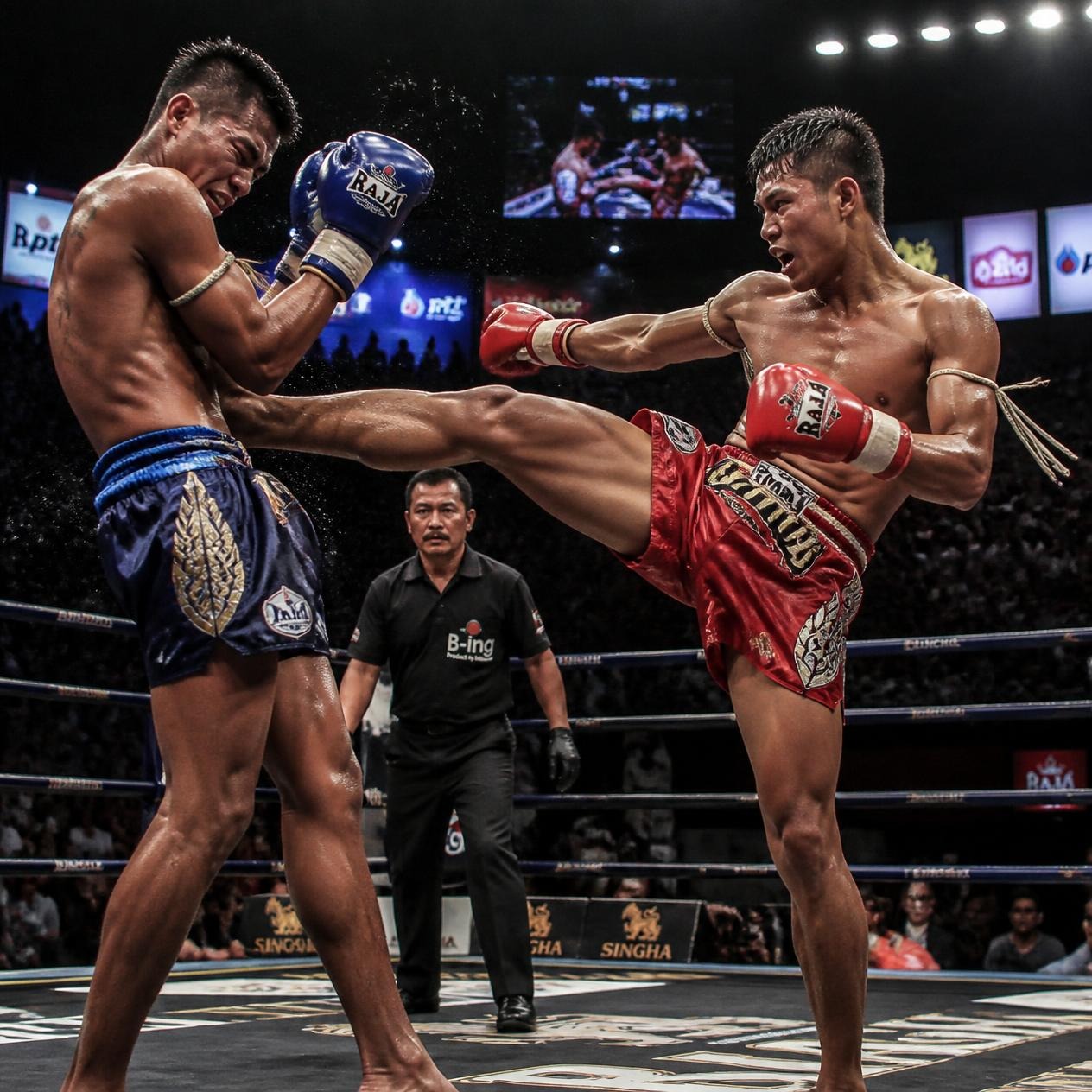
Those approaching Muay Thai often make a very common mistake: using the same gloves used for English boxing, thinking that the differences are purely aesthetic. In reality, the structure of the glove directly affects the quality of training, the ability to correctly perform the clinch, and the protection of the hands during punches, elbows, blocks, and techniques typical of the Thai discipline. Choosing the right Muay Thai gloves means training more naturally, improving technique, and reducing fatigue during sessions.
Muay Thai is defined as the art of eight limbs because it uses punches, kicks, knees, and elbows. Unlike traditional boxing, the fight involves numerous phases of clinching, grappling, and controlling the opponent, which require greater mobility of the hand and wrist. For this reason, manufacturers have developed gloves with very different characteristics compared to classic boxing models.
In this guide, we analyze the main construction differences between boxing gloves and specific Muay Thai gloves, we will see how to choose the correct weight, which materials to prefer, and which aspects to evaluate before purchasing, both for enthusiasts and for gym owners who wish to offer quality equipment to their members.
Why specific Muay Thai gloves are needed
Muay Thai imposes very different movements compared to boxing. During a single combination, one moves rapidly from punches to clinches, knees, and controlling the opponent. A glove that is too rigid limits these movements and makes the execution of the technique less natural.
Models designed specifically for this discipline feature a more compact construction and greater hand flexibility. This allows you to slightly open your fingers during the clinch while still maintaining a high level of protection.
The distribution of the padding also changes significantly. The goal is not exclusively to absorb the impact of punches, but to offer a balance between protection and freedom of movement during all phases of the fight.
Greater freedom in the clinch
The clinch represents a fundamental component of Muay Thai. Gloves that are too rigid make it difficult to grab the head or control the opponent's body, penalizing the learning of the technique.
Hand mobility
The more flexible construction facilitates natural hand movements without compromising safety during strikes and blocks.
Difference between boxing and Muay Thai gloves
The main difference between boxing and Muay Thai gloves concerns the distribution of the padding. In boxing gloves, the protection is more concentrated in the front part to maximize safety during a direct punch. In Muay Thai models, the distribution is more uniform and compact.
The thumb also has a different conformation. In Muay Thai gloves, it is generally designed to offer greater mobility during grappling and clinching while still maintaining effective protection.
The palm is also more open and flexible, a feature that facilitates gripping during technical training and allows for better management of the different phases of the fight.
Weight distribution
The arrangement of the padding influences balance, sensitivity, and control during all techniques typical of the discipline.
Wrist support
The support remains high but leaves more freedom compared to models designed exclusively for boxing.
How to choose the correct weight
The weight of the glove is expressed in ounces (oz). The choice depends on the athlete's weight, the type of training, and the gym's guidelines.
14 oz Muay Thai gloves represent one of the most common solutions for those practicing complete training including heavy bags, pads, and light sparring. In fact, they offer a good compromise between protection, speed, and comfort.
Those who mainly practice sparring can opt for higher weights, while for technical or competitive work, different models might be preferable based on the competition regulations.
Daily training
For most amateur athletes, the chosen weight should prioritize safety and continuity during sessions.
Sparring and preparation
Gyms may require different weights depending on the various activities performed during the week.
Materials and construction quality
The quality of the materials determines comfort, durability, and protection. The best gloves use natural leather or high-resistance technical synthetic leather.
The stitching must be sturdy and uniform, while the padding must maintain its shape even after numerous intensive training sessions.
The closure system also affects the user experience. Velcro represents the most practical solution for daily training, while laces are often preferred in a competitive setting.
Natural or synthetic leather
Leather generally guarantees greater durability, while modern synthetic materials offer an excellent quality-price ratio.
Closure system
A stable closure improves wrist support and increases safety during strikes.
How to choose based on training
Every athlete has different needs. Those who mainly dedicate themselves to heavy bag work will prioritize robustness and impact absorption, while those who practice a lot of clinching will seek greater mobility.
Gyms should have different models available to allow members to try different solutions before purchasing.
Trying on the glove personally always remains the best way to verify its comfort, ergonomics, and fit to your own hand.
Beginners
New practitioners should choose balanced models that facilitate the learning of techniques without excessive specialization.
Expert athletes
As experience increases, details such as padding distribution, sensitivity, and clinch precision become more important.
The most well-known brands
The market offers numerous manufacturers specialized in Muay Thai. Each brand proposes specific characteristics that meet different needs.
Venum Muay Thai gloves represent one of the most appreciated alternatives along with other historic manufacturers in the sector, thanks to a good combination of construction quality, comfort, and design.
The choice should, however, be based primarily on the fit and technical characteristics rather than just the brand name.
How to evaluate a manufacturer
Experience, quality of materials, and production consistency are more important elements than simple commercial notoriety.
Quality-price ratio
Investing in a well-constructed product generally allows you to obtain greater durability and better performance over time.
How to make gloves last
After every training session, it is fundamental to let the gloves dry completely in a ventilated environment. Humidity is the main enemy of the padding and the lining.
Periodic cleaning with specific detergents keeps the materials in optimal condition and limits the formation of bad odors caused by bacterial proliferation.
Storing gloves correctly also means avoiding direct exposure to the sun and intense heat sources that can stiffen leather and synthetic leather.
Regular cleaning
A few minutes after every training session are sufficient to significantly increase the life of the equipment.
Correct storage
Letting the gloves breathe after use is one of the most effective habits to keep them in perfect condition.
Choosing the right glove is an investment
Choosing the right Muay Thai gloves means improving the quality of training, facilitating the learning of the clinch, and protecting hands and wrists during all techniques typical of the discipline. The differences compared to traditional boxing gloves are not simple aesthetic details, but design characteristics developed to meet the specific needs of Muay Thai.
For gym owners, providing correct information and proposing suitable equipment contributes to improving the experience of members, enhancing the service, and strengthening the reputation of the facility. An informed choice also allows for reducing frequent replacements and ensuring safer training.
Evaluating weight, materials, construction quality, and intended use allows you to purchase a glove that is truly suitable for your needs, transforming the initial expense into an investment destined to last over time.


 Budgets
 Dumbers
 Discs
 Benches
 Racks and Rigs
 Weights Holders
 Isotonic machines
 Calisthenics
 Cardio
 Kettlebells
 Flooring
 Gym Set
 Accessories
 Combat
 ARTI MARZIALI
 CONTAINER GYM
 Tug-Of-War
 Used Gym Equipment
 PILATES MACCHINARI
 GINNASTICA ARTISTICA
 CAMPI DA PADEL
 Prodotti in Pronta Consegna
 Informazioni
 IRONMAN
 Gift Card