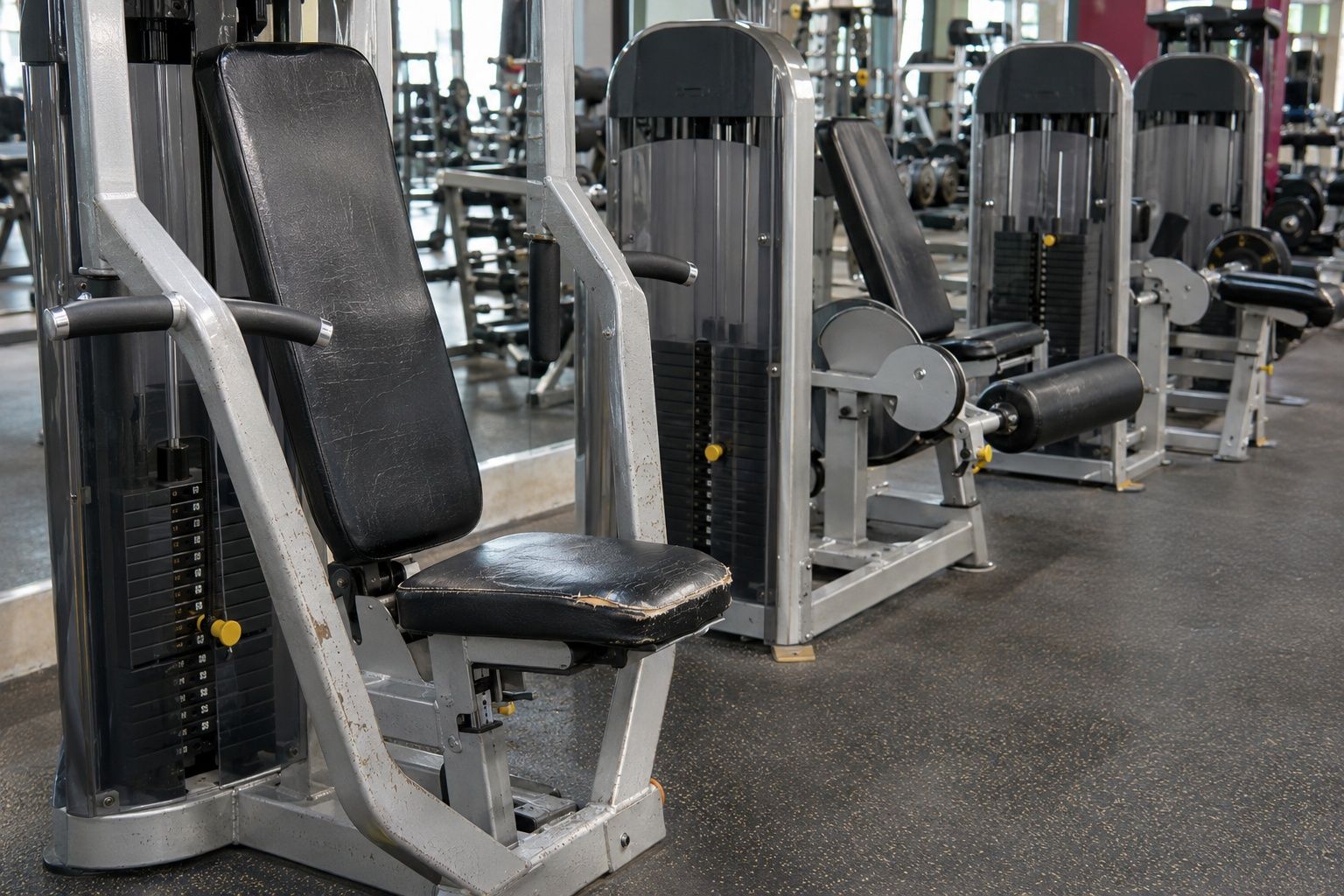
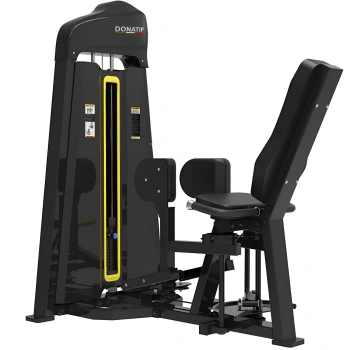
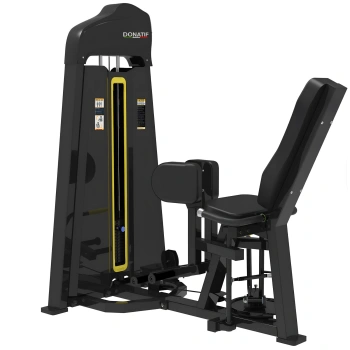
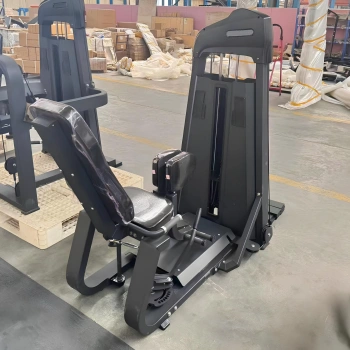
The bulk purchase of used isotonic machines can represent an interesting opportunity for gym owners, fitness centers, and personal training studios wishing to expand their equipment without necessarily bearing the cost of brand-new gear. However, purchasing multiple machines simultaneously introduces an often underestimated difficulty: determining whether the conditions observed on a few specimens are truly representative of the entire lot.
When a seller offers ten, fifteen, or twenty isotonic machines coming from the same facility, it might seem reasonable to test only a few of them. If the selected specimens function correctly, one might assume that the others are in similar conditions as well. This conclusion, however, fails to account for the differences in usage, maintenance, wear, and repairs that can characterize each individual piece of equipment.
For a professional buyer, the issue is not just about the immediate functioning of the machines, but also about the ability to document their condition, identify any critical issues, and estimate the necessary interventions before installation. A used isotonic machines inspection organized on a unit-by-unit basis allows for gathering more reliable information and comparing the actual value of the lot with the requested price.
In this guide, we analyze why sampling cannot automatically substitute individual verification, which checks can be performed without invasive interventions, how to interpret the results, and when to request the support of a qualified technician. The objective is to build an evaluation method applicable to real-world situations, avoiding both superficial checks and improvised verifications on potentially dangerous components.
Why testing only a sample of the lot is not enough
Sampling consists of selecting some representative equipment and using their results to form an judgment on the overall group. This approach can be useful for an initial commercial reconnaissance, but it presents important limitations when applied to used isotonic machines. Unlike new products manufactured according to uniform specifications, second-hand equipment can have very different operational histories even when they belong to the same brand and come from the same gym.
A leg training machine might have been used daily by numerous members, while a machine destined for a less requested muscle group might have accumulated a lower number of work cycles. Furthermore, the frequency of adjustments, cleaning methods, and maintenance interventions affect actual conditions. For this reason, the good preservation of one specimen does not constitute sufficient proof of the state of the others.
The individual verification of the machines instead allows distinguishing the common characteristics of the lot from the specific conditions of each unit. This does not necessarily mean performing complex tests on every piece of equipment, but adopting a consistent procedure that includes identification, observation, document collection, and evaluation of allowed functional checks.
Wear differences between seemingly identical machines
Two machines of the same model can present very different conditions. One might have recently replaced upholstery, still precise adjustments, and well-preserved external components. The other might show anomalous play, deteriorated coatings, or signs of previous interventions. Even when both appear aesthetically acceptable, these differences can influence the costs necessary to bring them back to the required operating conditions.
It is therefore useful to record the findings related to each unit separately, without automatically attributing the characteristics of the best-preserved specimen to the entire lot. The evaluation must be based on observable evidence and not just on general impression.
When sampling can still be useful
A preliminary sample check can help understand the general quality of the proposal, identify families of machines, and decide whether to pursue negotiations further. It can also be used to spot recurring critical issues that suggest the need for more extensive specialist verifications.
However, its role must remain preliminary. If the lot includes twelve machines, the positive outcome of three checks does not prove that the other nine are free from defects. The final decision should therefore include a documented evaluation of all units and an explicit management of unverified ones.
How to prepare checks before purchase
An effective evaluation begins before the site inspection. The first step consists of requesting a detailed inventory of available equipment from the seller, possibly including manufacturer, model, identification number, year of purchase when documentable, and declared conditions. This information allows understanding the composition of the lot and preparing a specific sheet for each machine.
Preparation should also include a request for updated photographs, available manuals, maintenance records, and information on any replaced components. If the seller lacks certain documents, this absence must be recorded without automatically interpreting it as proof of poor maintenance. It still represents an informational limit to consider during evaluation.
Before inspection, it is appropriate to establish which checks can be performed safely and which require qualified personnel. The availability of a machine does not imply that it is safe to use. If obvious damage, missing components, or uncertain operating conditions are present, testing must be postponed until evaluated by a competent professional.
Creating an inventory with unique identification
Each piece of equipment should receive a provisional internal code, for example LOT01, LOT02, and LOT03. This code must appear on the control sheet, in photographs, and in any technical observations. The system helps avoid confusion when the lot contains multiple similar specimens.
It is important to distinguish the code assigned by the buyer from the manufacturer's serial number. The latter, when present and legible, can be useful to reconstruct model features, verify relevant documentation, and request specific technical information.
Organizing the site inspection effectively
During the visit, it is preferable to follow a pre-established order rather than focusing on the most accessible or visually interesting machines. The procedure can start with identifying the unit, continue by observing external conditions, and end by recording any authorized functional checks.
A well-organized inspection also allows distinguishing immediately evaluable machines from those that are disconnected, partially disassembled, stored, or inaccessible. In these cases, it is necessary to clearly indicate that verification is incomplete, avoiding classifying the equipment as functioning solely based on received statements.
Visual inspection and structural conditions of the machines
Visual inspection represents the first level of evaluation and allows spotting numerous anomalies without moving the equipment. The used gym machine check should start by observing the frame, metal surfaces, visible connection points, and general preservation conditions. The objective is not to certify the safety of the structure, but to recognize elements requiring deeper analysis.
Signs of corrosion, deformations, seemingly altered welds, missing fasteners, or non-original components can indicate potential problems. Their importance depends on the model, position, and construction characteristics. Therefore, it is incorrect to formulate a definitive structural diagnosis through simple observation.
Aesthetic state must also be interpreted carefully. Recent painting and new upholstery can improve commercial presentation, but do not prove that mechanical components have been overhauled. Similarly, minor surface scratches do not necessarily indicate a functional problem. Evaluation must separate cosmetic aspects from those potentially relevant for use.
Frame, corrosion, and visible connections
During external observation, it is useful to check for obvious deformations, missing parts, major impact marks, and differences from the manufacturer's documented configuration. Hard-to-reach areas must not be explored via improvised disassembly, especially when components under tension might be present.
Any suspicious anomaly should be photographed and associated with the machine's sheet. If it concerns structural elements or essential connections, the equipment must be considered unverified regarding safety until a qualified technician intervenes.
Upholstery, coverings, and contact surfaces
Upholstery affects comfort, hygiene, and members' perception of quality. Torn coverings, deformed foams, and unstable supports may require replacement before putting back into service. It is useful to check if spare parts are identifiable and available for the specific model.
Replacing aesthetic parts can represent a relatively simple intervention in some cases, but total cost depends on the number of components involved and availability of compatible materials. For this reason, even seemingly minor anomalies should be recorded in the restoration estimate.
Functional verification of components and adjustments
The gym equipment functional test allows gathering information on the operational behavior of a machine, but must only be performed when preliminary conditions and manufacturer indications allow it. It is not appropriate to use equipment presenting suspicious damage, missing guards, deteriorated cables, or unstable components. In these situations, priority is to request a qualified inspection.
When a machine has been preliminarily judged suitable for verification by competent personnel, observation can focus on movement regularity, correct response of adjustments, and any anomalous noises or behaviors. Results must refer to specific test conditions, without turning them into a general guarantee of future reliability.
Isotonic machines include different configurations, including weight stack systems, plate-loaded machines, and equipment with articulated kinematics. A uniform procedure must therefore provide common recording criteria, but technical checks adapted to the model and manufacturer's instructions.
Cables, pulleys, and sliding systems
In models equipped with weight stacks, cables and pulleys are particularly important components. During external inspection, visible signs of deterioration, damaged coatings, or configurations seemingly inconsistent with documentation can be detected. However, components under tension must not be manipulated or connections interfered with to independently check their resistance.
Any irregular movement can depend on various causes, including wear, misalignment, or insufficient maintenance. Identifying the cause and defining necessary interventions must be entrusted to qualified personnel, especially when the problem affects elements supporting or transmitting load.
Seats, backrests, and adjustment systems
Adjustments allow adapting the machine to users' anthropometric characteristics. For a professional gym, it is important that systems provided by the manufacturer are present, intact, and usable according to documented methods. Anomalies may involve missing knobs, deteriorated selectors, or mechanisms that fail to maintain position correctly.
A seemingly functioning adjustment must not be automatically considered safe under load. When doubts arise about the locking or stability of a component, testing must be suspended and a specialist check requested before authorizing member use.
Documentation, maintenance, and traceability
The physical condition of a machine represents only part of the information necessary to evaluate its purchase. Manuals, identifiers, maintenance logs, and sales documents help reconstruct the equipment's history and understand what verifications were performed over time. Complete documentation does not eliminate the risk of defects, but allows formulating more informed evaluations.
It is important to request information on main interventions performed, distinguishing routine maintenance from extraordinary repairs. Replacing upholstery has a different meaning compared to intervening on a load-transmission system. Both can be legitimate, but must be considered in relation to intervention quality and available documentation.
For a professional buyer, it is also useful to verify that the seller can provide clear information on equipment origin and contractual conditions of transfer. Any declarations regarding overhaul, reconditioning, or warranty should be defined in writing, specifying which units they refer to and what services they include.
Manufacturer manuals and model identification
The manual relevant to the model constitutes a fundamental reference to understand configuration, intended use, maintenance, and safety indications. When unavailable, it may be appropriate to request it from the manufacturer or an authorized contact, using identification data present on the machine.
One should not presume that instructions for a similar model are automatically applicable. Differences between versions, production years, and installed components may make specific checks necessary before planning controls or interventions.
Intervention history and seller statements
A useful maintenance history should allow identifying the machine concerned, intervention date, nature of activity performed, and, when relevant, responsible subject. Generic statements claiming all machines have been overhauled do not offer the same informative level as records referring to individual units.
If the seller lacks a complete history, the buyer can request an independent technical evaluation and consider uncertainty in economic negotiations. Absence of documentation does not necessarily prove a defect, but limits the ability to reconstruct past conditions.
How to compare individual machines in the lot
Once information is gathered, the main problem becomes comparing different units without losing important details. A standardized sheet allows distinguishing observations, available documents, performed checks, and critical issues still to be analyzed. Comparison should be built on explicit criteria, avoiding evaluations based solely on aesthetic impressions or unjustified summary judgments.
For each machine, it is possible to record identification status, external conditions, presence of documentation, outcome of permitted verifications, and interventions possibly suggested by a technician. It is particularly important to distinguish a passed check from an unperformed check. Absence of observed anomalies does not equal absence of hidden problems.
Comparison can also be used to evaluate commercial utility of equipment. A machine in good condition but poorly consistent with gym services might have lower operational value compared to a more requested model needing documented and sustainable interventions. The decision must therefore integrate technical conditions and facility objectives.
Classifying findings without creating false certainties
A practical classification can distinguish machines with completed checks and no detected anomalies, those requiring deeper analysis, and those unviable under present conditions. This breakdown describes evaluation status, not automatically certifying safety or suitability for professional use.
Anomalies involving critical components must be reported separately from aesthetic imperfections. Worn upholstery and a potential structural problem cannot be treated as equivalent defects simply because both appear on the checklist.
Operational example: a lot of twelve machines
Imagine a fitness center evaluating twelve isotonic machines coming from a gym undergoing renovation. During a first visit, four pieces of equipment are observed, all seemingly well preserved. The seller proposes concluding the purchase claiming the entire lot presents analogous conditions.
A subsequent individual check could highlight, for instance, seven machines with no detected external anomalies, three needing deeper analysis on adjustments, and two lacking sufficient documentation to complete evaluation. This is an illustrative scenario, not an expected statistical distribution. Its value lies in showing how different results can emerge within the same lot and modify negotiations.
Limits of autonomous checks and technical intervention
A visual and documentary checklist can improve commercial evaluation quality, but does not replace qualified technical verification. Some defects are not recognizable from the outside, while others require specific competencies, tools, and procedures. It is therefore necessary to distinguish what the gym owner can observe from what must be ascertained by a professional.
This distinction is particularly important when equipment presents load-bearing components, transmission systems, structural elements, or adjustment mechanisms. Improvised testing can expose people to unnecessary risks and produce unreliable results. The buyer's objective must not be to independently demonstrate that every machine is safe, but to gather sufficient information to decide which specialist checks to request.
Technical support can also be useful to estimate intervention costs and evaluate spare parts availability. A seemingly limited problem can become economically relevant if it requires hard-to-find components or specialized machining. Conversely, some aesthetic imperfections can be managed with scheduled interventions, provided they do not compromise intended use.
When to suspend verification
Presence of visibly damaged cables, suspicious deformations, missing fasteners, unstable components, or absent guards must lead to interrupting any operational test not yet authorized. Also, anomalous noises or unexpected behaviors observed during checks conducted by competent personnel require further investigation.
It is not advisable to attempt corrective adjustments, disassembly, or repairs to quickly complete negotiations. Operations must be planned according to applicable instructions and entrusted to subjects with adequate competencies.
The value of an independent technical inspection
A qualified technician can help define the extent of necessary controls, interpret anomalies, and prepare an intervention estimate. Their evaluation should specify which machines were examined, which procedures were applied, and what limits remain.
For the buyer, a report referring to individual units is generally more useful than a generic judgment on the entire lot. In fact, it allows linking any costs, acceptance conditions, and contractual requests to the actually concerned equipment.
Operational checklist for lot evaluation
A repeatable procedure allows reducing omissions during complex site inspections. The checklist should be sufficiently detailed to document findings, but also simple to use when numerous pieces of equipment are present. It is preferable to fill out a sheet for each machine rather than using a single form with generic evaluations.
The first group of information concerns identification and origin. Internal code, manufacturer, model, available identification number, machine position, and received documents must be noted. The second group concerns observable conditions, including surfaces, coverings, visible components, and any anomalies. The third includes the outcome of authorized technical checks and still open issues.
Each significant observation should be accompanied by a photograph or documentary reference. Sheets must also report visit date and the subject who performed the check. This allows distinguishing information gathered directly from seller statements and subsequently formulated evaluations.
Essential fields of the individual sheet
An effective sheet can include identification, available documentation, aesthetic conditions, visible anomalies, performed checks, unperformed checks, need for technical analysis, and cost estimate when supported by an estimate. It is also useful to provide space dedicated to seller statements, keeping them separate from verified findings.
Distinguishing between positive outcome, anomaly, and unperformed check avoids one of the most common errors in used equipment evaluations: interpreting an empty box as absence of problems. Missing information must remain clearly identifiable until analysis is complete.
How to use the checklist during negotiations
Once sheets are completed, the buyer can prepare a summary of acceptable units according to established criteria, those requiring interventions, and those lacking essential information. The summary allows discussing price based on specific elements rather than general impressions.
The checklist can also become an attachment to purchase documentation, when agreed between parties. This way, detected conditions and any seller commitments are more easily identifiable even after equipment transfer.
How to turn checks into an investment decision
The economic value of a lot does not necessarily coincide with the sum of prices requested for individual machines. To evaluate operation convenience, one must also consider transport, handling, installation, any technical verifications, spare parts, and interventions necessary before use. An initially interesting proposal can lose part of its advantage if it includes numerous unviable equipment or items needing costly restoration.
A useful method consists of calculating total expected cost for each machine, separately attributing purchase price and documentable additional expenses. Still uncertain amounts should be treated as variables to analyze further, not as automatically null costs. This approach allows comparing bulk purchase with different alternatives, including selecting a fewer number of machines in better-documented conditions.
When the objective is renewing a weight room, it can be useful to compare the proposed lot with opportunities available in the sector of used and refurbished gym equipment. Comparison should concern actually available models, declared conditions, any documented interventions, and included services, without presuming that all offers present the same characteristics or guarantees.
Evaluating total acquisition cost
Suppose a lot of ten machines is offered at 8,000 euros. If transport and installation require 1,200 euros, budgeted interventions amount to 1,500 euros, and specialist checks cost 500 euros, estimated total cost reaches 11,200 euros. These are purely illustrative amounts, useful to show why initial price is not the only decision parameter.
Logan if some machines turn out unusable or require further interventions, average cost of actually available equipment may increase. For this reason, it is appropriate to compare different scenarios, also including the possibility of excluding certain units from negotiations.
Defining verifiable purchase conditions
Before formalizing the operation, it is useful to agree which equipment is included in the lot, which documents will be delivered, which interventions are eventually borne by the seller, and how machines failing agreed checks will be managed. Conditions should be described precisely enough to avoid different interpretations after payment.
For a gym owner, the most sustainable choice is not necessarily the one with the lowest unit price, but the one offering an adequate ratio between total cost, documented conditions, machine utility, and residual risks. Investing in gathering evidence before purchase allows negotiating with greater awareness, scheduling necessary interventions, and allocating budget to equipment truly consistent with facility needs.


 Budgets
 Dumbers
 Discs
 Benches
 Racks and Rigs
 Weights Holders
 Isotonic machines
 Calisthenics
 Cardio
 Kettlebells
 Flooring
 Gym Set
 Accessories
 Combat
 ARTI MARZIALI
 CONTAINER GYM
 Tug-Of-War
 Used Gym Equipment
 PILATES MACCHINARI
 GINNASTICA ARTISTICA
 CAMPI DA PADEL
 Prodotti in Pronta Consegna
 Informazioni
 IRONMAN
 Gift Card