
Trolley
You have no items in your shopping cart

 Budgets
 Dumbers
 Discs
Discs
 Benches
 Racks and Rigs
 Weights Holders
 Isotonic machines
 Calisthenics
 Cardio
 Kettlebells
 Flooring
 Gym Set
 Accessories
 Combat
 ARTI MARZIALI
 CONTAINER GYM
 Tug-Of-War
 Used Gym Equipment
 PILATES MACCHINARI
 GINNASTICA ARTISTICA
 CAMPI DA PADEL
 Prodotti in Pronta Consegna
 Informazioni
 IRONMAN
 Gift Card
- Donatif
- Sports products
- 0 I like it
- 3953 Views
- 0 comments
READING TIME: 5 MINUTES ➤➤
Multisport Gym Flooring: How to Choose the Right Surface for Every Discipline
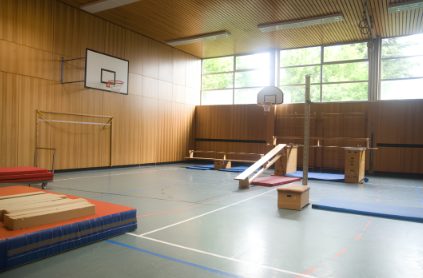
Managing multiple sports disciplines within a single space is now a crucial challenge for many facilities, schools, and sports centers. Choosing the right flooring becomes a strategic decision that directly impacts versatility, logistical efficiency, and space optimization. In this article, we explore the most suitable solutions for those looking for multisport gym flooring, analyzing materials, performance, and selection criteria that allow different sports such as basketball, volleyball, and fitness to coexist effectively.
- Why choose multisport flooring
- Key features of multisport flooring
- Compatibility with specific sports
- Solutions for schools and public facilities
- Criteria for choosing the ideal flooring
Why choose multisport flooring
Versatility as a strategic value in modern facilities
In a context where gyms and sports centers must accommodate a wide range of activities, having a single surface suitable for multiple disciplines is a logical and forward-thinking choice. Multisport floors are designed to meet diverse needs, delivering optimal performance for each sport without compromise. This approach reduces costs, simplifies operational management, and ensures greater continuity in the use of spaces, maximizing the profitability of sports facilities.
Optimizing space with a single surface
In schools, municipal gyms, or multi-purpose centers, the need to use the same space for different activities is common. Multisport flooring allows you to optimize every square meter, adapting to school lessons, training sessions, sporting events, or group fitness activities. This operational flexibility leads to a significant improvement in management efficiency and the overall quality of the services offered.
Key features of multisport flooring
Durability, elasticity, and safety
Flooring suitable for multiple sports must have specific technical characteristics that ensure both performance and safety. The materials used should provide wear resistance, shock absorption, and good grip to prevent injuries. Surface elasticity is essential to protect joints and muscles, especially in high-impact sports such as basketball and volleyball.
Adaptability to different indoor disciplines
The real strength of multisport surfaces lies in their ability to deliver good playability across different contexts. This means being rigid enough to ensure proper ball bounce in basketball, while also providing cushioning for fitness and gymnastics. Adaptability also extends to court markings and layouts, with clear, well-defined lines for each discipline while maintaining an organized overall appearance.
Compatibility with specific sports
Technical requirements for basketball
Basketball gym flooring requires a uniform surface with high rebound and good grip. Modern multisport flooring systems achieve these performances through layered technologies that combine elastic layers with durable top surfaces. The result is an ideal platform for both amateur competitions and intensive training.
Ideal performance for volleyball
Volleyball has different requirements: greater impact absorption, reduced joint stress, and good traction. Properly designed multisport floors can balance these needs with those of basketball, ensuring optimal performance even during frequent jumps and landings.
Support for fitness and functional training
Multisport facilities often host fitness, gymnastics, and functional training activities. In these cases, the flooring must be non-slip, easy to clean, and capable of absorbing vibrations and noise. A high-quality multisport surface can support these uses without requiring additional structures or modifications.
Solutions for schools and public facilities
Regulations and safety in educational institutions
Schools are among the environments where the versatility of sports flooring is most needed. It is essential that selected materials comply with safety regulations regarding fire resistance, slip resistance, and impact absorption, ensuring suitability for educational use. Additionally, the ability to host multiple disciplines reduces the need for separate spaces, improving the efficiency of school facilities.
Durability and long-term maintenance
Sports flooring for public environments must be long-lasting and able to withstand heavy daily use. Materials used in multisport flooring are designed to ensure high durability even under continuous use. Furthermore, ease of cleaning and low maintenance requirements help reduce operating costs—an especially important factor for schools and public facilities.
Criteria for choosing the ideal flooring
Analyzing facility type and activity flow
Each facility has its own characteristics: a school gym will host different activities compared to a private sports center or municipal facility. Carefully evaluating user flow, frequency of use, and types of sports practiced is essential for selecting the right flooring. The ideal solution balances technical requirements, budget, and long-term durability.
Material comparison: PVC, rubber, engineered wood
The most common multisport flooring solutions include heterogeneous PVC, valued for durability and easy maintenance; rubber, appreciated for shock absorption; and engineered wood, often used in high-performance settings. Each material has its advantages and drawbacks, but the key factor is its ability to adapt to multi-purpose use without compromising comfort or performance.
Costs, installation, and return on investment
Finally, the initial cost should be evaluated in the context of long-term return. High-quality multisport flooring can be a smart investment, reducing future maintenance costs, increasing facility profitability, and improving user experience. Relying on experienced partners and certified solutions helps ensure a professional and long-lasting result.
Comments (0)