Weighted calisthenics represents one of the natural steps in the evolution of those who practice bodyweight training. After consolidating the technique of fundamental exercises, in fact, body weight alone may no longer be sufficient to stimulate further adaptations in terms of strength, hypertrophy, and performance. It is precisely at this stage that weight belts, plates, vests, and other progressive overload systems come into play.
Many athletes immediately associate weights with Street Lifting, a competitive discipline that rewards maximum performance on pull-ups, dips, muscle-ups, and squats. In reality, the use of additional weight is also useful for those who do not have competitive goals but wish to improve their level, increase muscle mass, and make workouts more effective without abandoning the bodyweight philosophy.
Understanding when to start, which equipment to choose, and how to properly program the overload allows you to avoid mistakes, reduce the risk of injury, and build constant progress over time. In this guide, we analyze everything you need to know to integrate weights into your training journey.
Why use weights in calisthenics
After months or years of training, the body adapts to the stimuli received. Continuing to perform the same number of repetitions with body weight alone inevitably leads to a slowdown in improvements. Adding load, on the other hand, allows you to increase intensity while maintaining correct technique.
The principle of progressive overload is the basis of strength development. Just as it happens in barbell training, gradually increasing the weight forces muscles and the nervous system to adapt, generating new progress.
Weights also allow you to keep repetitions low, an ideal characteristic for developing maximal strength without having to resort to endless series of exercises.
Increasing strength
Weighted pull-ups and dips allow you to increase the ability to express absolute strength while simultaneously improving motor control and joint stability.
Stimulating hypertrophy
An adequate additional load allows you to work in optimal ranges for muscle growth, making bodyweight exercises extremely effective for mass gain as well.
When to start adding weight
One of the most common mistakes is to introduce weights too soon. Before using external loads, it is essential to master the basic exercises perfectly.
Generally, it is recommended to introduce overload when you can complete at least 10-12 perfect pull-ups and over 15 dips with complete control of the movement.
The health of shoulders, elbows, and wrists must also be a priority. The joints must be prepared to face greater tensions through a gradual progression.
Technique comes before weight
Additional weight must never compromise the range of motion, control of the eccentric phase, and quality of execution.
Gradual progression
Increments of 2.5 or 5 kg allow you to improve continuously, avoiding jumps that are too high, which would increase the risk of injury.
Equipment for overload
There are several solutions for adding weight during calisthenics. The choice depends on the exercises practiced, the goals, and the desired practicality.
The most common solution is the weighted pull-up belt, which allows you to hang Olympic plates via a chain, leaving full freedom of movement.
Weighted vests are also an excellent alternative for dynamic exercises, push-ups, squats, and functional circuits.
Weighted belts
They distribute the load on the pelvis while keeping the weight suspended between the legs and are ideal for heavy pull-ups and dips.
Olympic plates
The plates allow for extremely precise progression thanks to the availability of numerous different weight increments.
Street Lifting as a natural evolution
The street lifting guide identifies an increasingly widespread discipline that combines the principles of powerlifting with calisthenics exercises.
Competitions include maximum effort tests in pull-ups, dips, muscle-ups, and squats, rewarding strength, technique, and the ability to handle high overloads.
Even those who do not participate in competitions can benefit from preparation inspired by Street Lifting to improve their relative strength.
Benefits of heavy training
Training with low repetitions and high loads improves muscle fiber recruitment and increases neuromuscular efficiency.
Transfer to free exercises
Greater strength often makes advanced variations like front lever, planche, and muscle-ups easier.
How to program the overload
Integrating weights requires consistent planning. It is not necessary to always train with heavy loads: alternating strength sessions and technical sessions allows you to obtain better results.
The progression should include gradual weight increases only when all sets are completed while maintaining impeccable technique.
Recovery plays an even more important role, as higher loads increase stress on the nervous system and joint structures.
Volume management
A few high-quality sets are generally more effective than a high volume performed with compromised technique.
Importance of recovery
Sleep, nutrition, and planning of deload weeks allow you to sustain constant progress in the long term.
The most common mistakes
Many practitioners increase weight too quickly, chasing high numbers without building solid foundations.
Another mistake is neglecting the warm-up. Shoulders, elbows, and wrists must be prepared with mobility and specific activation.
Also, using cheap or uncertified equipment can be a risk when training with significant loads.
Ego is the worst coach
Increasing weight just to impress others often leads to plateaus and injuries.
Equipment quality matters
Robust materials, reliable welds, and certified components ensure safety during every session.
Training with weights in the home gym
A well-designed home gym allows you to develop strength in calisthenics without the need to attend a commercial gym.
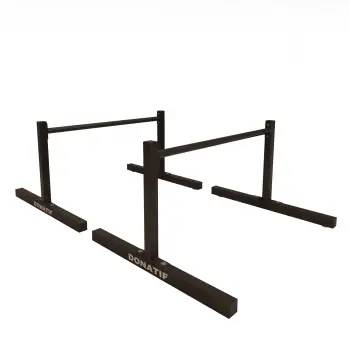
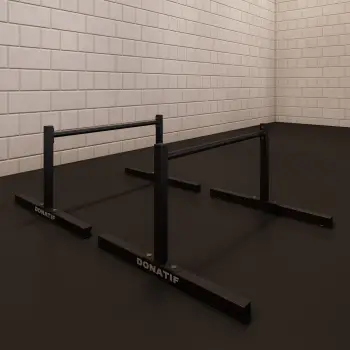
A sturdy bar, parallel bars, a weighted belt, and some Olympic plates are a sufficient base to face years of progression.
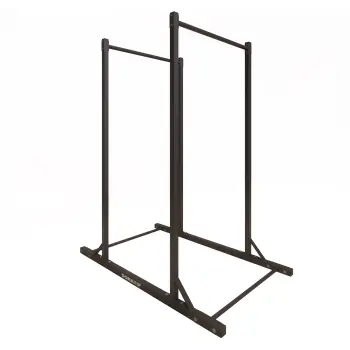
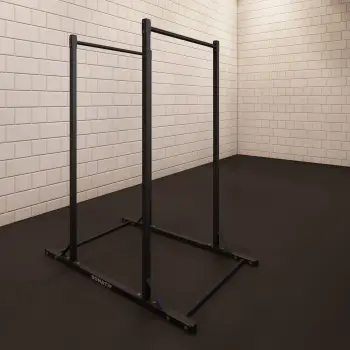
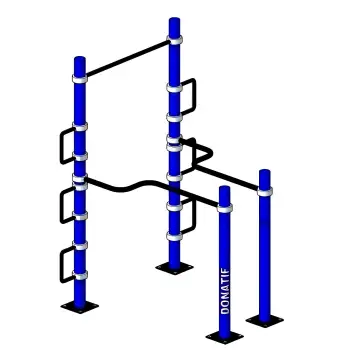
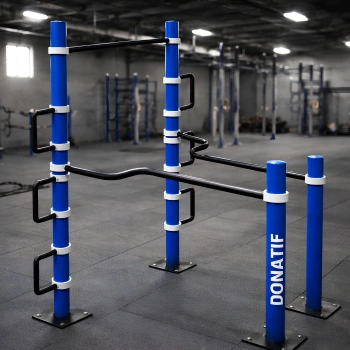
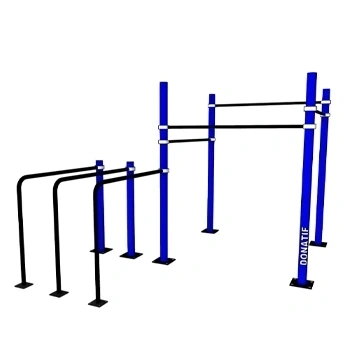
For those who want to build a complete station, it is possible to find numerous professional solutions dedicated to functional training and Street Lifting on calisthenics equipment, designed to offer stability, modularity, and durability over time.
Optimizing space
Even a few square meters can house an extremely versatile station if the equipment is chosen with care.
Thinking about future growth
Investing in modular components allows you to expand your training area without replacing existing structures.
Why invest in quality equipment
Integrating weighted dips and weighted pull-ups is one of the most effective ways to continue improving after exhausting the potential of body weight alone.
Gradual programming, impeccable technique, and reliable equipment allow you to obtain significant increases in strength and muscle mass while maintaining high safety standards.
For those who want to develop an advanced home gym or equip a professional facility, choosing products designed to support significant loads means investing in durability, performance, and training continuity, creating a solid foundation to progress year after year.


 Budgets
 Dumbers
 Discs
 Benches
 Racks and Rigs
 Weights Holders
 Isotonic machines
 Calisthenics
 Cardio
 Kettlebells
 Flooring
 Gym Set
 Accessories
 Combat
 ARTI MARZIALI
 CONTAINER GYM
 Tug-Of-War
 Used Gym Equipment
 PILATES MACCHINARI
 GINNASTICA ARTISTICA
 CAMPI DA PADEL
 Prodotti in Pronta Consegna
 Informazioni
 IRONMAN
 Gift Card