
Trolley
You have no items in your shopping cart

 Budgets
 Dumbers
 Discs
Discs
 Benches
 Racks and Rigs
 Weights Holders
 Isotonic machines
 Calisthenics
 Cardio
 Kettlebells
 Flooring
 Gym Set
 Accessories
 Combat
 ARTI MARZIALI
 CONTAINER GYM
 Tug-Of-War
 Used Gym Equipment
 PILATES MACCHINARI
 GINNASTICA ARTISTICA
 CAMPI DA PADEL
 Prodotti in Pronta Consegna
 Informazioni
 IRONMAN
 Gift Card
- Donatif
- General information
- 0 I like it
- 583 Views
- 0 comments
- gym flooring, safety flooring, gym safety, shock-absorbing materials
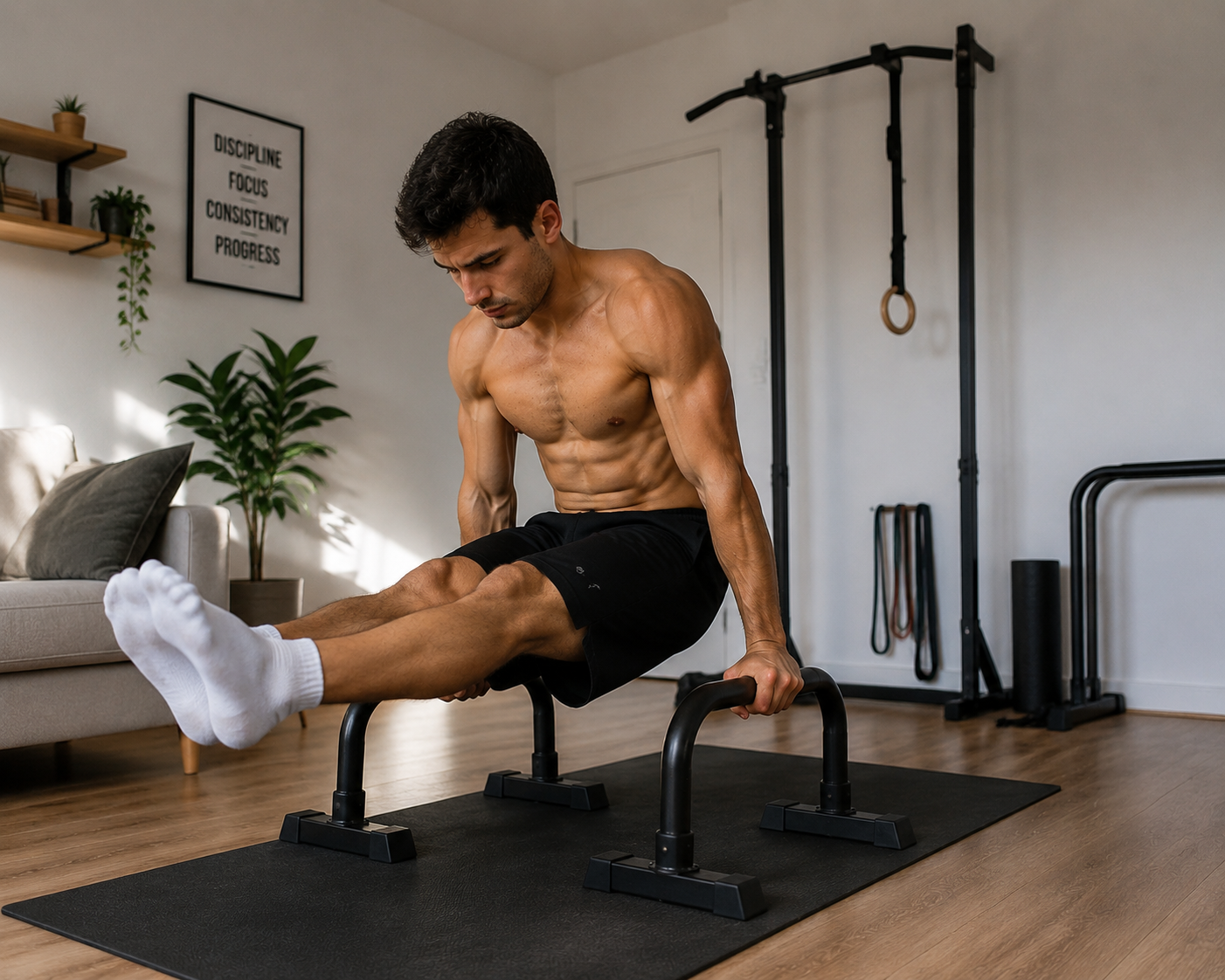
Best Home Calisthenics Structures: 2026 Buying Guide
Training at home with calisthenics means being able to develop strength, control, and coordination without depending on gym hours. However, the quality of your training depends largely on the equipment used. An unstable structure, built with cheap materials or not designed to support advanced exercises, can limit progress, compromise safety, and make every session frustrating.
Choosing the best calisthenics structures should not be based solely on price. Stability, modularity, build quality, expansion possibilities, and footprint are fundamental elements for creating a station destined to last for years. A bar that wobbles during a pull-up or a structure that transmits vibrations during a muscle-up affects not only comfort but also the technical quality of the movement.
In this guide, we will analyze the main solutions available for indoor and outdoor training, comparing pull-up bars, power racks, and freestanding stations. The goal is to help you identify the solution best suited to your needs, avoiding common mistakes and investing in equipment that can accompany your growth over time.
- Why choose a quality structure
- The main types of structures
- Materials and stability
- How to evaluate available space
- Pull-up Bar, Power Rack, or Freestanding Station?
- Accessories and modularity
- Mistakes to avoid before buying
- Why it pays to invest in a professional structure
Why choose a quality structure
In calisthenics, every exercise requires body control and precision. If the structure moves during a pull-up, vibrates during a dip, or oscillates during an assisted handstand, the athlete is forced to continuously compensate for these instabilities, reducing the effectiveness of the training.
A stable structure, on the other hand, allows you to focus exclusively on technical execution. This is particularly important when starting to practice advanced skills such as muscle-ups, front levers, back levers, or human flags, where a few millimeters of bar movement can completely change the perception of the exercise.
Build quality also affects the durability of the equipment. Structural steel, precise welds, and corrosion-resistant coatings guarantee a more cost-effective investment compared to cheap products that require frequent replacements.
Safety comes first
A certified and properly designed structure reduces the risk of failure and offers greater peace of mind during more intense workouts.
Better performance over time
Training on a rigid structure allows you to improve your technique more quickly, reducing energy loss and unwanted movements.
The main types of calisthenics structures
The market offers numerous solutions dedicated to home training. Each type has specific advantages and meets different needs in terms of space, budget, and experience level.
The most common options include wall-mounted bars, ceiling-mounted bars, multifunctional power racks, and complete freestanding stations. The choice depends not only on the exercises you want to perform but also on the possibility of making permanent installations.
Before purchasing, it is advisable to also evaluate any future evolution of your training, choosing a solution capable of accompanying your technical growth without having to be replaced after a few months.
Solutions for indoor environments
Garages, basements, and dedicated rooms allow for the installation of sturdy structures that can be used all year round regardless of weather conditions.
Outdoor installations
Gardens and terraces allow you to create real training areas by choosing products designed to withstand atmospheric agents.
Materials, stability, and build quality
One of the most important aspects concerns the choice of materials. High-thickness steel is the best solution to ensure rigidity and resistance even during explosive exercises.
Welds must be uniform and free of imperfections, while the paint should offer protection against scratches, humidity, and corrosion. The diameter of the bar also affects grip comfort and the ability to develop strength.
A professional pull-up bar must also guarantee high static and dynamic load capacity, maintaining maximum stability even during intensive use.
Why choose structural steel
Robust profiles limit flexing and vibrations, increasing the feeling of solidity during every exercise.
Surface protection
A quality finish extends the useful life of the structure and keeps the aesthetic appearance unchanged over time.
How to evaluate available space
Before purchasing, it is essential to accurately measure the area intended for training. Ceiling height, room width, and free space around the structure directly influence the choice.
Those who have a garage can opt for complete solutions, while smaller environments might require a simple pull-up bar fixed to the wall or ceiling.
It is also necessary to consider the space required for swings, ring exercises, dips, and dynamic movements, avoiding installations too close to walls or furniture.
The importance of height
A bar that is too low limits numerous exercises and makes many technical progressions difficult.
Organizing the home gym
A rational layout improves comfort, safety, and practicality during every workout.
Pull-up Bar, Power Rack, or Freestanding Station?
The pull-up bar is the most economical and compact solution. It is ideal for those who have little space and want to focus mainly on pull-ups and fundamental exercises.
The power rack adds great versatility, allowing you to integrate training with barbells, parallel bars, and numerous accessories. It is an excellent choice for those who want to combine calisthenics and strength training.
Freestanding stations, on the other hand, are the most complete solution. A modern outdoor calisthenics station or indoor unit allows you to train practically all the main skills without the need for additional structures.
When to choose a Pull-up Bar
Perfect for beginners or those looking for an essential, economical, and easily installable solution.
When a Power Rack is worth it
Ideal for users who want maximum versatility and the possibility of progressively expanding their home gym.
Accessories and expansion possibilities
A modular structure allows you to add new components over time without replacing the main system. This feature increases the duration of the investment and makes it possible to adapt the station to your goals.
Gymnastic rings, parallel bars, dip stations, resistance band supports, landmines, and anchoring systems are some of the most useful accessories for expanding training possibilities.
To learn more about the various solutions dedicated to home and professional training, you can consult the home calisthenics equipment available in the Donatif catalog.
Training with rings
Rings increase instability and allow you to develop control, coordination, and functional strength.
Thinking about the future
Choosing an expandable structure avoids new purchases when your technical level increases.
Common mistakes when buying
The first mistake is choosing solely based on price. A cheap structure may seem convenient initially, but it often entails higher costs in the long run due to premature wear and functional limitations.
Many users also underestimate the maximum supported weight, the quality of the welds, and the floor or wall mounting. These details directly affect safety and performance.
Another frequent mistake concerns the failure to evaluate the available space. Buying a structure that is too large or too small compromises the user experience and limits training possibilities.
Don't just look at the initial cost
Evaluating quality, support, and durability allows you to make a truly cost-effective purchase.
Underestimating modularity
An expandable structure accompanies the athlete's growth and maintains its value over time.
Why it pays to invest in a professional structure
A quality station represents much more than just a support for pull-ups. It is the foundation on which to build years of training, improving strength, technique, and safety consistently.
Resistant materials, high stability, expansion possibilities, and careful design allow you to tackle any progression without limitations, offering a training experience that is clearly superior to cheap solutions.
For those who want to create a functional, aesthetically pleasing home gym that is ready to accompany every phase of technical growth, choosing a professional structure means investing in quality, reliability, and lasting results.
Comments (0)