
Trolley
You have no items in your shopping cart

 Budgets
 Dumbers
 Discs
Discs
 Benches
 Racks and Rigs
 Weights Holders
 Isotonic machines
 Calisthenics
 Cardio
 Kettlebells
 Flooring
 Gym Set
 Accessories
 Combat
 ARTI MARZIALI
 CONTAINER GYM
 Tug-Of-War
 Used Gym Equipment
 PILATES MACCHINARI
 GINNASTICA ARTISTICA
 CAMPI DA PADEL
 Prodotti in Pronta Consegna
 Informazioni
 IRONMAN
 Gift Card
- Donatif
- General information
- 0 I like it
- 551 Views
- 0 comments
- gym flooring, safety flooring, gym safety, shock-absorbing materials
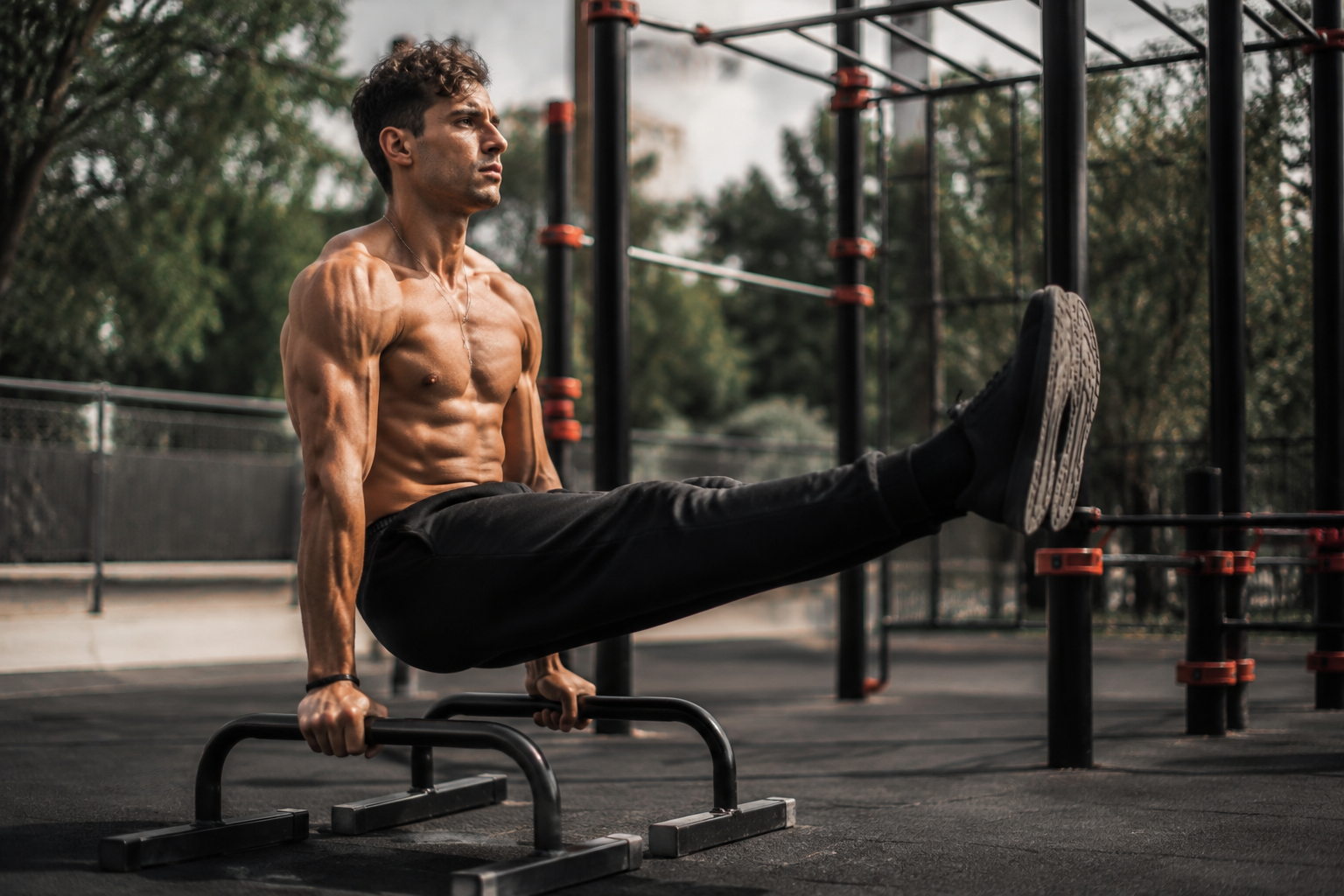
Intermediate Calisthenics Program: Overcoming Skill Plateaus
Reaching an intermediate level represents one of the most delicate moments in every athlete's journey. After mastering the basics, increasing the number of pull-ups, dips, and push-ups, and performing the first advanced exercises, many practitioners experience a plateau. In this phase, improvements slow down and skills like muscle-ups, front levers, and handstands suddenly seem unreachable.
The reality is that the problem rarely depends on motivation or absolute strength. In most cases, it is the training program that requires a leap in quality. Continuing to train like a beginner produces increasingly smaller adaptations, making a more structured approach necessary that alternates technical work, maximal strength, volume, and recovery.
This guide explores how to build a truly effective intermediate calisthenics program, which mistakes to avoid, and how to organize an intelligent progression to overcome plateaus and conquer your first static and dynamic figures. We will also analyze why the quality of equipment and the stability of the training structure directly influence the speed of progress.
- Why you enter a plateau phase
- Building a superior strength base
- Training for the muscle-up
- Progressions for the front lever
- How to organize a weekly schedule
- The importance of the training structure
- Recovery and injury prevention
- Evaluating the investment in your home gym
Why you enter a plateau phase
A plateau represents a normal phase of motor learning. After initial improvements, the body needs increasingly specific stimuli to continue adapting. Repeating the same exercises with identical volumes and intensities inevitably leads to a decrease in progress.
Many athletes simply continue to increase the number of repetitions, when instead it would be more useful to work on movement quality, explosive strength, and the ability to generate muscle tension. Calisthenics skills require coordination, technique, and control in addition to simple strength.
It is also fundamental to distinguish between a real plateau and a false perception of lack of improvement. Even when a skill is not yet completed, there can be significant progress in execution speed, stability, and the ability to maintain certain positions. Monitoring these indicators allows you to keep motivation high and correct the program with greater precision.
The most common causes
Random programming, insufficient recovery, poor technical work, and the use of unstable equipment are among the factors that most slow down progression.
How to analyze your limits
Recording workouts, filming executions, and evaluating strength, mobility, and technique allows you to precisely identify the aspects to work on.
Building a superior strength base
Advanced skills require significantly higher levels of strength compared to fundamental exercises. For this reason, a substantial part of the program must be dedicated to developing maximal strength through multi-joint movements and specific progressions.
Slightly reducing volume while increasing intensity allows you to improve motor unit recruitment and prepare the nervous system for more complex exercises. This approach also produces benefits for the quality of repetitions and joint stability.
It is advisable to alternate days dedicated to pulling, pushing, and core work, maintaining a gradual progression of loads and difficulties.
Pulling strength
Weighted pull-ups, controlled chin-ups, and explosive variations constitute a fundamental base for tackling more complex movements.
The role of the core
A strong abdomen capable of maintaining high body tension improves practically all calisthenics skills.
How to set up a muscle-up workout
The muscle-up represents one of the most coveted goals for intermediate-level athletes. To achieve it, it is necessary to simultaneously develop explosive strength, coordination, and the ability to manage the delicate transition phase above the bar.
Many attempts fail because the transition is neglected. Training exclusively for high pull-ups is not enough if you do not dedicate time to learning the complete movement through preparatory exercises.
The progression should include explosive pull-ups, controlled negatives, assisted transitions, and low-intensity technical repetitions, progressively increasing speed and precision.
Developing explosiveness
Chest-to-bar pull-ups, high pull-ups, and ballistic work improve the ability to quickly get over the bar.
Training the transition
Taking care of every detail of the transition phase reduces energy consumption and makes the movement more fluid.
The best front lever progressions
The front lever requires high levels of isometric strength and posterior chain control. Tackling it without a progressive path often leads to technical compensations that slow down improvements.
Progressions allow you to gradually increase time under tension while always maintaining correct posture. Tuck front lever, advanced tuck, one leg, and straddle constitute fundamental steps before the full position.
Each progression should be held with control, avoiding sacrificing body alignment just to increase hold time. The quality of execution remains more important than the duration.
Following a logical progression
Moving to the next variation only after having consolidated the previous one reduces the risk of compensations.
Training isometric strength
Controlled holds improve muscle recruitment and progressively prepare you for the full front lever.
Organizing a calisthenics strength schedule
An effective program correctly distributes volume, intensity, and recovery throughout the week. Alternating days dedicated to skills, strength, and complementary exercises allows you to maintain high quality without accumulating excessive fatigue.
A typical week can include two sessions focused on pulling, one on pushing, one dedicated to static skills, and a lighter session oriented toward mobility and active recovery.
Each workout should begin with technical work on skills, continue with strength exercises, and end with accessories and mobility. In this way, the nervous system tackles the most complex movements when it is still fresh.
Programming cycles
Dividing training into blocks of a few weeks allows you to focus on specific goals and monitor results with greater precision.
Measuring progress
Recording repetitions, hold times, technical quality, and perceived exertion makes it easier to modify the program when necessary.
Why the training structure influences results
One of the most underestimated aspects concerns the quality of the structure used. An unstable bar, excessive flexing of the structure, or unreliable fixings limit explosiveness and reduce safety during the execution of more advanced exercises.
For this reason, many practitioners who want to improve decide to build a professional home gym using sturdy and modular structures. Training on the same stable support allows you to develop greater technical precision and reduces the variables that can influence performance.
Investing in a professional calisthenics structure means creating a reliable environment in which to tackle increasingly demanding progressions with greater peace of mind and continuity.
Stability and control
A rigid structure immediately transmits the force produced by the athlete, improving the quality of repetitions and facilitating the learning of dynamic skills.
Choosing an expandable solution
Modular structures allow you to add accessories and new stations following the evolution of your goals without replacing the existing setup.
Recovery and reducing the risk of injury
Training intensely without respecting recovery times is one of the most frequent mistakes among intermediate athletes. Tendons and joints require longer adaptation times than muscles.
Including active recovery days, dedicating attention to shoulder and wrist mobility, and periodically reducing training volume allows you to maintain high performance over the long term.
Sleep quality, nutrition, and a gradual progression of difficulty contribute just as much as the program itself to achieving new skills.
Joint mobility
Good mobility improves technique, reduces compensations, and makes strength exercises more effective.
Programming deload weeks
Periodically reducing intensity and volume promotes complete recovery and prepares the body for new training cycles.
Evaluating the long-term investment
Overcoming the intermediate level requires method, patience, and a program built on solid foundations. Focusing exclusively on the number of repetitions is not enough when the goal becomes mastering skills like muscle-ups and front levers.
A well-structured intermediate calisthenics program integrates strength, technique, recovery, and logical progressions, allowing you to improve continuously while reducing the risk of injury. At the same time, training on reliable and stable equipment allows you to express your maximum potential during every session.
For those who want to build a home gym truly oriented toward performance, choosing professional, modular structures designed for intensive use represents an investment that will accompany your technical growth for many years, offering the stability necessary to turn every workout into a concrete step toward new skills.
Comments (0)