
Trolley
You have no items in your shopping cart

 Budgets
 Dumbers
 Discs
 Benches
 Racks and Rigs
 Weights Holders
 Isotonic machines
 Calisthenics
 Cardio
 Kettlebells
 Flooring
 Gym Set
 Accessories
 Combat
 ARTI MARZIALI
 CONTAINER GYM
 Tug-Of-War
 Used Gym Equipment
 PILATES MACCHINARI
 GINNASTICA ARTISTICA
 CAMPI DA PADEL
 Prodotti in Pronta Consegna
 Informazioni
 IRONMAN
 Gift Card
- Donatif
- General information
- 0 I like it
- 545 Views
- 0 comments
- gym flooring, safety flooring, gym safety, shock-absorbing materials
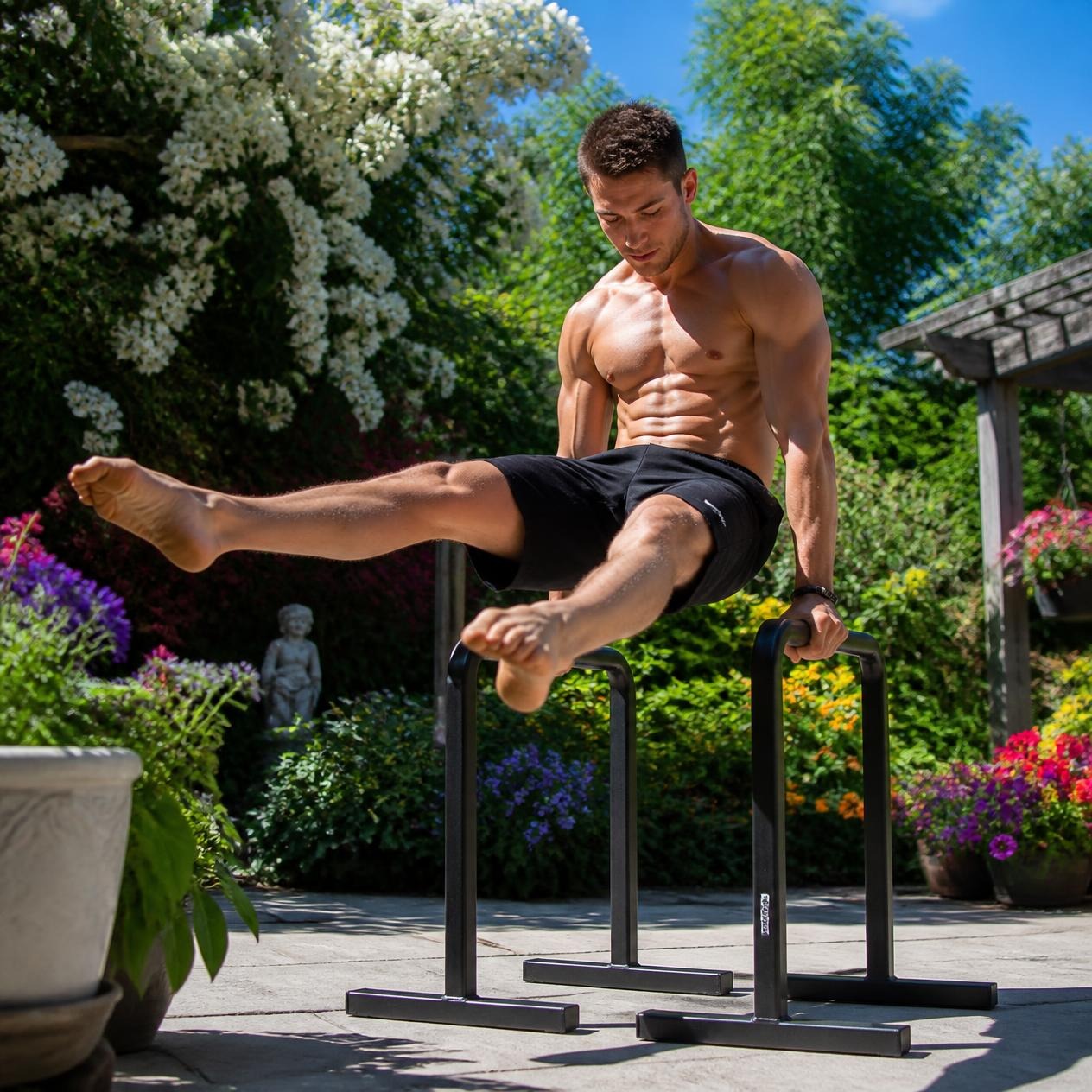
Outdoor Calisthenics: How to design an area in your garden
Creating an area dedicated to outdoor calisthenics in your garden means transforming an outdoor space into a gym that is always available, capable of offering training freedom, comfort, and continuity throughout the year. More and more enthusiasts are choosing to invest in a private structure to train without time constraints, avoiding crowds and creating an environment perfectly adapted to their needs.
However, designing an outdoor gym requires much more than simply installing a pull-up bar. It is necessary to evaluate the terrain, available space, materials, safety, the layout of the elements, and the possibility of expanding the facility over time. Careful planning improves the training experience, increases the durability of the equipment, and also enhances the home's outdoor space.
In this guide, we analyze all the fundamental aspects for designing a weather-resistant, functional calisthenics area suitable for both beginners and more experienced athletes, with particular attention to solutions dedicated to advanced home gyms.
- Why choose an outdoor gym
- How to design the space
- Choosing the terrain
- Which structures to install
- Materials and weather resistance
- How to arrange the equipment
- Maintenance and durability
- Why invest in a professional structure
Why choose an outdoor gym
Training outdoors offers advantages that go beyond simple physical exercise. Natural light, fresh air, and the possibility of using a personal space contribute to making training more pleasant and sustainable in the long term.
A gym installed in your own garden eliminates travel, allows you to train at any time of the day, and enables you to adapt your schedule to your needs without depending on the opening hours of a facility.
For those who practice calisthenics, having a dedicated station also means being able to work continuously on strength, technique, and progressions, developing skills that require consistency and repetition.
Maximum training freedom
A private gym allows you to organize sessions without limitations, dedicating all the necessary time to technical exercises and more advanced progressions.
A space that enhances the home
A well-designed outdoor area also represents an investment that improves the usability of outdoor spaces, creating a modern and functional environment.
How to design the space
The design phase is crucial for obtaining a truly effective area. Before purchasing equipment, it is necessary to evaluate dimensions, orientation, movement paths, and possible future expansions.
It is important to provide enough free space around the structures so that every exercise can be performed safely even during dynamic movements like muscle-ups, front levers, or swings.
Modular design also allows for adding new stations over the years without having to completely modify the facility.
Analyze the available space
Accurately measuring the garden allows you to identify the ideal position for the structure, avoiding obstacles, trees, or architectural elements.
Think about future developments
Those who start with a bar can subsequently integrate parallel bars, monkey bars, rings, benches, and other stations while maintaining a coherent project.
Choosing the terrain
The terrain represents one of the most important aspects in the creation of an outdoor gym. A stable base ensures safety, durability, and reliability of the entire structure.
Concrete surfaces generally constitute the most stable solution for the permanent fixing of structures, while lawns or natural ground may require dedicated plinths.
In addition to stability, it is also necessary to consider water drainage to avoid stagnation that could compromise usage comfort and the preservation of the equipment.
Correct foundations
Installation performed according to the manufacturer's instructions ensures maximum stability even during explosive exercises and intensive use.
Safety flooring
The inclusion of shock-absorbing rubber or dedicated surfaces improves comfort and reduces impact in case of a fall.
Which structures to install
The choice of garden calisthenics structure depends on the user's level and training goals. A pull-up bar represents the starting point, but a complete facility offers many more possibilities.
Modular configurations allow for the integration of bars at different heights, parallel bars, wall bars, monkey bars, and ring supports, greatly expanding the variety of available exercises.
For advanced athletes, it is also useful to provide stations dedicated to Street Lifting, static exercises, and functional training.
Bars and parallel bars
Outdoor pull-up bars must ensure the correct diameter, high structural rigidity, and finishes that offer a reliable grip in every season.
Useful accessories
Gymnastic rings, ropes, resistance bands, and weight supports increase the versatility of the station without taking up much space.
Materials and weather resistance
An outdoor gym must face rain, sun, humidity, and temperature changes. For this reason, it is fundamental to choose materials specifically designed for outdoor use.
High-quality structural steels, galvanization, and powder coating represent the most effective solutions for protecting the structure from corrosion over time.
Bolts, welds, and fastening systems must also be dimensioned to ensure safety and long life.
Corrosion protection
Professional surface treatments keep mechanical characteristics unchanged even after years of exposure to atmospheric agents.
Certified materials
Components designed for intensive use ensure greater reliability compared to cheap products intended for occasional use.
How to arrange the equipment
The correct layout improves the training experience and allows you to perform circuits without interference between different stations.
The main bars should be positioned leaving enough space for swings, muscle-ups, and dynamic movements, while areas dedicated to floor exercises can be placed to the side.
A rational arrangement also allows multiple people to train simultaneously while maintaining high levels of safety.
Organize movement flows
Separating zones dedicated to dynamic exercises from static ones makes workouts more fluid and comfortable.
Comfort during use
Evaluating sun exposure, the presence of shade, and wind direction helps to improve the quality of training throughout the year.
Maintenance and durability
Even a professional structure requires periodic checks to maintain high performance and safety.
Periodically checking tightness, the state of the paint, and the integrity of the bolts allows you to identify any signs of wear in a timely manner.
Simple periodic cleaning also helps to preserve the aesthetics of the facility and extend its useful life.
Scheduled checks
Regular inspections allow you to keep the structure always efficient and ready for use.
Cleaning and preservation
Removing dirt, leaves, and residue helps to protect surfaces and metal components over time.
Why invest in a professional structure
Creating an outdoor home gym requires careful planning and the choice of equipment built to last over time. A professional solution offers greater safety, stability, and room for evolution compared to generic products.
For those who want to build a complete, modular, and weather-resistant station, choosing professional outdoor calisthenics equipment allows you to create an area perfectly adapted to your needs, with structures designed for intensive use and long durability.
Investing in correct design means creating a space capable of accompanying the athlete's growth over the years, transforming the garden into a true personal gym where you can train in total freedom, with maximum efficiency and without compromises.
Comments (0)