To upgrade your gym weight room with new and refurbished machines, mixing makes sense when you assign each station the type of purchase that fits its workload. The most used and most visible machines should weigh more in your decision. Secondary stations, or those with simple mechanics, can be refurbished. The list price alone is not enough to decide.
This guide gives you a five-step method: define users and scope, collect data on each machine, compare at least two scenarios, apply a checklist, and document the decision. We make no savings percentages and no promises: every offer has its own terms, which must be read on the product page and in the sales documentation.
This article is written for gym owners, personal trainers with their own studio, and equipment buyers. It does not replace the opinion of a technician for structural or safety inspections.
In this article
Why isn't the list price enough?
Two offers with the same price can cover different scopes. One includes the weight stack, transport or assembly, the other does not. One has a written warranty, the other a generic formula.
The risk for the buyer is anchoring to the lowest figure and only later discovering the excluded items: spare parts, upholstery to redo, delivery to an upper floor, downtime. Before comparing prices, you need a common baseline.
If you want to explore the general topic, read when choosing refurbished equipment instead of new makes sense for a gym and when it is worth refurbishing an area with refurbished machines. Here we focus on the mix within the same gym.
How do you divide the gym into usage zones?
Start from the users, not the catalogue. Ask yourself how many people use each machine during peak hours and how visible that station is.
High-load zones
These are the most in-demand stations: often chest press, lat pulldown and leg press. Here reliability, spare parts availability and downtime matter most. New equipment makes the most sense where a breakdown stops many people.
Medium or low-load zones
Completion machines, such as hip adduction, arm curl or abdominal, often have simple mechanics and more distributed use. They are natural candidates for refurbishment, provided you check the condition of the wear-prone parts.
Image zones
The gym entrance and stations in plain view communicate quality. Appearance and aesthetic uniformity can weigh more than savings. A single brand or a single finish helps keep the look coherent.
What data should you collect on each machine?
For each candidate, new or refurbished, fill in the same card. Distinguish between known data (written on the spec sheet or in the documents), estimates (your own assessment) and assumptions to verify.
- Model and year, if declared, and available documentation (manual, manufacturer instructions).
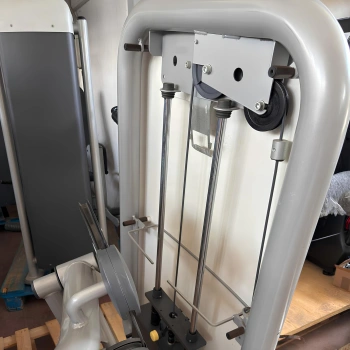
- Wear-prone parts: cables, pulleys, guides, bushings, padding, pins, weight stack.
- Included equipment: weight stack, selector, guards, adjustable seat.
- Actual sale terms and warranty: read what the product page says; do not take them for granted or assume they are the same across offers.
- Footprint and weight: doors, stairs, floor load, safety clearances.
- Logistics: delivery, unloading, assembly and who handles them.
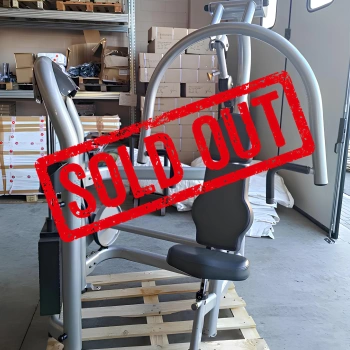
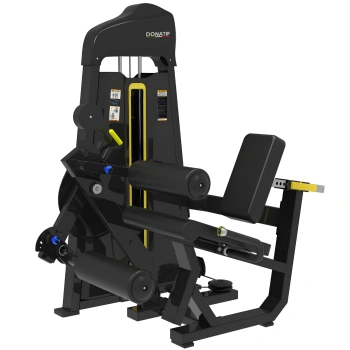
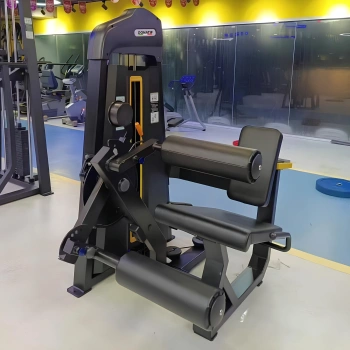
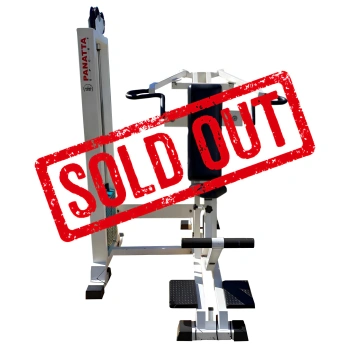
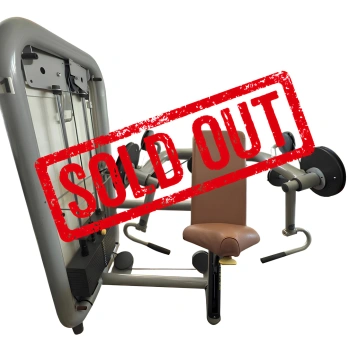
In the Donatif catalogue, under the category used gym equipment, you will find second-hand machines with weight stacks, such as Chest Press Matrix or Arm Curl Technogym. Each product page states what is included: always check condition, equipment and availability there before deciding.
For a detailed check on batches of used machines, see how to inspect every machine and avoid unexpected costs.
How do you compare scenarios?
Compare at least two solutions that serve the same use. The table below is a working template: fill it in with the real data from the offers, not with assumed values.
| Item | Scenario A: all new | Scenario B: mix | Scenario C: all refurbished |
|---|
| Purchase cost | From offer | From offer | From offer |
| Excluded items (transport, assembly, spare parts) | To verify | To verify | To verify |
| Written warranty | From product page | Per machine | Per machine |
| Aesthetic uniformity | High | To be planned | Depends on models |
| Downtime risk in high-load zones | To estimate | Contained if new units are in critical zones | To estimate |
| Lead times | From product page | The slowest one decides | From product page |
The cost to compare is the total cost, with the same items included in every column. If a figure is missing, write it down as an assumption and ask the seller.
Practical example: medium-sized gym
Imagine a gym with a weight room to upgrade, with about ten guided stations (a teaching assumption, not a real case). After analysing attendance, the owner identifies three machines in constant use during peak hours and seven completion machines.
The three high-load machines go for new purchase, with a written warranty and clear spare parts. The seven completion machines become candidates for refurbishment, with a completed card for each. For the weight-stack machines, you check cables, pulleys and padding; for those you discard, you note the reason.
If you choose a batch, remember that testing only a sample is not enough. Before fixing delivery dates, also plan the timing: how to schedule deliveries and assembly without disrupting classes.
When is it not worth mixing?
- Gym with a strong brand identity: if aesthetic uniformity is part of the offer, a mix can look out of place.
- Few stations: with three or four machines, one breakdown weighs more and your room for choice shrinks.
- No documentation: if you do not know what has been refurbished, or there are no clear sale terms, it is better to walk away.
- Users with specific needs: rehabilitation centres or spaces with particular requirements need a technician's assessment.
- No maintenance budget: a used machine without an inspection plan becomes a hidden cost.
If your gym also has free weights, consider how to balance guided machines and free loading by reading how to choose between guided machines and free weights. For new weight-stack machines, you can explore the category weight stack machines.
Decision checklist
- Have I defined users, peak hours and the visibility of each station?
- Have I assigned new or refurbished based on the impact of downtime?
- Do I have the same card for every machine, with known data, estimates and assumptions?
- Have I read the sale terms and warranty on each individual product page?
- Have I asked for photos and details on the wear-prone parts?
- Have I compared at least two scenarios with the same items included?
- Have I verified space, access, weight and assembly?
- Have I written down the decision and the remaining limits, indicating what needs a technician's opinion?
The internal check covers what you can verify yourself: documents, equipment, appearance, visual functionality. Doubts about structure, safety or suitability for use should be passed on to a qualified technician and to the manufacturer's instructions.
Frequently asked questions
Is refurbished or new more convenient?
It depends on the station. New is more sensible where a breakdown blocks many users; refurbished is better where use is spread out and the mechanics are simple, provided the condition is documented.
Can I mix different brands?
Yes, but consistency of space, ergonomics and finishes matters. Also check spare parts availability for each model.
Is the warranty the same for new and refurbished?
Do not take it for granted. Always read what is written on the product page and in the sale terms.
How do I estimate the budget without surprises?
Compare costs with the same items included in every scenario, and mark as assumptions anything that is not documented. Ask in writing for transport, assembly and spare parts.
How to proceed
Mixing new and refurbished is a design choice, not a compromise: critical zones get reliability, secondary ones a smart use of budget. Apply the checklist and compare scenarios using consistent data.
If you want an opinion on your gym, contact Donatif for a consultation or a quote: tell us the space, the number of stations and your users. In the meantime, you can browse the isotonic machines in our catalogue.


 Budgets
 Dumbers
 Discs
 Benches
 Racks and Rigs
 Weights Holders
 Isotonic machines
 Calisthenics
 Cardio
 Kettlebells
 Flooring
 Gym Set
 Accessories
 Combat
 ARTI MARZIALI
 CONTAINER GYM
 Tug-Of-War
 Used Gym Equipment
 PILATES MACCHINARI
 GINNASTICA ARTISTICA
 CAMPI DA PADEL
 Prodotti in Pronta Consegna
 Informazioni
 IRONMAN
 Gift Card