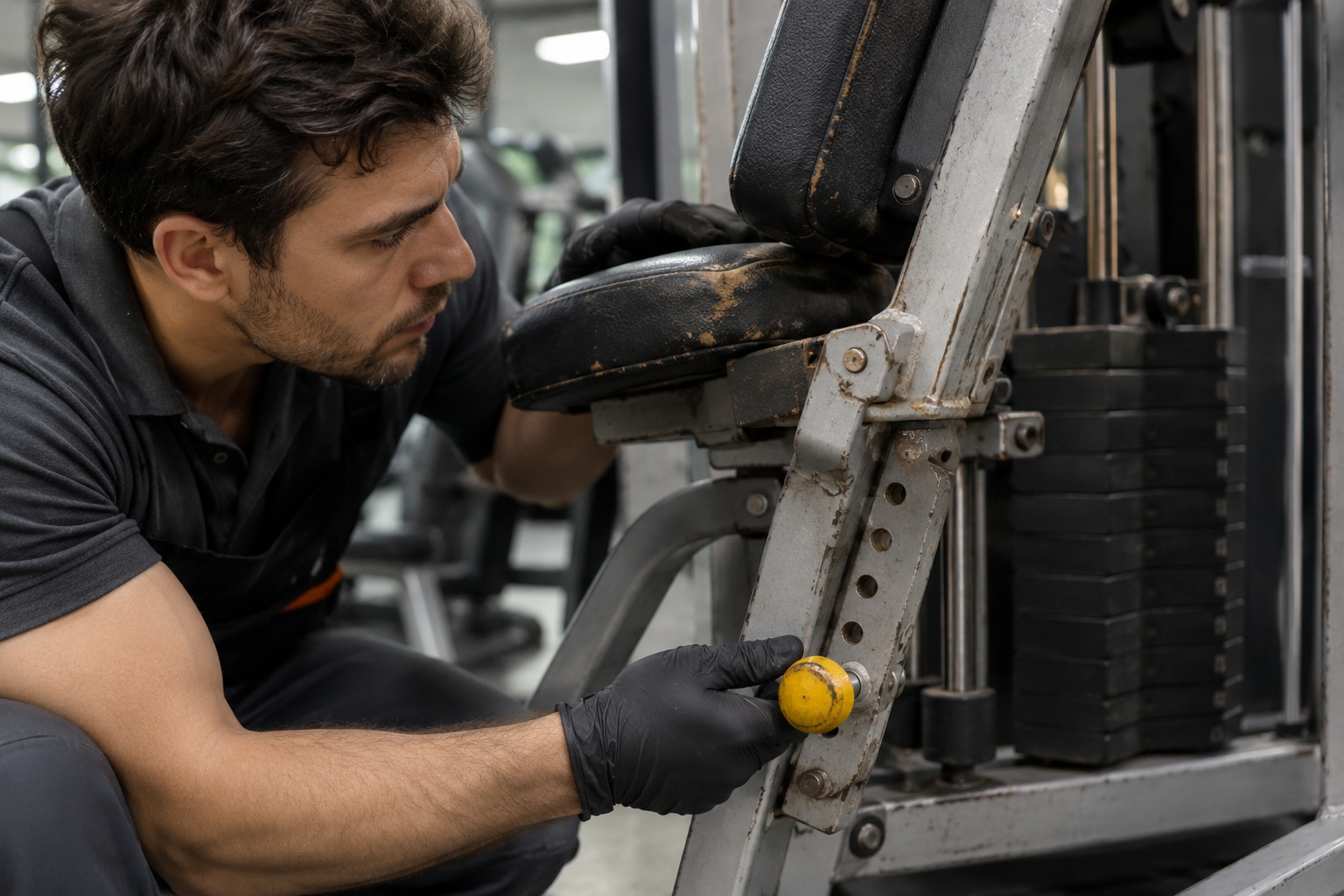
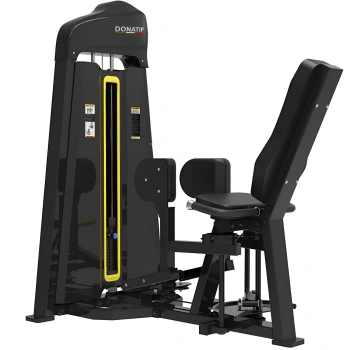
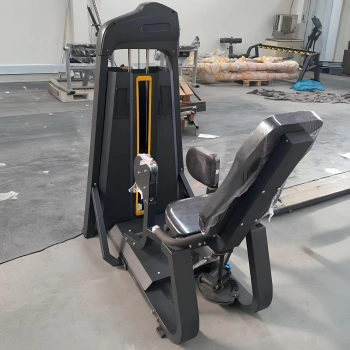
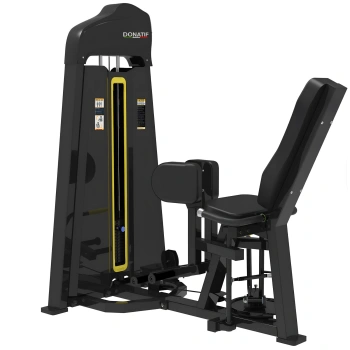
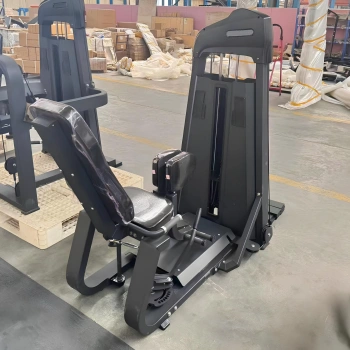
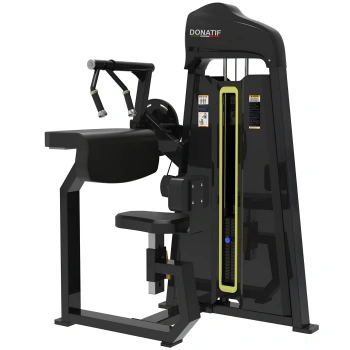
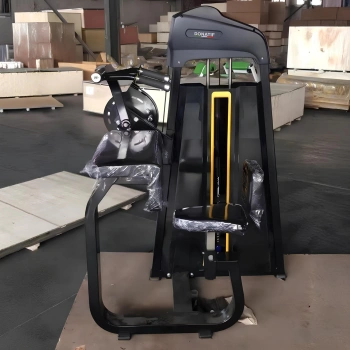
When evaluating the purchase of a lot of used plate-loaded and selectorized strength machines: is testing just a sample enough, the answer should not depend on the good impression left by one or two units. A lot may be composed of machines from the same line and of the same period, but each piece of equipment can have a different history of use, maintenance, and component replacement. For a gym owner, the true objective is therefore to establish a method that allows gathering comparable information on each unit before making a financial decision.
Sampling can have value as a first reading of the lot, for example to understand the general type of equipment or organize a subsequent inspection. However, it does not prove that the conditions observed on the sample are automatically representative of all the machines. Differences in adjustments, moving components, padding, cables, or other elements provided by the model can only emerge by checking the individual units.
An effective pre-purchase evaluation does not mean disassembling the machines or attempting tests on equipment that shows potential anomalies. It means distinguishing what the buyer can document through non-invasive checks from what requires a qualified inspection. Manuals, model identification, sales documentation, and permitted functional feedback form a more solid basis than mere aesthetics or the overall price of the lot.
Sample or single unit: what changes in the evaluation
Testing a sample allows quickly obtaining a first indication of the general conditions of a lot, but the result has evident limits when the goal is to decide whether to purchase all units. Used machines are not products freshly off the same production line. Over the course of their life, they may have accumulated different hours of use, been placed in areas of the gym with different traffic levels, or received non-identical maintenance interventions.
This means that a machine in excellent condition does not prove that the one next to it is in the same state. Likewise, a unit with evident signs of wear does not allow automatically classifying the entire lot as problematic. The evaluation must keep the findings relating to each piece of equipment separate, so as to be able to subsequently reconstruct the overall picture.
For the professional buyer, the sample can therefore be used as a preliminary filter, not as a substitute for individual verification. If the lot passes the first evaluation and the purchase remains interesting, it becomes useful to plan consistent checks on the individual machines and record what is observed.
The practical limits of sampling
The main limit is the impossibility of knowing in advance whether the sample truly represents the rest of the lot. If the best-preserved units are shown first, or if the machines have had different uses, the impression obtained may turn out to be unrepresentative. The quality of the process therefore depends on the possibility of accessing the individual units and verifying them with homogeneous criteria.
Why record each unit separately
Associating checks with each machine makes it possible to distinguish isolated defects from recurring problems. This information is also important in negotiation, because it allows evaluating the lot based on its actual conditions rather than applying a uniform judgment to machines that may be in different states.
Correctly identifying all the machines in the lot
Before analyzing functional conditions, it is necessary to know exactly what the lot includes. A generic list like leg press, leg extension, chest press, and lat pulldown is not sufficient for a professional evaluation. When available, model, version, identifiers, and associated documentation allow linking each machine to the correct technical information.
Identification is important even when equipment seems to belong to the same series. Production updates, different versions, or interventions performed during the machine's life can make some units different from others. Using the manual of a similar model as a sure reference for another machine can therefore lead to unsupported conclusions.
Creating a preliminary inventory also allows verifying whether the lot truly corresponds to the commercial proposal. Number of units, type, configuration, and available documents become measurable elements even before getting into the merits of the state of preservation.
Creating a profile for each machine
A simple profile can report unit identification, declared model, available documents, and the results of checks performed. There is no need to formulate technical diagnoses when one does not possess the necessary skills. It is more useful to precisely describe what is observable and separate it from evaluations that will have to be entrusted to a technician.
Distinguishing models and versions
The correspondence between machine and documentation should be verified before using specifications, procedures, or manufacturer indications. When identification is not certain, this uncertainty must be recorded instead of being resolved by aesthetic similarity.
What a non-invasive visual check can indicate
A used gym machine check can start with general observation without disassembling components. The aim is to document visible conditions and identify elements that make a specialized verification appropriate. Condition of surfaces, padding, grips, accessible elements, and the apparent completeness of the machine can provide useful information on the previous management of the equipment.
Aesthetics, however, must be interpreted with caution. Well-preserved upholstery does not prove that the functional components are in the same condition. On the contrary, cosmetic signs may have little impact on usability when the functional part has been correctly maintained. The evaluation should therefore avoid turning external appearance into the dominant criterion.
If damage, missing parts, or conditions that cast doubt on safety emerge during observation, the machine should not be used to perform improvised tests. The point must be recorded and submitted to a qualified subject, following the indications applicable to the model.
Separating aesthetics and function
For the gym owner, both have value, but they answer different questions. Aesthetics influence the presentation of the room and may require restoration work. Function, on the other hand, concerns the behavior of the equipment and requires specific criteria. Separating the two categories helps not to attribute a technical judgment to a machine just because it looks recent or well cleaned.
Recording anomalies without diagnosing them
A photograph and a precise description of an anomaly can be more useful than an improvised diagnosis. If an element appears deformed, incomplete, or different compared to other units, it is sufficient to record the finding and ask for a qualified evaluation when necessary.
How to set up a consistent functional test
The gym equipment functional test should be carried out only when the machine's conditions allow safe verification and according to what is foreseen by the manufacturer. It is not a procedure to force doubtful equipment until discovering if it presents a fault. Instead, it serves to observe normal operation through methods compatible with the documentation and with the skills of the person performing the check.
The advantage of using the same criterion on all comparable units is the ability to detect differences. If multiple machines of the same model show different behaviors in normal adjustments or permitted movements, the data can be recorded and investigated further. It is not necessary to immediately formulate a technical explanation.
When a machine presents conditions that make the possibility of using it doubtful, the test must stop before turning into an attempt at diagnosis. Disassembly, repairs, technical adjustments not intended for the user, and checks of potentially defective components must be entrusted to qualified personnel.
Using a repeatable criterion
Comparability is more important than the quantity of impressions gathered. A consistent sequence of checks for each unit allows identifying differences and compiling uniform documentation. This approach reduces the risk of dedicating a lot of attention to the first machines and superficially checking the last ones.
Establishing the limit of autonomous verification
Before inspection, it is useful to decide which findings can be made by the buyer and which should be reserved for a technician. This distinction prevents the pressure of concluding the purchase from leading to using or handling machines that first require a specialist evaluation.
Adjustments and components to consider in the evaluation
Strength machines are used by people with different characteristics, and for this reason the adjustments provided by the model play an important role in daily experience. Seats, backrests, levers, or other adjustable elements, when present, should be considered in the evaluation according to the manufacturer's instructions. A seemingly secondary element can become an operating cost if it requires intervention on many units.
The same principle applies to components involved in the movement of the machine. The buyer must not disassemble them to evaluate them independently, but can verify the documentation, observe what is accessible, and report behaviors that require further investigation. The distinction between observation and diagnosis is particularly important in the inspection of used strength machines.
If the lot includes numerous models, it is advisable to adapt the check sheet to the characteristics actually foreseen for each family. A checklist that is too generic actually risks omitting relevant elements, while a procedure built on a single model could include verifications not relevant to the others.
Checking the adjustments provided by the model
The manufacturer's documentation allows knowing which adjustments should be available and how they should normally be used. During a non-invasive verification, it is therefore possible to record whether the expected elements are present and if obvious anomalies emerge, without attempting on-site repairs.
When a component requires verification or possible replacement, the data should enter the economic evaluation of the lot. It is not necessary to independently estimate a technical intervention: it is preferable to obtain qualified feedback and use the relative cost as part of the comparison between purchase price and actual conditions.
Documentation and history of the individual machines
Documentation adds a level of information that physical inspection alone cannot provide. Manuals, identifiers, any available intervention logs, and documents relating to the sale help reconstruct what is being purchased. The quantity and quality of available information can vary, but gaps should be recorded as such.
It is useful to ask if information exists on interventions performed on individual machines and always distinguish verbal statements from verifiable documentation. The absence of a document does not automatically prove that a machine is in poor condition, just as the presence of documentation does not guarantee the absence of defects. These are elements that contribute to the overall evaluation.
For those also considering professional alternatives already refurbished or selected through dedicated channels, it can be useful to compare the lot with the offer of used and refurbished gym equipment. The comparison should still concern documented conditions, services actually included, and characteristics of the individual proposals, without assuming equivalence between different products.
Value of the available history
A history can help understand what interventions were carried out and when, provided the information can be traced back to the units concerned. In large lots, it is particularly useful to prevent generic documents from being interpreted as proof of identical maintenance for all machines.
Before purchase, it is important to understand what is actually included in the proposal and which conditions are documented by the seller. Transport, installation, any interventions, and other services should not be assumed. Clarifying these aspects makes the economic comparison more reliable.
Comparing units without relying on first impressions
After gathering data, the lot can be analyzed as a whole without losing visibility of individual machines. A simple classification can distinguish units with no anomalies observed during permitted checks, units with aspects to investigate further, and machines for which technical verification is necessary before formulating a judgment.
This system avoids two extremes. The first consists of considering the whole lot good because the first machines checked seem satisfactory. The second consists of devaluing all equipment due to a problem found on a single unit. A machine-by-machine matrix instead makes the actual distribution of findings visible.
The economic evaluation can be built subsequently on this basis. The price of the lot gains meaning when it is compared with the quantity and type of machines, documented conditions, any verifications still necessary, and possible professional restoration costs.
Building a comparison matrix
Rows can represent individual machines and columns the observed criteria. Using consistent categories makes it easier to spot recurrences and isolated anomalies. The method is particularly useful in numerous lots, where relying on memory can produce confusion between similar units.
From lot price to actual cost
An interesting price is not enough if a significant portion of the equipment requires interventions not yet quantified. Before comparing the offer with new or refurbished alternatives, it is therefore useful to identify which costs are certain, which can be estimated through quotes, and which still remain unknown.
Checklist for checking a lot before purchase
A professional checklist can start with the complete inventory: identification of each machine, model, any version, available documentation, and correspondence with what is indicated in the proposal. Subsequently, observable conditions and the results of permitted functional verifications are recorded, keeping a separate sheet for each unit.
For each machine, it is also necessary to note any points that require a qualified evaluation. The purpose of the checklist is not to independently certify that the equipment is problem-free. It serves to prevent doubts, differences, or missing information from disappearing into the overall judgment of the lot.
Before the final decision, it is advisable to verify that open costs have been considered. If some machines require specialist inspection, the economic value of the offer should be evaluated only after obtaining sufficient information to understand the impact of such verifications.
Checks to associate with each unit
Identification, documentation, visible state, completeness, expected adjustments, and the result of permitted non-invasive tests constitute a practical basis. Any anomaly should be described without attributing an unverified cause to it. In this way, the sheet can also be used by a technician subsequently called to examine the machine.
When to postpone evaluation to a technician
If doubts arise relating to integrity, safety, functional components, or conditions that cannot be evaluated without disassembly or specialized skills, autonomous checking has reached its limit. The machine should not be subjected to potentially risky tests to obtain an immediate answer. Qualified verification offers more useful data for the decision.
Evaluating the lot as an investment for the gym
A lot of used strength machines can represent an opportunity to expand a weight room, replace existing equipment, or start a facility with a different initial capital compared to purchasing new. The economic advantage, however, should be measured on the truly usable value of the lot and not just on the difference between the requested price and the theoretical price of new machines.
For this reason, establishing checks for each machine in a lot means protecting the quality of the decision. The buyer can distinguish immediately evaluable units from those requiring further investigation, better estimate subsequent costs, and negotiate based on documented findings. The sample remains useful as a first observation, but does not replace this level of detail.
The final choice should therefore bring together price, lot composition, documented conditions, any necessary interventions, availability of information, and adequacy of the machines to the gym project. A consistent procedure does not guarantee that every future problem can be excluded, but it allows reducing decisions based on assumptions and knowing which aspects have been verified and which still require specialist evaluation.


 Budgets
 Dumbers
 Discs
 Benches
 Racks and Rigs
 Weights Holders
 Isotonic machines
 Calisthenics
 Cardio
 Kettlebells
 Flooring
 Gym Set
 Accessories
 Combat
 ARTI MARZIALI
 CONTAINER GYM
 Tug-Of-War
 Used Gym Equipment
 PILATES MACCHINARI
 GINNASTICA ARTISTICA
 CAMPI DA PADEL
 Prodotti in Pronta Consegna
 Informazioni
 IRONMAN
 Gift Card