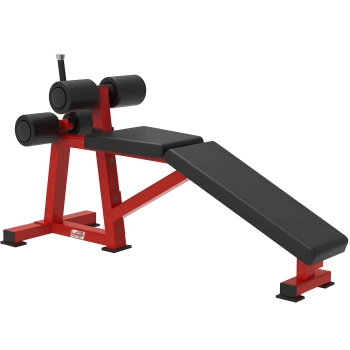
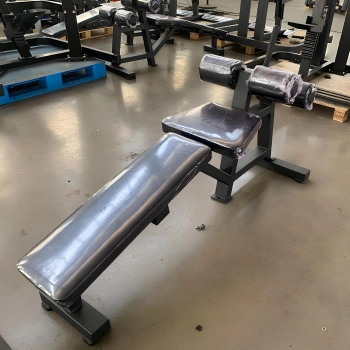
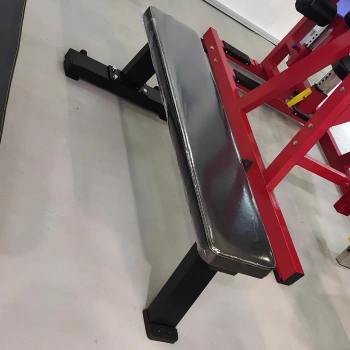
Among the most versatile equipment found in a gym, the bench represents one of the fundamental tools for developing strength and hypertrophy. However, when it comes to chest training, many athletes focus exclusively on the classic flat bench, neglecting a variation that can offer interesting advantages: the decline bench. Understanding the differences between these two configurations allows for more effective and complete workout programming.
Choosing a quality gym reclining bench is not just about the ability to change the backrest angle, but also the presence of the decline position, which is often absent in budget models. This feature significantly expands training possibilities, allowing you to stimulate the pectoral muscle from different angles and improve exercise variety.
In this guide, we will analyze the characteristics of the flat bench and the decline bench, their respective advantages, the benefits for the lower chest, safety-related aspects, and the criteria to evaluate when choosing a professional bench for home gyms or fitness centers.
Differences between flat and decline bench
The flat bench is one of the most well-known exercises for upper body strength development. It allows for handling heavy loads and simultaneously engages the pectorals, anterior deltoids, and triceps, making it ideal for both beginners and advanced athletes.
The decline bench, on the other hand, changes the working angle by positioning the torso slightly tilted downward. This variation influences the barbell path and the distribution of forces, changing the engagement of the different portions of the pectoralis major without disrupting the technical movement.
Both variations have a place in a balanced program. It is not about determining which is the absolute best, but about understanding how each configuration can contribute to muscle development and prevent monotony in workouts.
How the pushing angle changes
The different body inclination modifies the trajectory of the load and the distribution of muscle work. This allows for emphasizing certain fibers over others, offering a complementary stimulus compared to the traditional bench.
Muscle engagement
While maintaining significant activation of the entire pectoralis major, the decline variant slightly reduces the contribution of the shoulders in many executions, allowing some athletes to train with greater comfort.
How pectoral work changes
One of the main reasons to use the decline bench concerns the ability to emphasize work on the lower part of the pectoralis major. It is important to remember that the muscle always works as a whole, but the orientation of the fibers can be influenced by the direction of the push.
Lower chest exercises performed with a decline bench can contribute to improving the aesthetic development of the lower chest, especially when included within a complete program.
Alternating different angles also allows you to avoid excessive adaptations, keeping the quality of the training stimulus high throughout the year.
Greater variety of stimulus
Using multiple inclinations allows for better load distribution among the various structures involved, promoting more harmonious development.
Hypertrophy-oriented training
For those seeking complete muscle development, the combination of flat, incline, and decline bench offers a very wide range of stimuli without radically changing the execution technique.
Benefits of the decline bench
The decline bench benefits are not exclusively about aesthetics. Many athletes perceive greater stability during the push and a feeling of less shoulder fatigue, especially when they have joint limitations in the traditional position.
The barbell trajectory can be more natural for some people, favoring better perception of muscle work and a more balanced distribution of forces throughout the entire movement.
The decline bench also represents a valid alternative in training periodization phases, allowing for the introduction of effective variations without completely changing the structure of the routine.
Joint comfort
For some practitioners, the decline position allows for reduced perceived stress on the shoulders while maintaining high exercise intensity.
Greater variety
Integrating different working angles helps keep motivation high and offers new possibilities for technical progression.
Safety during training
Safety is an essential aspect when using heavy loads. A professional bench must offer a stable structure, robust materials, and reliable adjustment systems.
Decline bench safety depends largely on the presence of effective leg supports, which are essential to prevent the body from sliding during the exercise.
The quality of the padding, the width of the base, and the precision of the adjustment mechanisms also directly affect the stability and control of the movement.
Importance of leg locks
Locking rollers allow you to keep the body in position, avoiding unwanted movements during the pushing phase.
Structural robustness
High-thickness steel, precise welds, and non-slip feet contribute to making the bench stable even during the most intense workouts.
How to choose a reclining bench
Not all adjustable benches are truly versatile. Many models only allow for adjustment in incline and flat positions, completely excluding the decline.
For this reason, it is important to carefully check the backrest adjustment range, load capacity, material quality, and the presence of accessories dedicated to decline training.
Those who want a complete solution should look toward a gym reclining bench designed to offer all the main usage configurations without compromising stability.
Build quality
A professional structure ensures greater durability, less maintenance, and a feeling of solidity during every exercise.
Adjustment system
Adjustments must be simple, quick, and above all safe, avoiding mechanical play that could compromise the precision of the position.
Errors to avoid
One of the most frequent errors consists of using excessive loads without having become familiar with the new bench angle. Every variation modifies the technical movement and requires a short adaptation period.
Another common error concerns incorrect foot placement in the locking rollers, which can reduce stability and compromise movement control.
Finally, it is advisable to avoid overly rapid movements and always maintain control of the barbell throughout the entire execution, prioritizing correct technique over simply increasing the load.
Focus on technique
Precise execution allows for better results while minimizing the risk of unwanted compensations.
Gradually increase the load
Controlled progression promotes constant improvements without compromising training quality.
When to include the decline bench in your routine
The decline bench can be used as a main exercise during certain periods of the year or as a complement to the flat bench within the same session.
Hypertrophy-oriented athletes can alternate different angles during the mesocycle to keep the variety of muscle stimulus high and promote balanced chest development.
Even in home gyms, a complete adjustable bench allows you to replace numerous dedicated pieces of equipment, optimizing space and financial investment.
For beginners
Beginners should first learn the flat bench technique and then progressively introduce decline variations.
For experienced athletes
More advanced athletes can leverage the decline bench to diversify work and improve specific strength or muscle development goals.
Evaluating the best investment
Choosing a professional bench means looking beyond the simple purchase price. Stability, load capacity, build quality, and the ability to actually use all inclinations affect the training experience and the longevity of the equipment.
Benches that also include the decline position offer superior versatility and allow you to expand the number of available exercises without purchasing additional machines. This feature represents a concrete advantage for both home gyms and commercial gyms looking to optimize space.
Carefully evaluating materials, adjustment systems, support safety, and build quality allows you to make an investment destined to maintain high performance over time, offering a more complete, safe, and suitable workout for every level of experience.


 Budgets
 Dumbers
 Discs
 Benches
 Racks and Rigs
 Weights Holders
 Isotonic machines
 Calisthenics
 Cardio
 Kettlebells
 Flooring
 Gym Set
 Accessories
 Combat
 ARTI MARZIALI
 CONTAINER GYM
 Tug-Of-War
 Used Gym Equipment
 PILATES MACCHINARI
 GINNASTICA ARTISTICA
 CAMPI DA PADEL
 Prodotti in Pronta Consegna
 Informazioni
 IRONMAN
 Gift Card