Rubberized Tile
Why choose rubberized tile
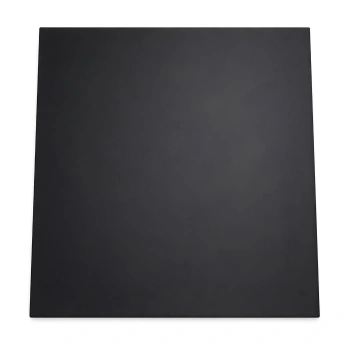
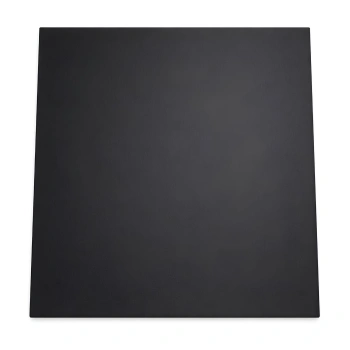
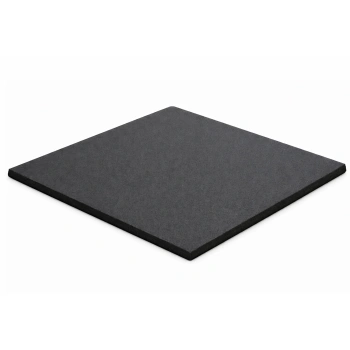
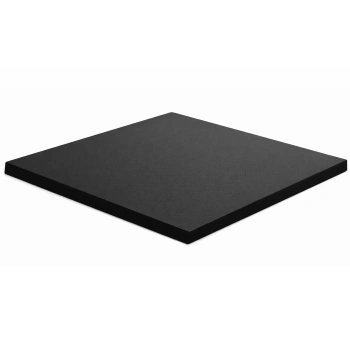
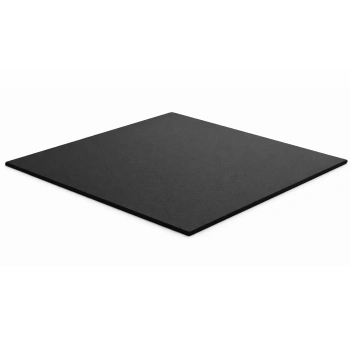
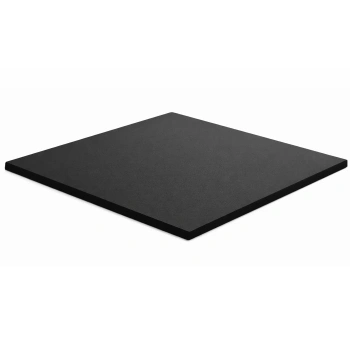
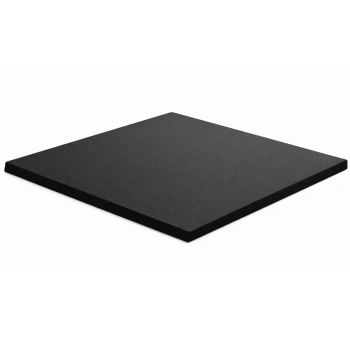
Rubberized tile indicates modular flooring designed to provide protection, stable footing and good wear resistance in settings where the floor is subjected to repeated loading, rubbing or impact. In a home gym, weight room or technical work area, this type of surface helps to create a safer, neater foundation with easy installation and practical management over time as well.
Choosing such a floor is not just about aesthetics. It is about the ability to absorb some of the stress, limit stress on the subfloor, and make daily use of the space more comfortable. In professional or home environments, well-selected rubber flooring makes it possible to improve the usability of the area and adapt the surface to the real needs of training or intensive use.
How to evaluate thicknesses and texture
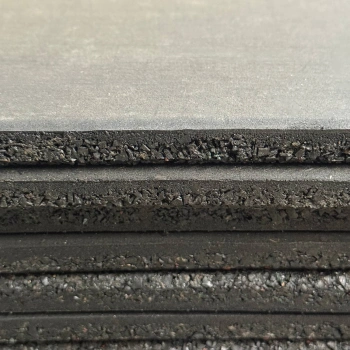
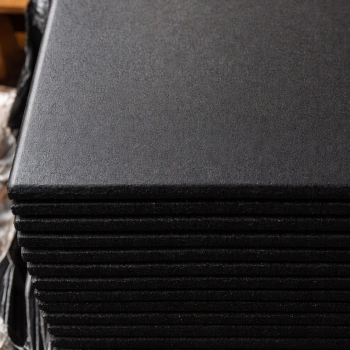
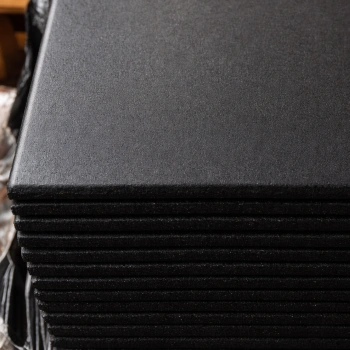
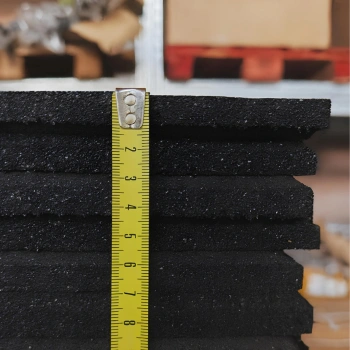
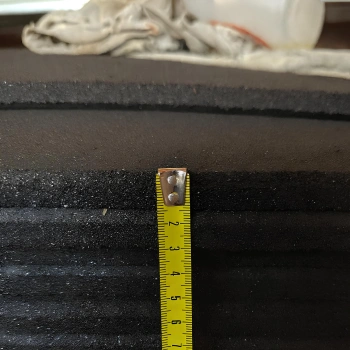
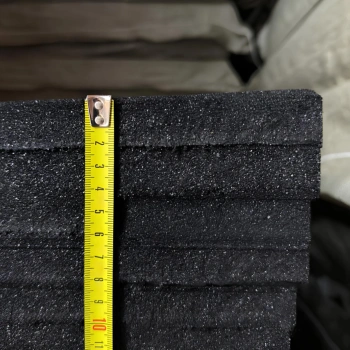
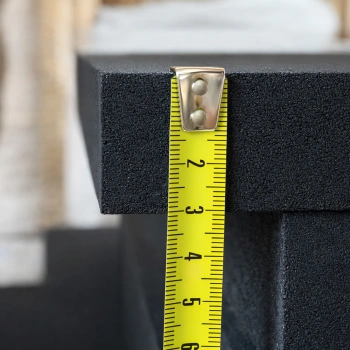
The thicknesses of rubberized tiles directly affect the performance of the product. A thinner solution may be suitable for areas with moderate loads, cardio stations or surfaces where continuity of support is sought without excessive bulk. On the other hand, when use involves free weights, larger equipment or frequent traffic, going for thicker thicknesses will help achieve a more protective and stable base.
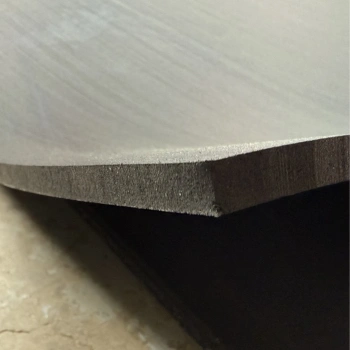
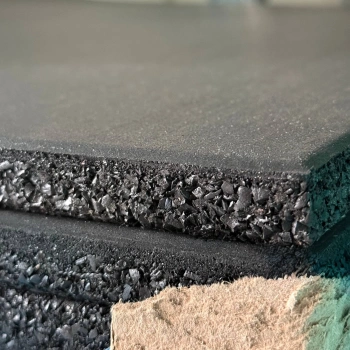
Evaluating only the number of millimeters, however, is not enough. Density, material compactness and compound quality also come into play. A high-density rubberized tile returns a firmer feel under load and promotes better operational durability. This is why it pays to choose the thickness in relation to the environment, type of use and the need to preserve both comfort and the floor underneath.
Types of grain and finishes available
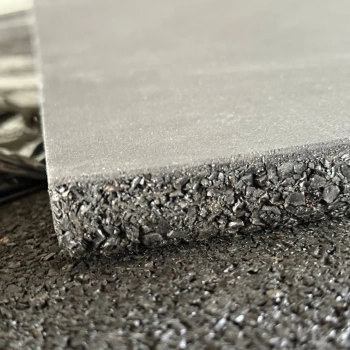
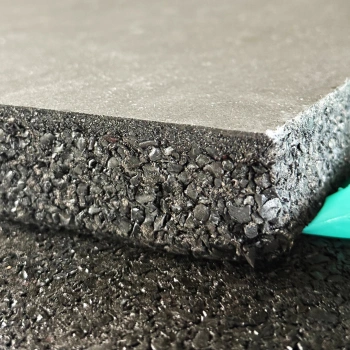
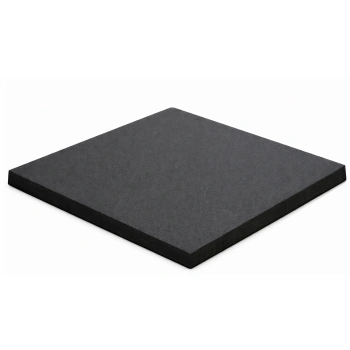
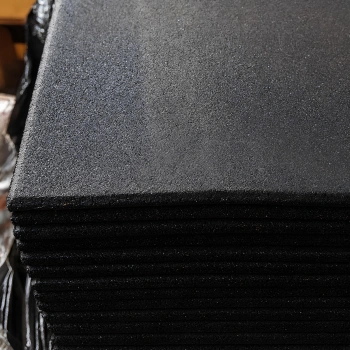
Surface grain changes the behavior of the tile both practically and visually. More compact or fine-grained finishes are often indicated in environments where a more uniform, easy-to-manage and visually pleasing surface is desired. More noticeably grained solutions, on the other hand, can offer a more technical perception and an interesting response in terms of perceived grip and robustness.
The choice of finish should be read in relation to the actual use of the space. In a gymnasium or functional area, a well-calibrated texture helps improve pitch stability and equipment grip. At the same time, the presence of different grain types allows for the construction of an environment consistent with the intensity of use, the level of maintenance required, and the overall aesthetics of the project.
Water-repellent versions and outdoor use
Water-repellent rubberized tiles are designed for contexts where moisture and water contact are a real variable. This feature becomes useful in semi-open areas, covered outdoor spaces, areas subject to frequent washing, or environments where a more protected surface than surface absorption is desired. The goal is not only to preserve the material, but to maintain a smoother performance over time.
For outdoor installations, it is important to consider the overall exposure of the space, the frequency of use, and the need for a surface that will continue to provide stability as environmental conditions change. A well-selected outdoor rubberized tile allows for training areas, technical walkways or operating stations with a more functional approach, without sacrificing visual order and ease of management.
Indoor and outdoor applications
Indoor use of rubberized tile is particularly popular in home gyms, equipment rooms, weight areas, personal training studios and multifunctional areas. In these contexts, the flooring helps define a dedicated surface that is better suited to support equipment, repetitive movements and prolonged standing. The modularity of the format also makes it easy to cover spaces of different sizes, from small home environments to more complex structures.
Outdoor use further expands the possibilities. A tile designed to better withstand outdoor conditions can be used in outdoor fitness areas, covered areas, functional spaces adjacent to sports facilities or technical surfaces where a more protected and stable base is needed. The ability to choose thickness, grain and water-repellent version makes the category suitable for very different needs, without forcing a one-size-fits-all solution.
Protection, stability and comfort of use
One of the main advantages of rubberized tile concerns the protection of the subfloor. In the presence of equipment, dumbbells, discs or high-intensity movements, the rubber helps reduce direct impact on the underlying surface. This aspect is relevant both in professional environments, where the workload is constant, and in domestic spaces, where one wants to preserve the existing floor without giving up a well-defined training zone.
Along with protection, overall comfort should be considered. Rubber flooring offers a more technical footing than many traditional surfaces, with benefits in terms of stability, noise attenuation, and perceived safety during use. The combination of non-slip effect, ability to absorb some of the stress and adaptability to indoor and outdoor settings makes this category particularly attractive to those seeking a concrete, durable and consistent solution with intensive use.
Frequently asked questions about Rubberized Tile
What thickness of rubberized tile is best to choose?
Thickness should be chosen according to the type of use. For areas with moderate loads, a smaller solution may suffice, while for weighted areas, more demanding equipment or heavy use, it is preferable to go for rubberized tiles with greater thickness and more compact structure.
Can rubberized tiles be used both indoors and outdoors?
Yes, the category includes solutions suitable for both indoor and outdoor settings. For outdoors, it is useful to evaluate finish, density, and presence of water-repellent versions so that the surface is better suited to environmental exposure and moisture.
What is the difference between a fine grain and a more pronounced grain?
The difference is mainly in surface performance, grip and visual impact. A fine grain tends to provide a more uniform appearance, while a more pronounced finish can be more technical and enhance grip in specific contexts of use.
Does a rubberized tile help protect the floor underneath?
Yes, a rubber floor tile helps reduce direct impact on the bottom and improve the stability of the supporting surface. This aspect is useful in both home gym and professional environments where equipment and loads are used frequently.


 Budgets
 Dumbers
 Discs
Discs
 Benches
 Racks and Rigs
 Weights Holders
 Isotonic machines
 Calisthenics
 Cardio
 Kettlebells
 Flooring
 Gym Set
 Accessories
 Combat
 ARTI MARZIALI
 CONTAINER GYM
 Tug-Of-War
 Used Gym Equipment
 PILATES MACCHINARI
 GINNASTICA ARTISTICA
 CAMPI DA PADEL
 Prodotti in Pronta Consegna
 Informazioni
 Gift Card