Outdoor Rubberized Flooring
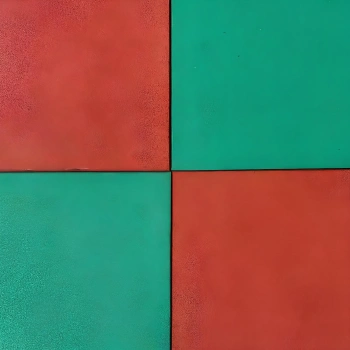
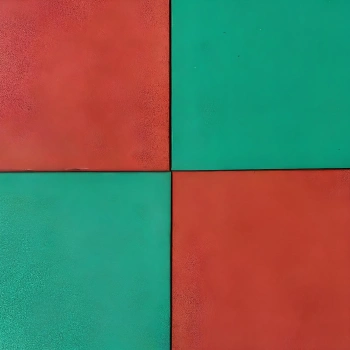
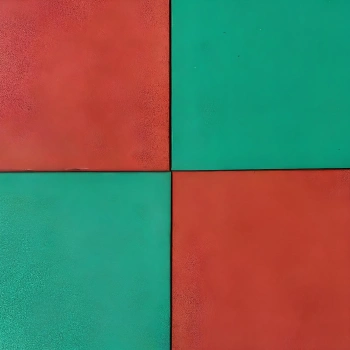
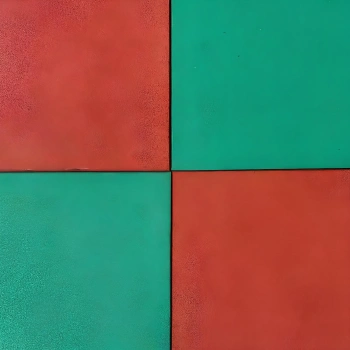
Rubberized outdoor flooring is used when a stable, non-slip, and more comfortable base is needed than traditional hard floors. It finds use in outdoor fitness areas, transit areas, condominium spaces, gardens and surfaces dedicated to dynamic activities. The presence of modules and slabs with different thicknesses makes it possible to handle very different needs without departing from a consistent technical logic.
This category includes products designed for outdoor use, with a structure suitable for continuous use and variable environmental conditions. In fact, the term outdoor rubber flooring indicates a surface designed to provide grip, attenuation of ground contact, and convenience in daily handling. The correct choice depends mainly on the context: sports area, private space, play area or multifunctional surface.
Why choose rubberized outdoor flooring
Rubberized outdoor flooring is chosen when there is a need to improve the quality of the bearing surface without resorting to invasive intervention. Compared to a hard surface, rubber makes footfall more controlled, limits the feeling of hardness and helps create an environment more suitable for repeated activities. In an outdoor space, this aspect affects both the perceived comfort and daily usability of the area.
Another relevant element concerns versatility. An outdoor rubberized flooring can be included in sports, technical, or civic settings with good aesthetic and functional continuity. For those who manage a home gym area, an equipped courtyard or a condominium surface, having modular formats and differentiated thicknesses means being able to intervene more precisely, adapting the product to the actual destination and not to a generic standard size.
One of the central points of the category concerns the availability of various formats. Modular tiles are often appreciated when you want to cover an area in an orderly and manageable way, while slabs can be useful in more linear installations or in projects with specific needs for continuity. The shape of the product affects the installation, the organization of the space, and the way the load is distributed.
The thicknesses of outdoor rubberized flooring also play a practical role in the choice. A thinner thickness may be sufficient for light uses or for surfaces where adherence matters most; a greater thickness, on the other hand, is more suitable when intensity of use, weight of equipment, or need for cushioning increases. This is why the category is thought of broadly: not just one standard, but several options for different contexts.
Where to use outdoor rubberized flooring
Outdoor rubber flooring finds a natural place in outdoor fitness areas. In these spaces, the surface must provide stability during free exercise, functional circuits, use of benches or equipment, and work with moderate loads. A suitable base helps to better define the operating area and also makes the space more visually uncluttered.
The same material is also suitable for gardens, terraces, courtyards and common areas. In these cases, not only the sporty appearance matters, but also the practicality of a surface that helps make the space more usable. Outdoor rubber tiles can be evaluated in residential settings, in areas dedicated to transit, or in areas where a safer and less rigid base is desired than traditional flooring exposed to the outdoors.
Weather resistance and safety
When it comes to outdoor use, the most common question concerns the material's behavior with rain, sun and temperature changes. An outdoor rubberized floor must be chosen precisely by considering these variables, because its function does not end with the initial installation but continues over time. The tightness of the surface, evenness of footfall and adherence are factors carefully observed by those who design a functional outdoor space.
The issue of safety concerns both movement and daily use. A slip-resistant outdoor surface can be useful in areas subject to moisture, frequent passage or dynamic activities. In the presence of children, tools, weights or simply constant use, rubber is a technical solution often considered because it combines practicality, stability and better management of ground contact than stiffer materials.
How to choose the most suitable floor
To properly choose outdoor rubberized flooring, the first criterion is the intended use. An area for light training does not require the same characteristics as an area where equipment, machines or supports subject to higher loads are placed. Frequency of use also matters: an area used occasionally may lean toward different solutions than a space that is active every day.
The second criterion is the combination of format and thickness. Outdoor rubber tiles allow for good modularity and make it easier to manage surfaces of different sizes, while different thicknesses help to better calibrate protection and comfort. In a category like this, variety is not a commercial detail-it is the right way to respond to technical needs that change from space to space.
Frequently Asked Questions about Outdoor Rubberized Flooring
Is outdoor rubberized flooring suitable for rain?
Yes, an outdoor rubberized flooring is normally chosen precisely for contexts exposed to outdoor elements. Proper evaluation depends on the type of surface, subfloor, and intended use, but the goal of this category is to offer products designed for outdoor spaces where adherence and practicality are central aspects.
What thickness to choose for an outdoor fitness area?
The thickness of rubber flooring should be defined by the intensity of use, the presence of equipment and the level of protection required. This is why the category includes various thicknesses: a thinner choice may suit light uses, while larger sizes are more suitable for technical settings and areas subjected to higher stresses.
Can outdoor rubber tiles be used on terraces and gardens?
In many cases, yes. Rubber outdoor tiles are often considered for terraces, gardens, patios, and multifunctional surfaces because they allow space to be organized in a modular way. Concrete compatibility always depends on the substrate and end use, but it is one of the most popular applications in outdoor rubberized flooring.
Is outdoor rubberized flooring suitable for rain?
Outdoor rubberized flooring is generally chosen for spaces exposed to outdoor elements. Performance depends on product type, subfloor, and intended use, but the category is designed for settings where adherence, practicality, and outdoor use are central requirements.
What thickness to choose for an outdoor fitness area?
Thickness should be evaluated based on intensity of use, weight of equipment, and level of protection required. Having multiple thicknesses in a category allows you to choose a solution that is more consistent with the expected load and the type of activity being performed outdoors.
Can outdoor rubber tiles be used on terraces and gardens?
Outdoor rubber tiles are also often used on terraces, gardens, patios and multifunctional spaces. The choice should always be related to the substrate and the actual use of the surface, but it is a modular solution suitable for many outdoor settings.


 Budgets
 Dumbers
 Discs
Discs
 Benches
 Racks and Rigs
 Weights Holders
 Isotonic machines
 Calisthenics
 Cardio
 Kettlebells
 Flooring
 Gym Set
 Accessories
 Combat
 ARTI MARZIALI
 CONTAINER GYM
 Tug-Of-War
 Used Gym Equipment
 PILATES MACCHINARI
 GINNASTICA ARTISTICA
 CAMPI DA PADEL
 Prodotti in Pronta Consegna
 Informazioni
 IRONMAN
 Gift Card