Badminton Floor
The badminton floor is the foundation of the playing experience: performance, safety and durability all start with a surface designed for indoor sport. Whether you run a school gym, a multisport centre or a dedicated arena, choosing the right badminton flooring means ensuring stability, shock absorption, consistent grip and easier maintenance. On this page you will find a complete guide to types, technical features, installation, BWF regulations and buying criteria, with a focus on prices and current promotions.
Take advantage of our offers on badminton floors to renovate or expand your facility. From time to time we run discounts on sports PVC rolls, packages on technical parquet with an elastic underlay, and complete kits including court lines, primer and adhesives. The promotions are designed for sports clubs, public bodies and hospitality venues that need a reliable, high-performance solution with fast delivery times and pre- and post-sales support.
If you are planning several courts, consider the multi-hall bundles with progressive pricing and included services such as site survey, layout design and certified installation. For specific needs we offer customised solutions: choice of thickness, matt anti-glare finishes, anti-slip texture and underlays with different shock absorption. Ask for a detailed quote to find out the advantages available this season.
Why choose a quality badminton floor
A quality sports floor determines how regular the bounce is, how fast players can move and how well injuries are reduced. In badminton, where sprints, stops and changes of direction are constant, the surface must provide controlled grip and vertical elasticity to protect joints and muscles. Quality also means dimensional stability over time, resistance to cleats and black marks, and easy repair in case of localised wear.
Investing in the right solution lowers total running costs: a surface that is easy to clean, with a protective finish and scheduled maintenance, keeps its look and performance for longer, reducing downtime and extraordinary work. In short: better performance for athletes, greater safety for everyone and a measurable return on investment for the operator.
The different types of badminton flooring
The two main families are sports PVC in rolls/sheets and multilayer technical parquet. Sports PVC offers relatively quick installation, a calibrated friction coefficient and even shock absorption thanks to foam backings or cellular structures. It is ideal for multipurpose gyms, because it copes well with intensive use and the reconfiguration of spaces. The sheets differ in thickness (e.g. 4.5–8 mm), density and wear layer with anti-marking treatments.
Badminton parquet is the premium choice for dedicated arenas and high-level facilities. Combined with an elastic underlay and a floating or nailed system, it delivers a natural feel, uniform elasticity and aesthetic value. It requires controlled environmental conditions (humidity/temperature) and more careful maintenance, but ensures longevity and the possibility of sanding and re-varnishing over time. Both types can be marked with regulation lines in matt contrast for maximum readability.
Technical features and performance
When evaluating a badminton floor, consider parameters such as the dynamic friction coefficient (grip), shock absorption, vertical deformation, abrasion resistance and light reflection. Excessive grip can lead to twisting injuries, while poor grip compromises stability when decelerating. Adequate shock absorption reduces stress on ankles and knees without penalising responsiveness and speed.
The surface finish should reduce glare for better reading of the shuttlecock, while dimensional stability prevents waving and cracking. For intensive facilities, look for protective layers against black marks and cleats and a texture that makes daily cleaning easier. On parquet, the choice of wood species and varnish affects durability, appearance and ease of scheduled maintenance.
Installing and maintaining your badminton floor
Correct installation is just as important as the quality of the material. Preparing the subfloor (flatness, residual moisture, cohesion) affects adhesion, stability and lifespan. For sports PVC, specific adhesives and heat-welding of the joints are used to ensure mechanical and hygienic continuity. In parquet systems, a build-up with a vapour barrier, elastic underlay and certified fixings ensures a uniform response across the whole playing area.
Maintenance is not a cost, but a strategy: defining a cleaning plan with compatible products, microfibre cloths and low-moisture machines preserves grip and shine. Periodic work such as renewing the protective treatment or controlled polishing extends the service life. Proactive management prevents slipperiness, dust build-up and premature wear of the court lines.
Professional installation techniques
For PVC sheets, after the primer and any self-levelling compound, the rolls are laid in alternating directions to reduce tension, then bonded with an adhesive suited to sports loads. Heat welding seals the joints and makes the surface hygienic and continuous. The regulation lines are marked with high-adhesion paints with a matt finish to maximise readability and reduce reflection under artificial light.
On parquet, installation can be floating on an elastic system or fully bonded, depending on the project. Proper acclimatisation of the boards, checking the moisture of the screed and the use of elastic sealants guarantee stability over time. Finally, a certified sports varnish optimises friction, chemical resistance and ease of cleaning.
Maintenance and cleaning tips
Schedule daily dry cleaning to remove dust that compromises grip and, once a week, a light wash with pH-neutral detergents compatible with the finish. Avoid waxy or film-forming products that alter the friction coefficient and attract dirt. For stubborn stains, use non-abrasive pads and follow the manufacturer's instructions so as not to damage the surface texture.
For parquet, keep relative humidity and temperature within the recommended ranges to avoid warping or cracking. Schedule six-monthly checks of the protective treatment and consider local micro-sanding when necessary. Proper management of sports footwear and the use of entrance mats reduce the amount of sand and particles brought in, extending the performance of the badminton floor.
International regulations and standards
For official events and championships, it is essential that the approved badminton floor meets international standards for friction, shock absorption, flatness and court dimensions. The rules also cover colour contrast, light reflection and the readability of the lines. The aim is to ensure equal conditions for athletes, fluid play and a significant reduction in injury risk.
Besides the technical specifications, it is important to consider fire safety requirements, VOC emissions compliance for indoor environments and integration with modular flooring systems for temporary events. Compliance documentation and laboratory tests help operators and designers select truly certified solutions suited to the intended use.
Official BWF requirements
The Badminton World Federation (BWF) sets criteria for playing surfaces used in recognised competitions. Among the most relevant aspects are grip uniformity, shock absorption within predefined ranges and consistent elastic behaviour across the whole area. The visibility of the lines, the colour of the court and the absence of excessive glare are also part of the recommendations, to ensure an optimal view of the shuttlecock for athletes and spectators.
When selecting a system, check the availability of test reports and BWF certifications or equivalent, as well as material traceability. This simplifies the management of competitions, makes it easier to obtain permits and ensures that your facility can host high-level events without additional work or sudden replacements.
Approved floors for competitions
An approved floor is not just a label: it is a guarantee of repeatable performance and safety. Approved systems undergo standardised tests for friction, deformation and wear resistance. This means fewer surprises, consistent quality and a better experience for athletes and technical staff, who can count on stable mechanical response at any point of the court.
In practice, using surfaces recognised at federation level makes organisers' work easier: faster approval times, compliant layouts and codified maintenance procedures. In addition, official recognition is often a plus in terms of the image of the facility and its appeal to sponsors and events.
Badminton floor prices and offers
The price of a badminton floor varies according to type, thickness, certifications and installation complexity. PVC sheets generally offer a more accessible entry point, especially for multipurpose facilities, while parquet systems require a larger investment offset by longevity and the possibility of refurbishment. The costs of court lines, underlays, certified adhesives and specialist labour should also be considered.
For an accurate estimate it helps to prepare a technical brief with the number of courts, intended use (training, school, competitions), usage schedule and condition of the subfloor. This allows the solution to be sized correctly and avoids extras on site. With well-defined offers you can compare like-for-like alternatives and choose the best value for money.
Factors that affect the price
The main drivers are: installed square metres, thickness and technology of the system, certifications, the need for screed preparation and the complexity of the layout (adjacent courts, common areas, borders). Ancillary services also have an impact, such as site survey, detailed design, night-time installation to keep the facility running and the supply of related equipment (posts, nets, scoreboards).
Do not overlook energy and management costs: a surface that is quick to clean and needs fewer products reduces recurring operating costs. Consider how long the facility will be used; sometimes the solution with the higher initial cost leads to a lower TCO in the medium term thanks to simpler preventive maintenance and greater wear resistance.
How to save with discounts and promotions
To optimise your investment, take advantage of seasonal campaigns, combined orders for several courts and trade-in programmes for old floors. Planning ahead gives access to more flexible installation slots and favourable rates. "Turnkey" supplies with certified installation reduce the risk of extras and ensure a single point of responsibility for materials and installation.
Always request a comparative quote on at least two equivalent systems, comparing shock absorption, thickness, warranties and delivery times. Check for any warranty extensions linked to scheduled maintenance plans: the additional cost is often marginal compared with the long-term benefit.
Frequently Asked Questions (FAQ)
Is PVC or parquet better for badminton?
It depends on the use. Sports PVC is versatile, quick to install and suitable for multipurpose facilities with heavy traffic. Technical parquet offers a natural feel, excellent elasticity and great aesthetic value, ideal for dedicated arenas and competitions. Consider your schedule, budget and approval requirements to make an informed choice.
How long does a badminton floor last?
With proper maintenance, a quality PVC sheet can last several years of intensive use, while parquet can last much longer thanks to the possibility of refurbishment. The actual lifespan depends on traffic, cleaning and compliance with environmental parameters.
Can several courts be marked on the same surface?
Yes. Surfaces for indoor badminton support multi-court layouts with regulation lines in different colours and a matt finish. It is important to plan the layout to avoid visual overlap and to respect the safety distances between courts.


 Budgets
 Dumbers
 Discs
 Benches
 Racks and Rigs
 Weights Holders
 Isotonic machines
 Calisthenics
 Cardio
 Kettlebells
 Flooring
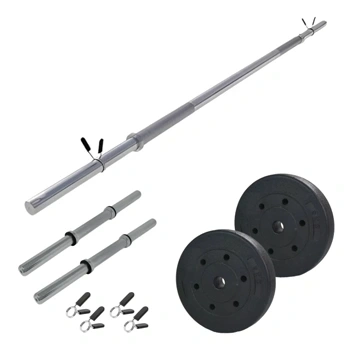 Gym Set
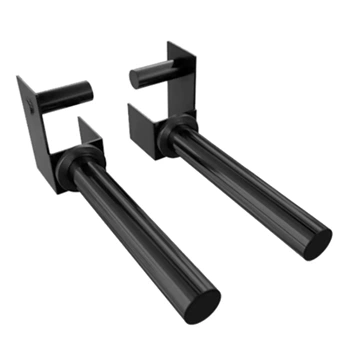 Accessories
 Combat
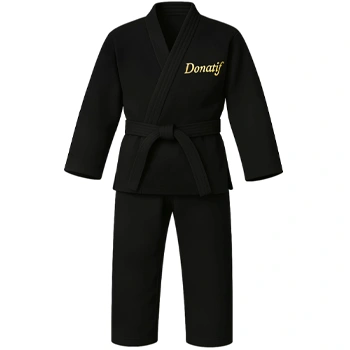 ARTI MARZIALI
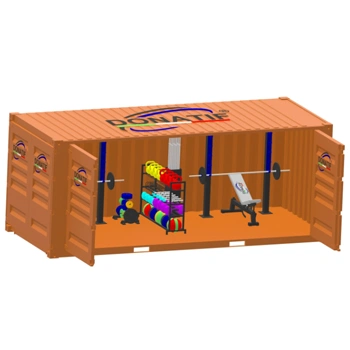 CONTAINER GYM
 Tug-Of-War
 Used Gym Equipment
 PILATES MACCHINARI
 GINNASTICA ARTISTICA
 CAMPI DA PADEL
 Prodotti in Pronta Consegna
 Informazioni
 IRONMAN
 Gift Card


