Gym Barbells
Types of Barbells
Not all barbells are the same. They differ in length, grip diameter, sleeve rotation type and load capacity. The right choice affects safety, comfort and the quality of your technique. This section is a concise but complete guide to the main families: the Olympic barbell for weightlifting and powerlifting, the curl bar (EZ bar) for arm and shoulder work with less joint stress, and standard barbells or specific bars for targeted exercises such as squats and bench press.
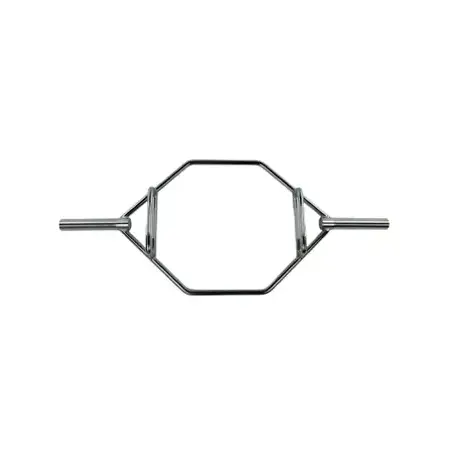
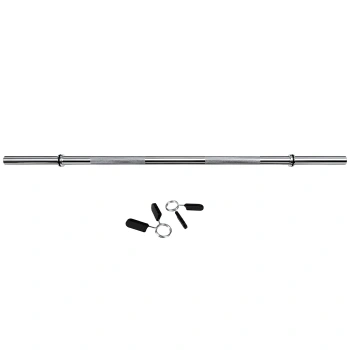
Also consider the "specialty" versions: the trap bar for more technical, centred deadlifts, the guided bar of the Smith Machine for fixed bar paths, and lighter technique bars for learning proper form. If you train at home with limited space, there are short bars of 120–150 cm compatible with 28 mm hole weight plates or 50 mm ones; for complete home gym or box setups, the reference lengths are 200–220 cm with 50 mm sleeves.
Olympic Barbell
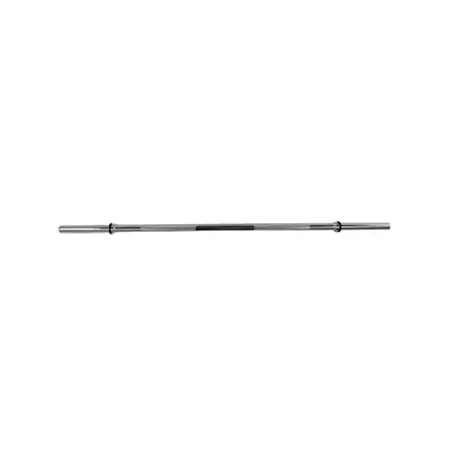
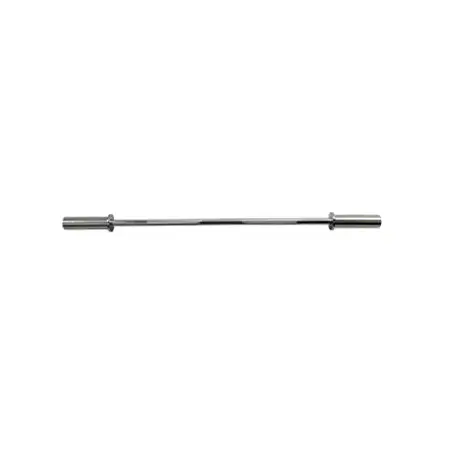
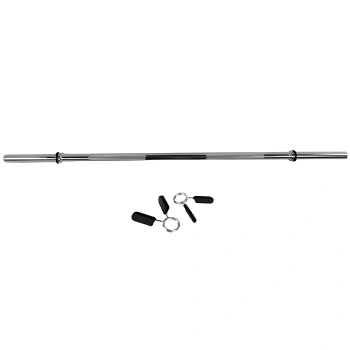
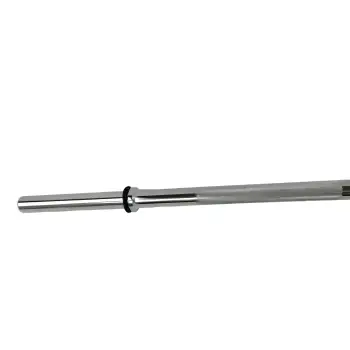
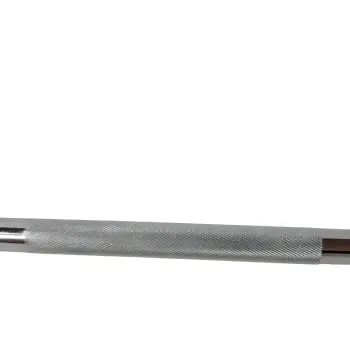
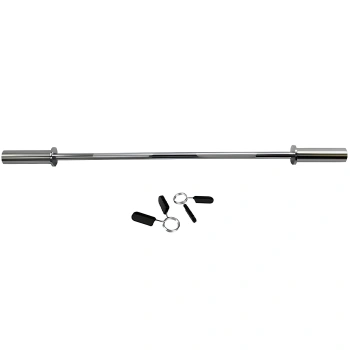
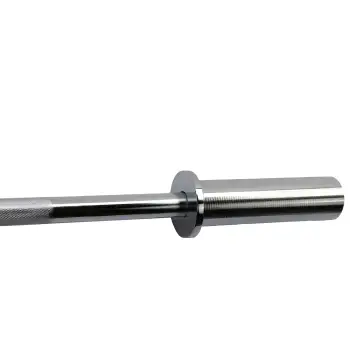
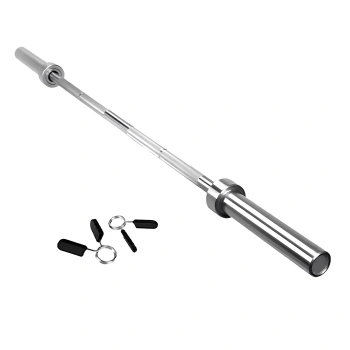
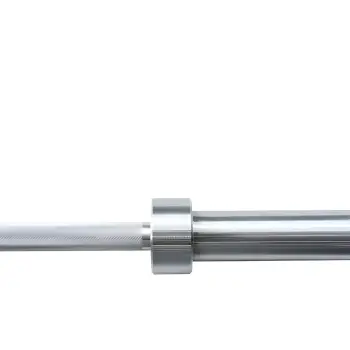
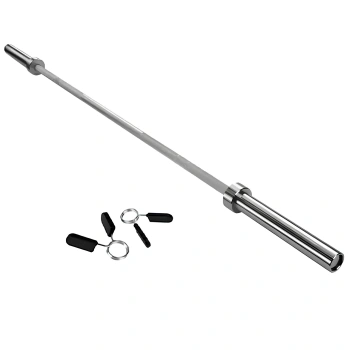
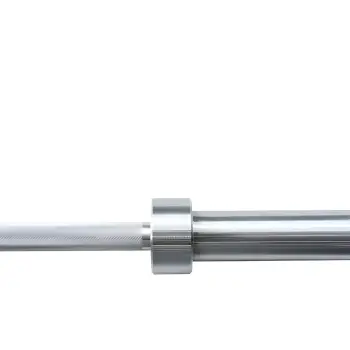
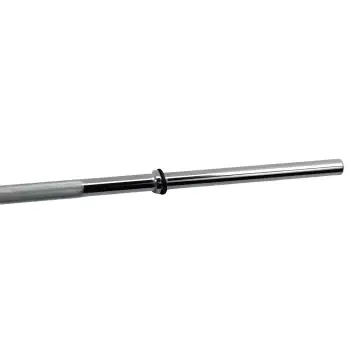
The Olympic barbell is the standard for heavy loads and explosive movements. It has rotating sleeves with bearings or bushings to reduce torsion on wrists and elbows during snatches and jerks, plus a knurling designed to give a firm grip even with chalk or damp hands. Typical versions weigh 20 kg for the men's model and 15 kg for the women's, with lengths of around 220/201 cm and a grip diameter of 28–25 mm depending on the discipline.
If your goal is to build strength in the squat, flat bench press and deadlift, this is the most stable and durable bar. Its load capacity is high and the rotation of the sleeves protects your joints when large amounts of bumper plates are added. Always check the knurling, the declared tensile strength and compatibility with the racks and supports you already own.
Curl Bar (EZ Bar)
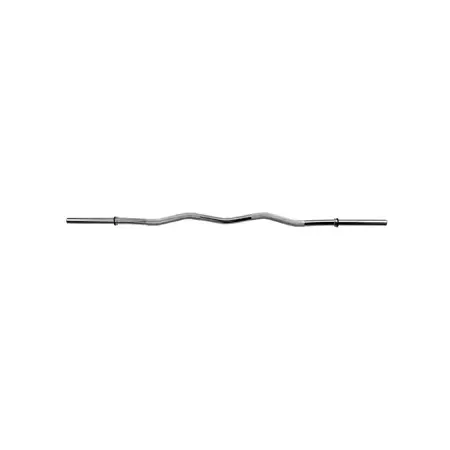
The curl bar, or EZ bar, has angled sections that allow a more natural grip for curls, skull crushers and triceps and biceps work. The hand position reduces forearm external rotation and limits stress on wrists and elbows, making it suitable for medium-to-high training volumes and for anyone who prefers a "softer" feel than a straight bar.
For those training arms at home, the EZ bar is practical because it is short, easy to handle and compatible with 28 mm or 50 mm weight plates depending on the model. Paired with good-quality weight collars, it allows quick, safe weight changes and fits perfectly alongside dumbbell work, offering new ranges of motion and bar paths.
Standard Barbells and Variants
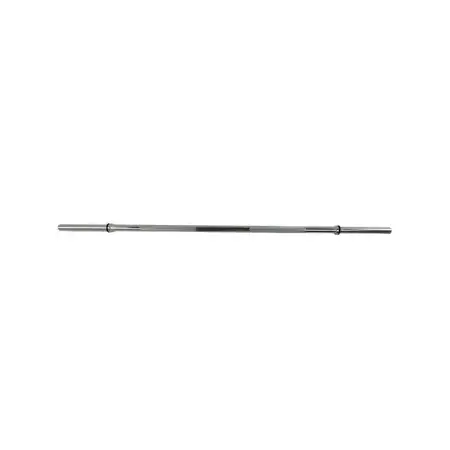
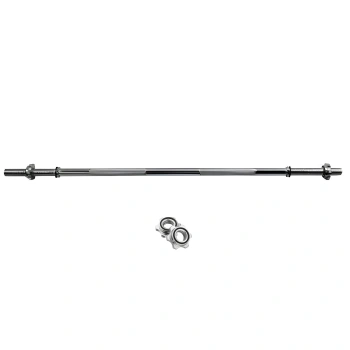
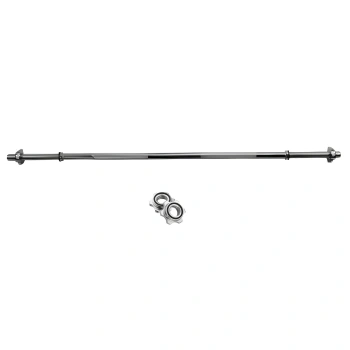
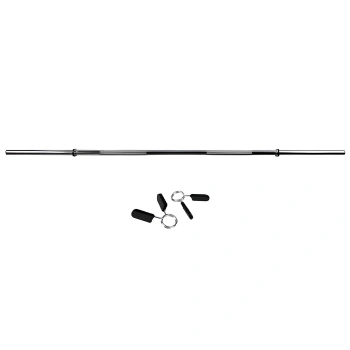
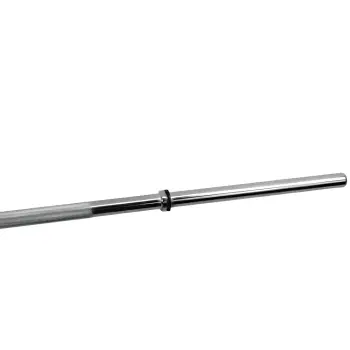
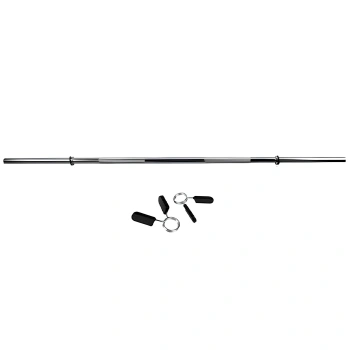
Standard barbells cover general uses such as bent-over rows, military presses and lunges. They come in various lengths and diameters, often with different load ratings for beginner or intermediate users. If space is limited, bars of 150–180 cm allow complete sessions with compact racks, while still keeping a good sense of balance and control during the lift.
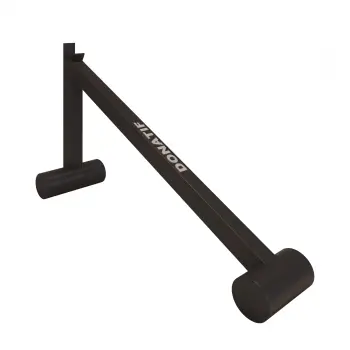
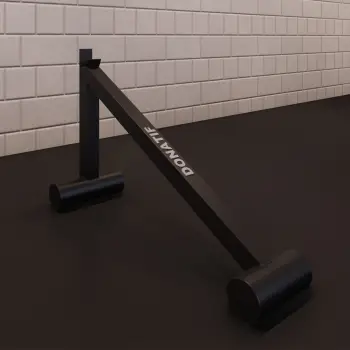
Variants include squat bars with centre knurling for better grip on the back, and trap bars for deadlifts performed with a more upright back. Check compatibility with your barbell support and the weight plates you already own to avoid unnecessary adapters and make the most of your budget.
Training with Barbells
The barbell is the most efficient tool for building overall strength and muscle mass. With a single bar you work through complete kinetic chains, improve coordination and stability, and manage precise load increases thanks to fractional plates. Exercises such as the squat, flat bench press and deadlift build solid foundations on which to add accessory variations and planned intensity cycles.
At home you can get effective sessions with just a few items: a barbell, a set of weight plates, an adjustable bench and a stable rack. Work on 2–4 compound exercises, focus on technique, manage recovery and log your loads to track real progress rather than relying on feel. For those who practise Cross Training, barbells with 50 mm sleeves and bumper plates are ideal for controlled drops and dynamic work.
Essential Barbell Exercises
Squat: place the barbell on your traps, feet hip-width apart, descend under control and drive back up by "screwing" your feet into the floor. Flat bench press with barbell: shoulder blades retracted, stable set-up and a vertical bar path with a controlled pause on the chest. Deadlift: bar close to the shins, neutral spine, hips and knees driving together. These movements produce system-wide adaptations and are the foundation of any sensible programme.
Add variations for specific needs: front squat for quads and posture, barbell row for the posterior chain, military press for shoulders and core stability. Keep progressions gradual, use weight collars and always check your set-up before heavy sets.
Muscles Trained with the Barbell
With a gym barbell you train legs, glutes, back, chest, shoulders and arms in an integrated way. Compound exercises engage the deep stabilisers and improve force transfer from feet to hands, useful in both performance and everyday activities. Proper periodisation avoids plateaus and supports measurable progress week after week.
The difference compared with dumbbells alone is the ability to safely lift heavier loads on balanced bar paths. This translates into a higher mechanical stimulus for the same training time. Then add accessory work with dumbbells or bodyweight to cover complementary angles and ranges of motion.
How to Choose the Right Barbell
Define your goal, space, budget and level. For maximal strength and structured progressions, go for an Olympic barbell with 50 mm sleeves; for arms and frequent isolation work, add a curl bar. If you train at home, measure your rack and bench, check the internal width for safe racking and compatibility with the weight plates you already have. Safety comes from clear specifications and correct pairings.
Check the technical parameters: grip diameter (25/28 mm depending on use), length (from 150 to 220 cm), anti-corrosion finish, knurling and maximum load capacity. For beginners, the quality of the bar matters more than the absolute load: smooth rotation and an even knurl make the difference to technique and grip.
Barbell Weight and Size
Frequently asked: how much does a barbell weigh? It depends on the model. Olympic bars are typically 20 kg (men's) and 15 kg (women's); standard barbells for home gyms can range from 8 to 12–13 kg; short bars can weigh as little as 6–7 kg. Length affects leverage and stability: 200–220 cm for complete setups, 150–180 cm for small spaces without sacrificing execution quality.
Always check the manufacturer's declared data: weight tolerances, tensile strength, finish (chrome, zinc, black oxide) and the presence of centre knurling if you squat often. If you aim for a heavy flat bench press, choose bars with less flex and excellent grip; for Olympic lifts, look for sleeves with bearings and consistent spin.
Tips for Beginners and Advanced Lifters
Beginners: start with a well-built barbell, even a lighter one, and weight plates that allow small increases (0.5–1.25–2.5 kg). Focus on technique with moderately challenging sets and linear progression. Avoid maximal loads until you have consolidated your set-up and range of motion, and always use weight collars for safety.
Advanced lifters: manage periodisation, grip variations and ROM, alternate volume and intensity cycles and choose a bar consistent with the goal of the mesocycle. If you train at home, make sure your barbell support, bench and flooring with technical mats are up to the planned loads. The quality of the bar and weight plates shows in how repeatable your technique is as percentages go up.
Accessories and Supports
Barbell accessories extend your options and safety. Weight collars prevent accidental sliding, squat pads protect your traps while you are learning, and straps can help with the deadlift without turning into permanent crutches. A set of bumper plates protects the floor and the bar, while fractional plates optimise progression when 5 kg jumps are too big.
For tidiness and equipment longevity you need a barbell rack or a dedicated plate storage unit. Keeping the bar off the ground prevents rust and bending over time, while proper storage of weight plates speeds up changes between exercises. Investing in suitable supports is an integral part of safety, not an optional extra.
Weights and Plates for Barbells
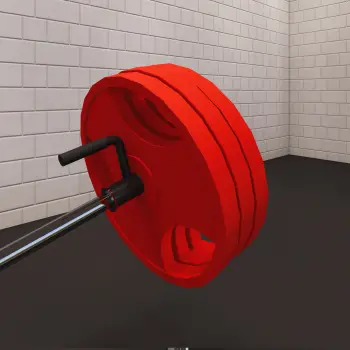
Barbell weight plates differ in material, coating, hole diameter and weight tolerance. The most common in home gyms are cast iron and rubber-coated plates; in boxes, bumper plates are often used to cushion impact. Choose according to the type of training, acceptable noise level and type of flooring. Compatibility with 28 or 50 mm holes is a primary constraint: don't overlook it.
To start a balanced set, combine pairs of 1.25–2.5–5–10–15–20 kg. This allows fine progressions and versatile total loads. Remember to include reliable locking collars: they are small, but their role is critical for safety and consistency of the lift.
Weight Collars and Racks
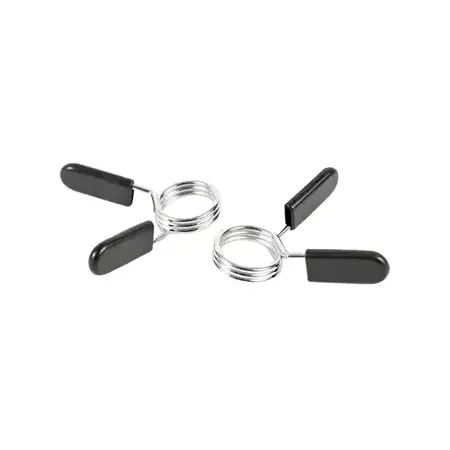
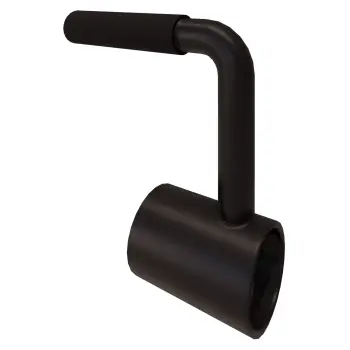
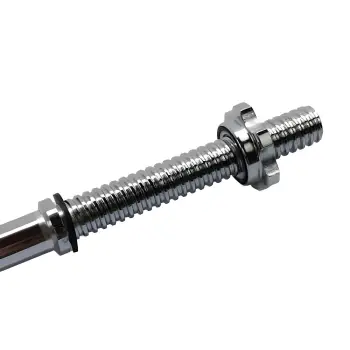
Weight collars must clamp evenly without damaging sleeves and finishes. Lever-action models offer speed and hold, while spring models are inexpensive and sufficient for moderate loads. The right choice reduces the micro-movements that alter balance and bar path, especially in heavy sets or dynamic exercises.
Racks allow vertical or horizontal storage of barbells and organisation of weight plates by diameter. A tidy space is safer and reduces downtime. If you often train with a partner, consider racks with double hooks and adjustable safety arms so you can train with confidence even without a spotter.
Professional Barbells Online at Donatif
Buying at Donatif means selecting tested barbells and accessories, with clear technical specifications and dedicated support. Each product page states the actual weight of the bar, load capacity, weight plate compatibility and usage tips for exercises such as the flat bench press, squat and deadlift. In addition, bundle solutions let you save money and receive everything in a single shipment.
Whether you are building a home gym or upgrading the equipment of a studio, here you will find the right barbell for your goal and level. From technique models for learning to Olympic barbells designed for heavy loads, the range is designed to ensure reliability, progression and longevity.
Barbell FAQ
How much does a gym barbell weigh?
It depends on the model: a standard Olympic barbell weighs 20 kg (men's version) or 15 kg (women's version), while many "standard" bars for home gyms weigh between 8 and 12–13 kg. There are also lighter technique bars for learning how to perform the movements correctly.
Which barbell should I use for bench press and squat?
For the flat bench press and squat an Olympic barbell with 50 mm sleeves, good knurling and a high load rating is recommended. If you squat a lot, centre knurling is useful to stabilise the bar on your back. For arm work choose a curl bar (EZ bar) to reduce stress on wrists and elbows.
What diameter should I choose for barbell weight plates?
The two main standards are 28 mm and 50 mm. The 50 mm is the Olympic standard and allows the use of bumper plates and professional collars; the 28 mm is common in home gyms and on more compact bars. Choose based on the bar you own or plan to buy to ensure full compatibility.
How do I calculate the total weight on the barbell?
Add the weight of the bar to that of the loaded weight plates. Example: a 20 kg bar with two 10 kg plates per side equals 20 + 40 = 60 kg in total, not counting the weight collars. For fine progressions use fractional plates of 0.5–1.25–2.5 kg.


 Budgets
 Dumbers
 Discs
 Benches
 Racks and Rigs
 Weights Holders
 Isotonic machines
 Calisthenics
 Cardio
 Kettlebells
 Flooring
 Gym Set
 Accessories
 Combat
 ARTI MARZIALI
 CONTAINER GYM
 Tug-Of-War
 Used Gym Equipment
 PILATES MACCHINARI
 GINNASTICA ARTISTICA
 CAMPI DA PADEL
 Prodotti in Pronta Consegna
 Informazioni
 IRONMAN
 Gift Card